
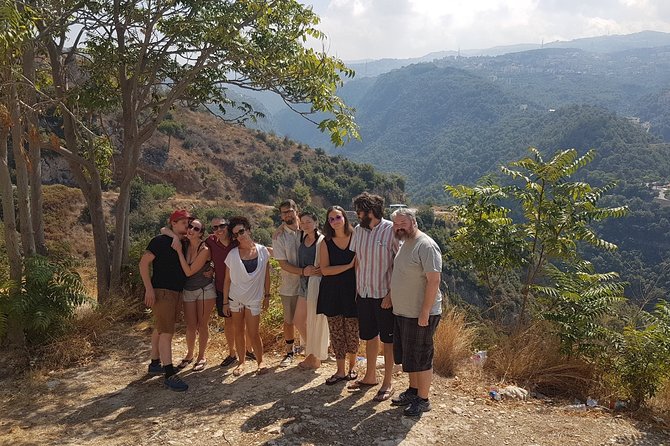
Reviewed · JEITA GROTTO & HARISSA TOURS
Exclusive Journey to Jeita Grotto, Harissa, and Byblos
The best thing about this day out is the mix: you go from millions of years of cave-making at Jeita Grotto to a mountaintop Marian shrine, then finish among Phoenician ruins and a seaside port in Byblos. It gives you three very different views of Lebanon without asking you to fight Beirut’s traffic yourself.
I like the door-to-door private transport, which saves time and lets you adjust the pace. I also like the human touch reported from drivers Fadi, Kassem, Hussein, and Ali, who were described as friendly, flexible, punctual, and easy to talk with. The main drawback is cost control: the $50 price does not include lunch or several admission tickets, so your final bill will be higher.
Key points to know before booking
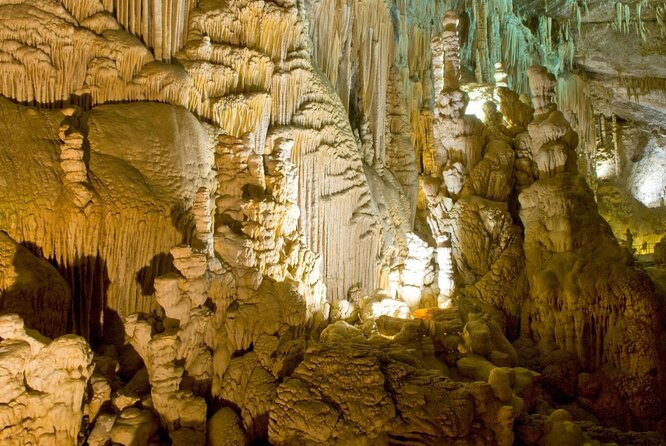
- Three major sights in one day: Jeita Grotto, Harissa, and Byblos give you nature, pilgrimage, and ancient history in a single outing.
- Private transport matters in Lebanon: Hotel pickup and drop-off spare you the stress of driving and navigating traffic between Beirut and the coast.
- You set the rhythm: The experience is private, so you are not tied to the pace of a large group.
- Some tickets cost extra: Jeita Grotto, the Harissa cable car, and Byblos Castle are not included.
- Byblos receives the most time: Plan on about two hours in the town, plus another hour for the castle and archaeological area.
- The guide style is light-touch: You explore independently for much of the day, with a local guide included in Byblos.
Why this Beirut day trip works
Lebanon packs an unusual amount into a small area. In one day, you can see a cave system formed in limestone, a giant statue overlooking Jounieh Bay, and a Phoenician port linked to the spread of the alphabet. The challenge is getting between these places without losing hours to traffic or taking wrong turns.
This tour handles that basic problem well. A private, air-conditioned vehicle collects you at your hotel at about 9 a.m. and returns you there after roughly eight hours. You are not hiring a car, studying road signs, or worrying about parking near popular sights.
I see the main value in the transport rather than in a long stream of guided commentary. The arrangement gives you a driver and tour leader, but much of the sightseeing is left to you. That suits an independent visitor who wants help with the roads but still wants to pause, wander, take photographs, or move on without a group leader calling everyone back.
The service is private, meaning only your group takes part. That makes the day a better fit for couples, families, or friends with a shared plan. It is less appealing if you want a full historical lecture at every stop.
More Jeita Grotto and Harissa runs:
- Guided Small-Group Tour to Jeita, Harissa, Byblos with Lunch
★ 5.0 · 361 reviews - Jeita Grotto,Harissa&Byblos Full-Day PRIVATE-CAR Trip from Beirut
★ 5.0 · 222 reviews - Jeita Grotto – Harissa – Byblos Trip
★ 5.0 · 169 reviews
Jeita Grotto: Lebanon below the surface
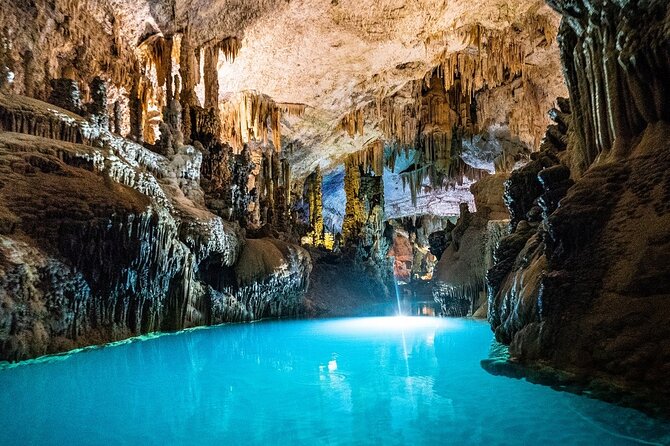
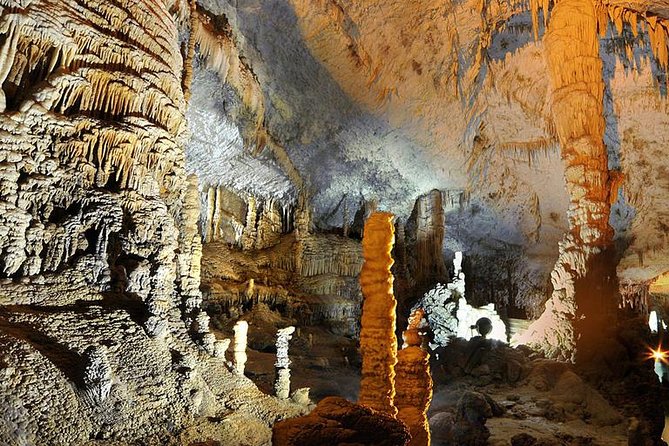
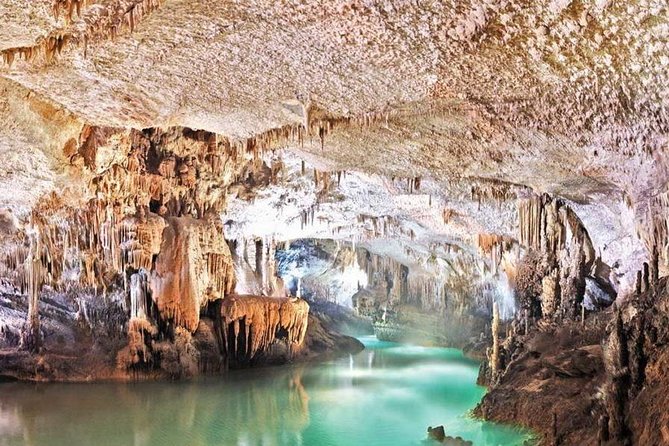
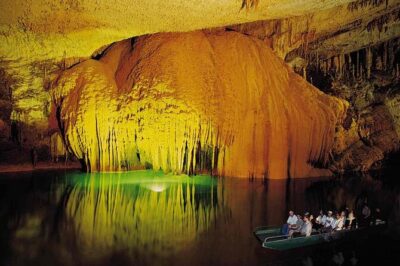
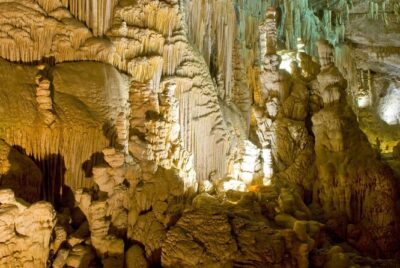
Jeita Grotto is the day’s most unusual stop. The site consists of two separate but connected limestone cave galleries formed over millions of years. The upper cave reaches about 2,130 meters in total length and is known for its stalactites, stalagmites, columns, curtains, draperies, ponds, and mushroom-shaped formations.
You should allow about 90 minutes here. The lower gallery extends for about 6,200 meters and lies around 60 meters below the upper cave. A smooth underground river and lake run through it, adding a water element to what could otherwise feel like a standard cave visit.
The site sits about 300 meters above sea level, with a total height difference of 305 meters. Those figures give you a sense of the scale, but the real appeal is the change in atmosphere. After Beirut’s traffic and noise, you enter a cool, enclosed world shaped by water and stone.
Admission is not included, so ask about the current ticket price when you book or before you set out. That extra cost matters when comparing the advertised $50 with the final amount you will spend.
Jeita is also the place where timing can shift. The visit itself is listed at 90 minutes, but transport, ticketing, and movement between the upper and lower sections may affect the exact schedule. I would avoid treating this as a minute-by-minute day.
Harissa and the view over Jounieh Bay
From Jeita, the tour continues to Harissa, a major Christian pilgrimage site above Jounieh. The centerpiece is the white-painted, 15-ton bronze statue known as Our Lady of Lebanon or Notre Dame du Liban. Built at the end of the 19th century and inaugurated in 1908, the statue rises 8.5 meters and has a diameter of five meters.
The Virgin’s outstretched arms face toward Beirut. From here, you look over Jounieh Bay and the city below, making Harissa as much a viewpoint as a religious site.
The visit to the shrine is listed at about 30 minutes, with no admission charge. That is enough time to see the statue, take in the view, and enter the small chapel inside its base if it is open during your visit.
A nearby concrete and glass cathedral adds another architectural layer. Harissa also has churches belonging to different Christian traditions, including the Byzantine-style Melkite Greek Catholic Basilica of St. Paul, built between 1948 and 1998. The supplied timing allows only about 15 minutes for the churches, so consider this a short orientation rather than a full church tour.
The site is important to pilgrims, not just sightseers. I would dress and behave with that in mind. The tour gives you access to a major religious place, but it does not promise an extended explanation of its traditions.
The Harissa Téléferique option
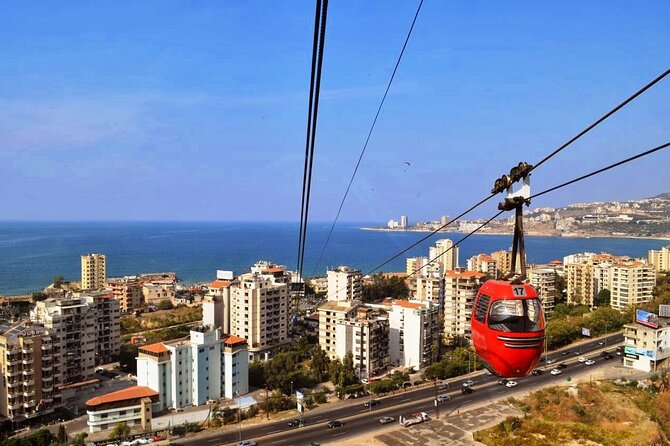
The Téléferique is a gondola lift running from Jounieh up the steep, pine-covered mountain to Harissa, reaching an altitude of about 650 meters. It is one of Lebanon’s older and most visited tourist attractions, and the ride gives you a different view of the bay and the surrounding city.
The ride is listed at 20 minutes, and admission is not included. The tour description presents it as part of the Harissa portion, but the exact way you use the cable car may depend on the day’s traffic, operating arrangements, and your driver’s plan. Confirm whether the vehicle meets you at the upper or lower station before paying for a ticket.
This is a good example of an optional extra that can affect the value of the tour. If the cable car is a priority, budget for it. If you are satisfied with the road transfer and the shrine viewpoint, you may prefer to skip the extra charge and preserve time for Byblos.
More days out in Byblos:
- Byblos, Jeita Grotto & Harissa Day Trip -With Lunch (4G on Board)
★ 4.5 · 145 reviews - Semi-Private Tour to Jeita Grotto, Harissa & Byblos with Lunch
★ 5.0 · 52 reviews - Small Group Tour to Jeita Grotto, Harisa & Byblos with Hotel pickup
★ 5.0 · 49 reviews - Private Guided Tour to Jeita Grotto through Harissa and Byblos
★ 5.0 · 48 reviews
Byblos: ruins, castle, and the old harbor
Byblos is the longest and most layered stop. The city has been inhabited since Neolithic times and is closely tied to Phoenician trade and the spread of the Phoenician alphabet. Its name is also linked to the ancient trade in papyrus, though the most useful reason to visit is simpler: the old town, port, castle, and ruins sit close enough to form a walkable historic visit.
You have about two hours for Byblos itself, followed by roughly one hour at Byblos Castle. A local guide is included in Byblos, which is useful here because the archaeological area contains several periods in one compact site.
The historic area includes the remains of the Temple of Baalat Gebal and the Temple of the Obelisks. You may find the ruins easier to understand with local explanations, since the stones and foundations do not always explain themselves. The guide can add shape to what you are seeing without controlling the entire day.
Byblos Castle is a restored 12th-century Crusader fortress surrounded by a dry moat about 10 meters wide. Its square keep gives you a useful view across the archaeological site. From the upper level, Bronze Age dwellings can be seen below the walls, with the sea beyond.
Inside the castle is a small museum and a room with information panels about the city’s past. Admission is not included, so keep cash or another accepted payment method ready for this ticket.
The castle is not just a photo stop. It helps you read the whole site from above. I would visit the ruins first if possible, then climb the keep, because the higher view makes the scattered remains easier to place.
A short walk through the souk and port
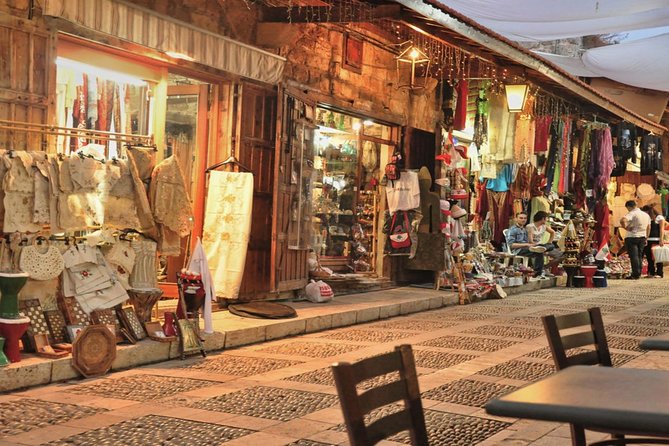
The old souk receives only about 10 minutes in the listed schedule. That is enough for a quick stroll along the cobblestone streets, a look at the old buildings, or a fast browse for souvenirs and antiques. It is not enough for serious shopping.
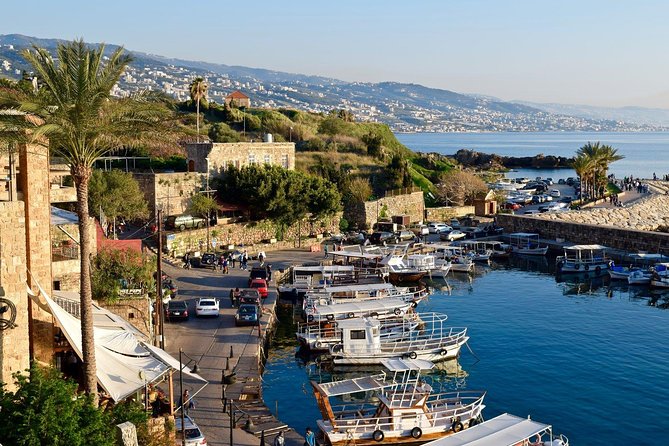
The same applies to Byblos Port, which is given another 10 minutes. The harbor is traditionally regarded by Lebanese people as the oldest port in the world, and around 3000 BC it served as an important timber-shipping center in the eastern Mediterranean.
The port works best as a quiet closing scene after the castle. You can look at the water, connect the town to its ancient trade role, and take a few photographs. If you prefer cafés, shops, or a longer walk by the water, you will need to use some of the flexible private-tour time carefully.
What the private format really gives you
The private vehicle is more than a comfort feature. It lets you keep your energy for the sights. Lebanon’s roads can be stressful for someone unfamiliar with local driving conditions, and the tour specifically removes the need for self-driving.
You can also ask for a different pace. If Jeita takes longer, you may need to shorten Harissa or Byblos. If you move quickly, you may gain more time in the old souk or port. That flexibility is one of the strongest reasons to choose this arrangement over a fixed group excursion.
The service is not always perfectly clockwork. One pickup was slightly late because of hotel location and traffic, though the driver apologized and continued with attentive service. I would give the operator your exact hotel details and keep a little patience around the 9 a.m. departure.
The drivers named in the available feedback are Fadi, Kassem, Hussein, and Ali. Their strengths were described in practical terms: friendliness, honesty, good communication, flexibility, punctuality, and a relaxed manner. Kassem was also praised for helping with questions and making passengers comfortable quickly. These details matter because you will spend much of the day in the vehicle with the driver.
Is $50 a fair price?
At $50 per person, the price looks reasonable for private hotel pickup, a private air-conditioned vehicle, a tour leader, a local guide in Byblos, and hotel drop-off. The value improves if you are sharing the vehicle with several people, since the convenience is spread across your group.
The price is less generous once you add expenses. Lunch is not included. Admission to Jeita Grotto, the Téléferique, and Byblos Castle is also extra. The shrine, Harissa churches, Byblos town, old souk, and port are listed without admission charges.
One direct assessment from the available comments called the experience a bit pricey and noted that lunch could fit into a higher total cost. I agree that you should compare the advertised rate with your likely all-in spend, not view $50 as the complete budget.
Still, private transport across three major areas has real value. I would consider it fair for a small group that wants convenience and control. A solo visitor focused mainly on low cost may find a public or shared option cheaper, if one is available and practical for the same route.
Who should book this experience?
I would choose this tour if you are staying in Beirut and want to see several headline sights in one day without driving. It is especially useful for a first visit, when road navigation and regional transport may take more effort than expected.
It also suits you if you like independent sightseeing. You get transport and help in Byblos, but you are not required to listen to a guide at every monument or stay with a large group.
Families and small groups should appreciate the private format. You can manage breaks and attention spans more easily than on a rigid coach outing. Couples may also like the ability to spend longer at the places that matter most to them.
I would think twice if you want a slow Byblos visit, a long lunch, or detailed religious and archaeological commentary throughout the day. The schedule is full, and the short time at Harissa’s churches, the souk, and the port leaves little room for lingering.
Free cancellation is available if you cancel at least 24 hours before the 9 a.m. start time. Inside that window, the payment is not refunded, and changes are not accepted.
Should you book it?
Book this experience if your priority is efficient private transport between Beirut, Jeita Grotto, Harissa, and Byblos. The route gives you a strong first look at Lebanon’s coast and nearby mountains, and the flexible format is more comfortable than managing the roads yourself.
Before booking, ask for the expected admission costs and confirm how the Téléferique fits into the route. Add money for lunch, cave entry, the cable car, and Byblos Castle. If you accept those extras and keep your timing flexible, this is a useful, well-shaped day for seeing three very different sides of Lebanon.
FAQ
What is included in the tour price?
The experience includes hotel pickup and drop-off, private transportation, an air-conditioned vehicle, a tour leader, and a local guide in Byblos.
How long does the tour last?
The tour lasts approximately eight hours and begins at about 9 a.m.
Is this a private tour?
Yes. Only your group participates in the activity.
Is hotel pickup available?
Yes. Hotel pickup and drop-off are included.
Is lunch included?
No. Lunch is not included in the price.
Are admission tickets included?
Admission to Jeita Grotto, the Harissa Téléferique, and Byblos Castle is not included. The shrine, Harissa churches, Byblos, the old souk, and Byblos Port are listed without admission charges.
Is a guide provided in Byblos?
Yes. A local guide in Byblos is included, along with a tour leader.
What is the cancellation policy?
You can cancel at least 24 hours before the experience for a full refund. Cancellations or changes made less than 24 hours before the start time are not accepted and are not refunded.
Just added around Beirut
- Beirut to Sidon, Tyre and Maghdouché: Daily Tours with Lunch★ 5.0 · 3 reviews
- Exploring Beirut’s Past: A Private Guided Historical Tour★ 5.0 · 3 reviews
- Chouf Charm: Private Journey Through Lebanon’s Historic Heartland★ 4.5 · 3 reviews
- Private Trip to Beiteddine, Deir el Qamar & Maaser el Chouf Cedars★ 4.5 · 3 reviews
- Hike Chouwen★ 5.0 · 3 reviews
- Small-Group Tour with Lunch to Baalbek, Anjar and Ksara★ 5.0 · 3 reviews
- Baalbek, Anjar & Wine: A Journey Through Lebanon’s Heritage★ 5.0 · 3 reviews
- Lebanese wineries guided tour with tastings & lunch★ 4.9 · 3 reviews
Jeita Grotto & Harissa Tours, compared.
Guided Small-Group Tour to Jeita, Harissa, Byblos with Lunch
Read our review →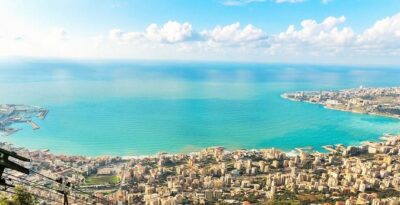
Jeita Grotto,Harissa&Byblos Full-Day PRIVATE-CAR Trip from Beirut
Read our review →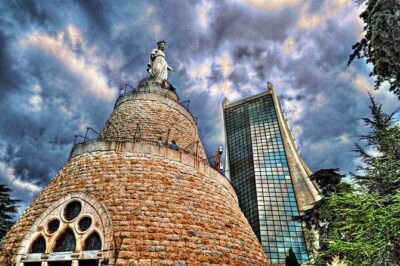
Byblos, Jeita Grotto & Harissa Day Trip -With Lunch (4G on Board)
Read our review →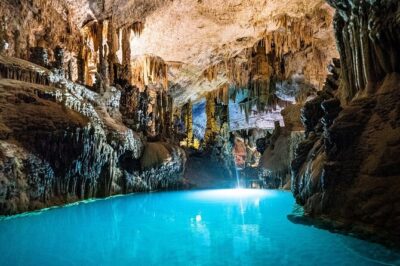
Semi-Private Tour to Jeita Grotto, Harissa & Byblos with Lunch
Read our review →
Small Group Tour to Jeita Grotto, Harisa & Byblos with Hotel pickup
Read our review →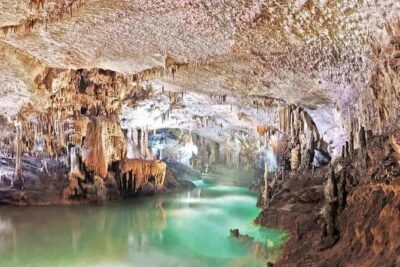
Private Guided Tour to Jeita Grotto through Harissa and Byblos
Read our review →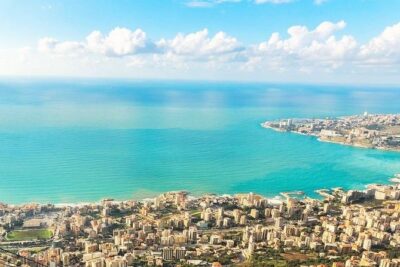
New Guided Semi-Private Tour to Jeita Grotto, Harissa & Byblos
Read our review →Browse the lists this tour appears in