
Reviewed · BEIRUT CITY TOURS
Historical Beirut Tour (AM) Half Day – (4G on Board)
Beirut’s past is not tucked away in one old quarter. It appears in Roman baths beneath modern streets, Ottoman-era monuments, rebuilt squares, and museum cases filled with Phoenician, Roman, and Byzantine treasures. This three-hour tour gives you a useful first look at that layered story, with a guide to explain what you are seeing.
I like the National Museum of Beirut, which gives the tour real weight rather than leaving you with only a quick walk through downtown. I also like the thoughtful historical focus, especially the links between Beirut’s Roman beginnings, its role as Lebanon’s capital, and the city’s recovery after long periods of destruction.
The main drawback is the balance between outdoor sightseeing and museum time. About an hour is set aside for the museum, while the walking portion can feel brief. If you want to explore neighborhoods, enter major buildings, or spend more time outdoors, this half-day tour may feel limited.
Key points at a glance
- Roman baths beneath the city: See remnants of Roman Beirut alongside the modern downtown district.
- A focused National Museum visit: Allow about one hour for Phoenician, Roman, and Byzantine objects.
- A guide-led introduction: English and French commentary connects the monuments to Lebanon’s political and cultural past.
- Simple morning timing: The tour begins at 8:30 am and lasts about three hours.
- Hotel pickup with limits: Pickup and drop-off are offered at qualifying hotels within Beirut city, not hostels, Airbnbs, or private apartments.
- A small-group feel, with a cap of 25: The group may not be tiny, but the maximum keeps it more manageable than a large coach outing.
Beirut’s story begins below the modern streets
I find this tour most useful as an orientation. Beirut can seem scattered at first. Modern commercial streets, restored public squares, archaeological remains, and reminders of war sit close together, but the connections are not always obvious.
Your guide begins with the broad outline. Beirut was settled more than 5,000 years ago and later prospered as a Roman city-state from 15 BC. The story then moves through the Ottoman period, the collapse of the Ottoman Empire after World War I, and the creation of modern Lebanon, with Beirut becoming its capital.
That introduction matters because the city’s monuments do not tell a single, tidy story. The tour presents Beirut as a place that has repeatedly been damaged, rebuilt, and reshaped while retaining a liberal character. You get political context along with the stones and statues.
Guides such as Eliane and Madeline have received especially warm praise for their clear, engaging explanations. Their value is not simply in naming a monument. A good guide helps you understand why the site matters, who shaped it, and how it fits into the city’s wider story.
More ways to see Beirut on foot:
- City Sightseeing Beirut Hop-On Hop-Off Bus Tour
★ 4.5 · 87 reviews - Airport Arrival Transfer to Your Beirut Hotel
★ 5.0 · 87 reviews - Authentic Lebanese Cooking Lesson and Meal with Tania’s Family in Beirut
★ 5.0 · 62 reviews
Martyrs’ Square and the memory of Ottoman rule
The first listed stop is Place des Martyrs, also called Martyrs’ Square. You spend about 10 minutes here, with no separate admission fee.
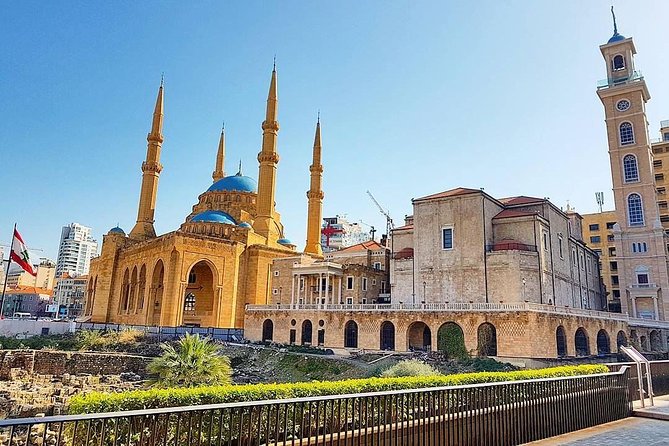
The square is home to the Martyrs’ Statue, which honors Lebanese nationalists executed by the Ottomans during World War I. It is a compact stop, but the subject is important. The monument connects Beirut to the political pressures that helped shape modern Lebanon.
Do not expect a long guided walk through the square. Ten minutes is enough for photographs and an explanation, but not enough for an extended look at every surrounding building or monument. I would treat this as a historical marker and a starting point, not as the main event.
The square also helps you see how Beirut’s public spaces carry political meaning. A statue here is not just decoration. It reflects national memory, foreign rule, and the difficult process of defining Lebanon as a modern state.
Nejmeh Square and downtown Beirut
The tour continues through central Beirut, including recently renovated Nejmeh Square. This is one of the city’s key public spaces, centered on its famous clock tower.
The tower was built during World War I, giving the square another link to the era of Ottoman rule and the upheavals that followed. Your guide explains the buildings and events around the square, turning what could be a quick photo stop into a lesson in how Beirut rebuilt its civic center.
I like this part because it shows the contrast between old references and new construction. The downtown district has been repaired and renewed, yet its streets still point toward the city’s earlier chapters. The experience is less about checking off monuments than learning to read the city’s surfaces.
That said, the walking component is not especially long. The tour uses an air-conditioned vehicle, and the schedule moves efficiently between locations. If you hoped for a slow neighborhood stroll with time to browse shops, enter buildings, or linger in side streets, you may want to explore downtown on your own afterward.
One useful detail is that the route can sometimes include a look toward the Parliament area, depending on access at the time. This is not something to count on, but it can add another layer to your understanding of Beirut’s civic center.
Roman baths and archaeological traces
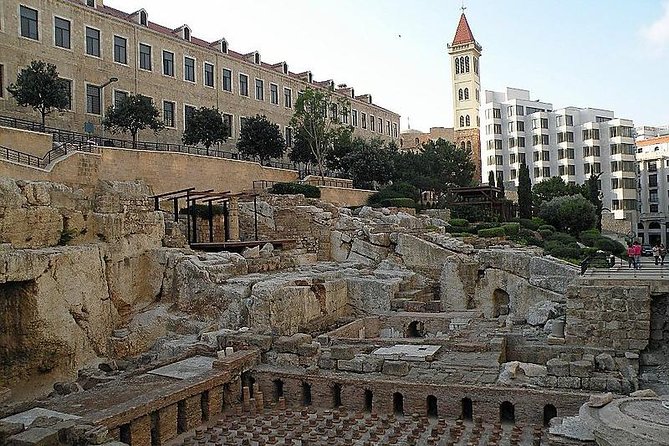
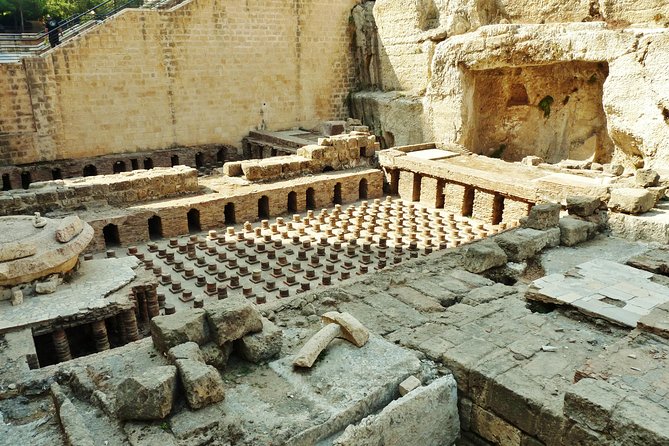
The Roman Bath area offers one of the clearest examples of Beirut’s ancient past sitting beside its modern life. The listed visit to the Roman Bath and downtown area lasts about 30 minutes, with admission included.
The remains help explain why Beirut’s Roman period is central to the tour. The city was not merely an old settlement. It became an important Roman urban center, and the baths offer a physical reminder of that period.
The broader archaeological story is still developing. Some archaeological sights in Beirut were found as recently as 2007, which is a useful reminder that the city’s past continues to come to light beneath present-day streets.
This stop is also where a guide makes the biggest difference. Ruins can be hard to read without context. Your guide can point out what survives, explain its purpose, and connect the Roman site to the modern city around it.
The limitation is time. Thirty minutes does not allow for a long archaeological walk. You will get the essential explanation and a chance to take photographs, but anyone with a strong interest in Roman Beirut may want a separate museum or archaeology-focused visit.
More ancient sites near Beirut:
- PRIVATE Beirut Historical Walking Half Day Tour
★ 5.0 · 27 reviews - Temple of Eshmun – Mleeta Landmark – Beaufort Castle
★ 5.0 · 9 reviews - Guided Half-Day Private Beirut Historical Tour
★ 5.0 · 6 reviews - Sidon & Tyre Unesco Heritage w/pick-up, guide, entries+lunch
★ 4.9 · 6 reviews
One hour inside the National Museum of Beirut
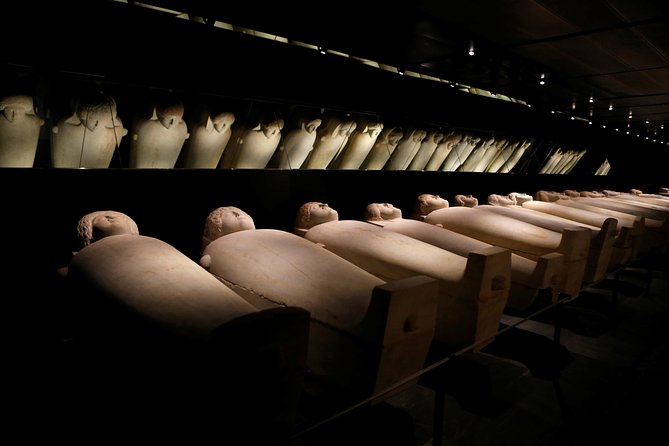
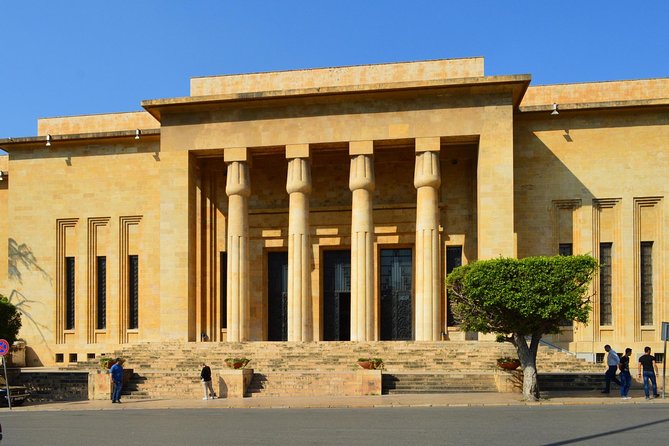
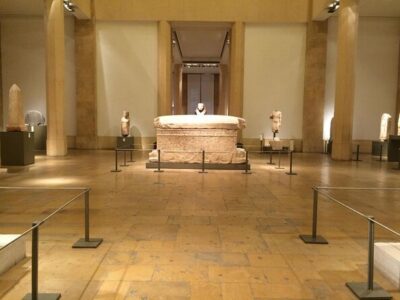
The National Museum is the strongest part of the experience for many people, and it receives about one hour of the schedule. Entrance fees are included.
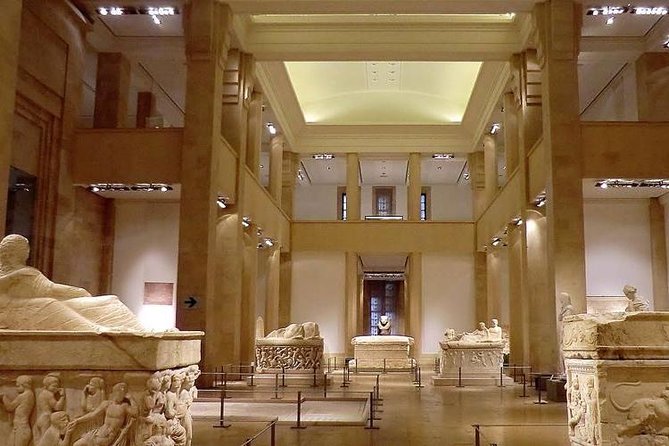
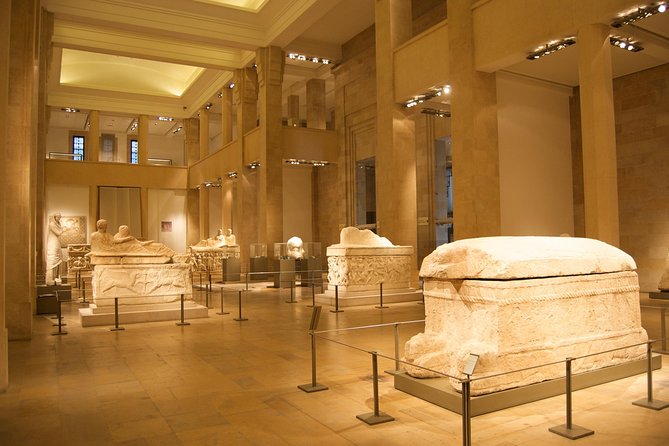
The collection covers Lebanon’s long story through archaeological objects. Expect highlights that include Phoenician statues, Byzantine mosaics, and Roman pieces. Together, they show how the country’s cultures changed and overlapped over thousands of years.
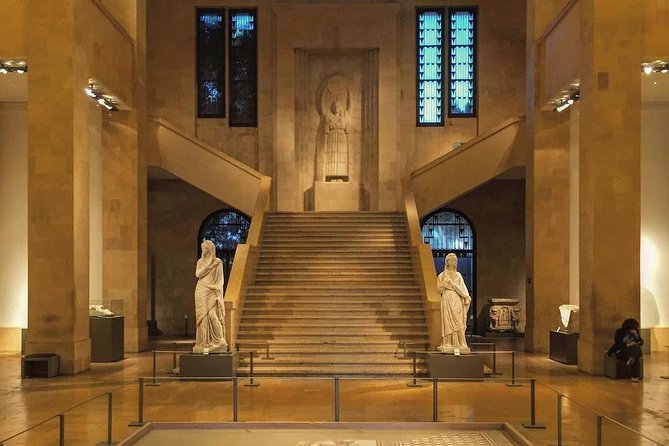
I especially like the way the museum gives structure to the outdoor tour. At Martyrs’ Square and the Roman baths, you see individual reminders of the past. In the museum, those fragments become part of a larger sequence. You can move from ancient Lebanon through later periods and gain a clearer sense of the country’s place in the eastern Mediterranean.
The museum also carries a modern story of its own. It was badly affected during Lebanon’s conflict years and later restored. The work required to protect and rebuild the collection adds meaning to the visit. You are not only looking at old objects. You are seeing a cultural institution that survived a difficult recent past.
An hour is long enough for a well-chosen introduction, especially with a guide pointing out the main pieces. It is not enough for every gallery or for a slow look at each object. If museums are a major reason you travel, plan to return independently if time allows.
Several departures have featured guides including Eliane and Madeline, whose strong command of the city’s history has been a major part of the experience. Still, guide quality can vary from one departure to another, and the tour’s published promise is an English and French-speaking licensed guide rather than a specific person.
What the vehicle adds to a walking tour
The title calls this a walking tour, but it is not three continuous hours on foot. An air-conditioned vehicle is included, along with bottled water and WiFi on board.
That arrangement is practical in Beirut. It cuts down on the time spent moving between downtown and the National Museum, and it gives you a break between outdoor stops. Hotel pickup and drop-off are included for qualifying hotels within Beirut city.
There are limits. Pickup does not apply to hostels, Airbnbs, or private apartments, and the stated meeting point is Nakhal Tourism and Travel in Beirut. Confirm your pickup details before setting out, particularly if you are not staying at a standard hotel.
The vehicle also helps explain why some people find the walking portion shorter than expected. You are seeing several important places, but the experience is a guided city overview rather than a long urban walk.
Is $50 a fair price?
At $50 per person, the tour is reasonably priced if you value convenience and a guide. The price includes transport, a licensed English or French-speaking guide, bottled water, onboard WiFi, hotel pickup when eligible, and entrance fees to the listed sites.
The value is strongest for a first morning in Beirut. You do not need to arrange transport to the museum, work out how the downtown stops fit together, or study the political background before arriving. You also get a human explanation of sites that could otherwise feel disconnected.
The value is weaker if you mainly want free time outdoors. Downtown Beirut can be explored independently, and the route is focused enough that an experienced independent visitor may feel the tour moves too quickly. The museum admission and transport help justify the price, but the tour is not designed for a slow, personal exploration of the city.
Lunch is not included. Since the experience ends after about three hours, you can arrange your own meal afterward or pair the tour with another activity, but no food stop is part of the morning.
Who will get the most from this morning?
I would recommend this tour to you if you are visiting Beirut for the first time and want a clear historical framework. It suits people who prefer a guide to explain political events, monuments, and archaeological remains rather than simply handing over a map.
It is also a good match if you want to see the National Museum but would rather not arrange the transport yourself. The morning start leaves the rest of your day open, and the three-hour length is manageable.
You may want something else if you are seeking a long walking route through several neighborhoods. The tour does not promise extended time in Ottoman Beirut, South Beirut, or inside key downtown buildings. It also may not satisfy you if you want a full archaeological study of the Roman remains.
The group can reach 25 people. That is not a private experience, but it is still a controlled size for a guided introduction. Most people can participate, according to the stated requirements, though the listing does not give detailed accessibility information.
Safety and changing conditions in Lebanon
The supplied information notes a US Department of State warning against travel to Lebanon because of safety and security concerns. The operator reports that its tours continue to run and says it stays in contact with local guides and suppliers.
That does not replace your own safety decision. Check current official advisories before booking and again before departure. Conditions can change, and the operator may alter or cancel tours if circumstances require it.
Practical advice before you book
The tour starts at 8:30 am. If you are using hotel pickup, confirm that your hotel qualifies and that the pickup arrangement is clear. If not, plan to meet at Nakhal Tourism and Travel in Beirut.
Wear comfortable shoes, even though the outdoor walking is limited. You will still be moving through public squares and archaeological areas, and the day is built around standing, looking, and listening.
Bring water if you prefer more than the included bottle, and leave room in your schedule for the museum. The National Museum is not a quick photo stop. It is the part of the morning where you will spend the most time indoors.
Free cancellation is available when you cancel at least 24 hours before the start time. Changes or cancellations made less than 24 hours before the tour are not accepted for a refund, and the cut-off uses local time.
Should you book the Historical Beirut Tour?
Book it if you want a well-organized introduction to central Beirut, especially one that combines downtown monuments with the National Museum. The Roman baths, Martyrs’ Statue, Nejmeh Square, and museum collection give you a useful sequence of ancient, Ottoman, wartime, and modern themes.
The best reason to choose it is the guide-led context. A strong guide, such as Eliane or Madeline on some departures, can turn a short route into a thoughtful history lesson. Hotel transport and museum admission add practical value.
Skip it if your priority is a long outdoor walk or a highly personal route through less-visited parts of Beirut. In that case, use this morning to visit the museum and downtown independently, then seek a longer neighborhood tour. For a first look at Beirut with limited time, though, the $50 price is fair and the format is easy to manage.
FAQ
How long does the Historical Beirut Tour last?
The tour lasts approximately three hours.
What time does the tour begin?
The stated start time is 8:30 am.
Where does the tour start?
The meeting point is Nakhal Tourism and Travel in Beirut. Pickup is also offered from selected hotels within Beirut city.
Is hotel pickup included?
Yes, pickup and drop-off are included for guests staying at qualifying hotels located within Beirut city. Pickup does not include hostels, Airbnbs, or private apartments.
What language does the guide speak?
The tour includes a professional licensed guide who speaks English and French.
Is the National Museum entrance included?
Yes, entrance fees to all mentioned sites in the program are included, including the National Museum of Beirut.
How long is the museum visit?
The scheduled visit to the National Museum lasts about one hour.
Is lunch included?
No. Lunch is not included in the tour price.
What is the cancellation policy?
You can cancel at least 24 hours before the local start time for a full refund. Cancellations or changes made less than 24 hours before the start time are not accepted for a refund.
Just added around Beirut
- Beirut to Sidon, Tyre and Maghdouché: Daily Tours with Lunch★ 5.0 · 3 reviews
- Exploring Beirut’s Past: A Private Guided Historical Tour★ 5.0 · 3 reviews
- Chouf Charm: Private Journey Through Lebanon’s Historic Heartland★ 4.5 · 3 reviews
- Private Trip to Beiteddine, Deir el Qamar & Maaser el Chouf Cedars★ 4.5 · 3 reviews
- Hike Chouwen★ 5.0 · 3 reviews
- Small-Group Tour with Lunch to Baalbek, Anjar and Ksara★ 5.0 · 3 reviews
- Baalbek, Anjar & Wine: A Journey Through Lebanon’s Heritage★ 5.0 · 3 reviews
- Lebanese wineries guided tour with tastings & lunch★ 4.9 · 3 reviews
Beirut City Tours, compared.

Authentic Lebanese Cooking Lesson and Meal with Tania’s Family in Beirut
Read our review →
Beirut: Jeita Grotto, Harissa, Byblos group tour & Guide
Read our review →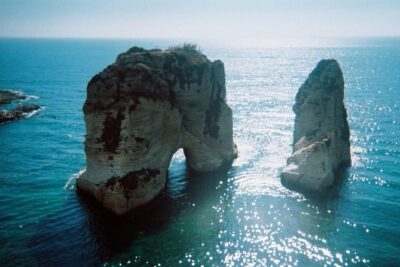
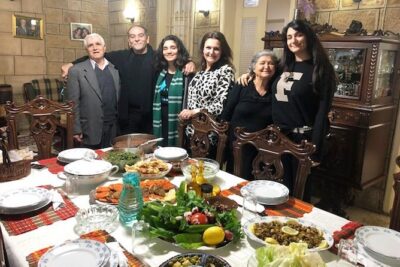
Private Lebanese Cooking Class in Beirut with Amal + Transfers
Read our review →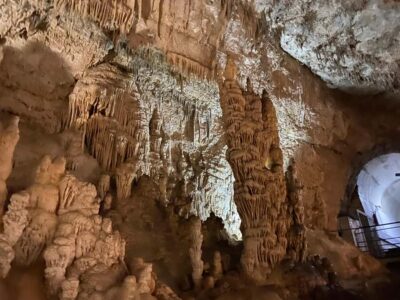
Lebanon: Beirut, Jeita Grotto, Byblos Private Tour and Lunch
Read our review →
Authentic Lebanese Meal in Beirut in Tania’s Family Home
Read our review →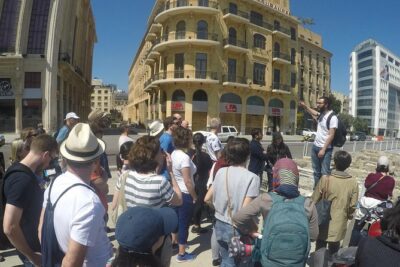
Browse the lists this tour appears in