
Reviewed · SIDON & TYRE DAY TRIPS
Private Guided Tour to Sidon, Tyre and Maghdouche from Beirut
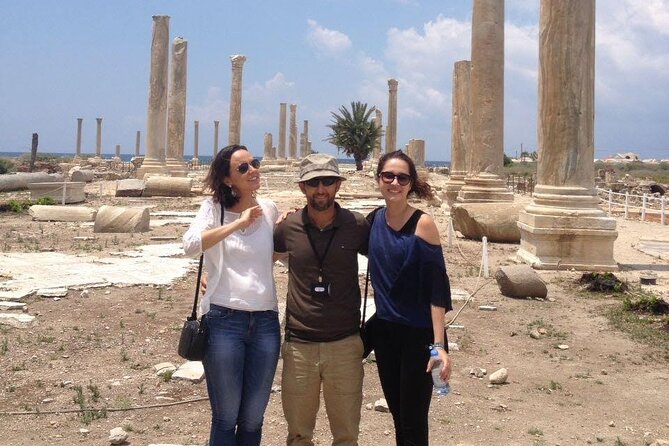
Tyre’s Roman hippodrome is the star of this southern Lebanon day trip. Its broad stone track, monumental arch, ancient road, aqueduct, and nearby necropolis make the past feel unusually close. Sidon adds a Crusader castle, old souks, and the craft of soap-making, while Maghdouche brings a quieter religious stop.
I like the private door-to-door transport, which saves you from dealing with Lebanese traffic and lets you shape the pace around your own group. I also like the range of the day: Phoenician ports, Crusader remains, Roman ruins, traditional commerce, and a Christian shrine all fit into one outing. The trade-off is a full schedule, with about four hours at the main sites and more time spent on the road.
Key points at a glance
- Tyre’s Al-Bass site: See one of the best-preserved Roman hippodromes, plus an ancient road, triumphal arch, aqueduct, and necropolis.
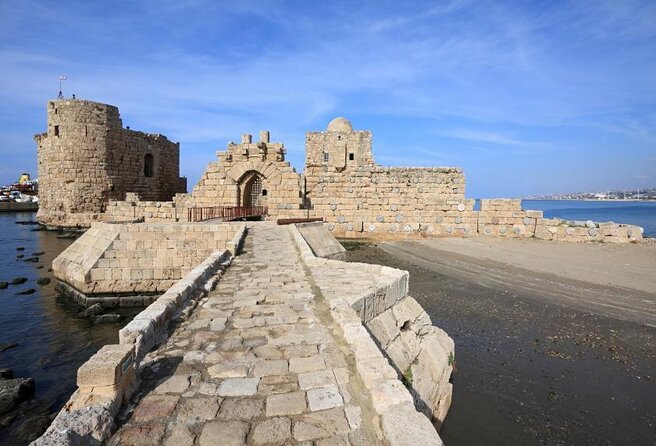
- Sidon’s waterfront castle: Walk around the Crusader Sea Castle, built on a small island and linked to shore by a causeway.
- Private touring: Your group travels alone with a driver and guide in an air-conditioned vehicle.
- A taste of old Sidon: Khan al-Franj and the narrow souks offer a look at trade, crafts, cafés, and daily life.
- Maghdouche shrine: Visit Our Lady of Mantara, a hilltop religious site linked to the tradition of Mary waiting for Jesus.
- Plan for extra costs: Lunch and entrance fees are not included in the $100 per-person price.
Why this makes a strong day trip from Beirut
This tour works because it connects three places that feel different from one another. Sidon is the most atmospheric stop, with its port, old market lanes, and Crusader fortress. Tyre offers the largest archaeological payoff. Maghdouche is smaller and more reflective, giving the day a change of tone before the return to Beirut.
You leave at 9:00 a.m. and spend roughly eight hours on the outing. That is enough time for the major sights, though not enough for a slow, unplanned wander in every town. The private format matters here. You can ask questions as you go, avoid waiting for a large group, and keep your belongings with you in the same vehicle.
The tour includes hotel pickup and drop-off, a tour leader, a professional guide, and air-conditioned private transport. That is useful in southern Lebanon, where road conditions and traffic can make independent planning tiring. You are paying for convenience as well as sightseeing.
At $100 per person, the value depends heavily on your group size. For one person, it is a sizeable day-trip cost once lunch and admission fees are added. For two or more people sharing a private vehicle and guide, the price becomes easier to justify, especially if you value a direct pickup and a flexible, personal explanation of the sites.
More trips down to Sidon and Tyre:
- Small-Group Adventure Tour to Sidon Tyre & Maghdouche-Day Trip
★ 5.0 · 45 reviews - Sidon, Tyre & Maghdouche Day Trip – With Lunch (4G on Board)
★ 4.5 · 44 reviews - Guided Small-Group Tour to Sidon, Tyre & Maghdouche with Lunch
★ 5.0 · 41 reviews
Sidon: a Phoenician port with Crusader walls
Sidon, known in Arabic as Saida, is one of the oldest Phoenician cities. Its roots reach back to the third millennium BC, and its prosperity grew in the second millennium. The city was known for purple dye made from sea snails, glassware, and maritime trade. Jesus is also associated with a visit to the region, adding another layer to Sidon’s long story.
Your time in Sidon is divided among several compact stops. That keeps the visit varied, but it also means you should be ready to move on after a short look at some places.
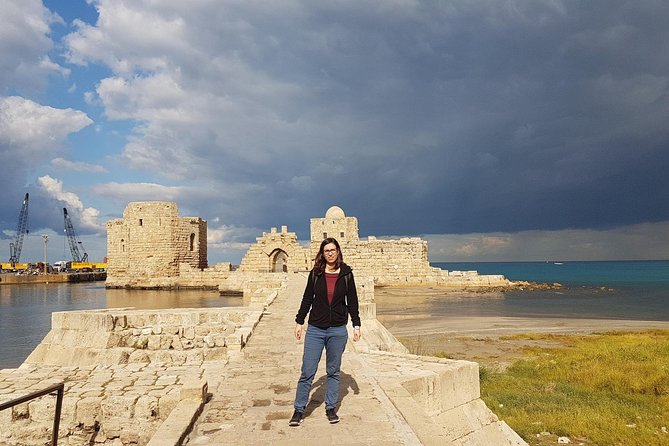
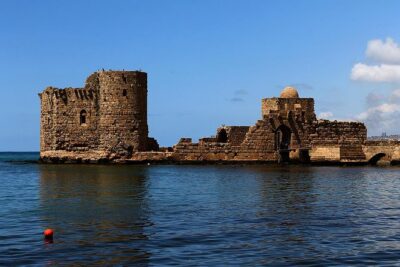
The Sea Castle is the visual introduction. Crusaders built it in the thirteenth century on a small island, then connected it to the mainland with a causeway. The fortress was badly damaged by the Mamluks in 1291 and later restored by Emir Fakhr el-Dine Maan II in the early seventeenth century.
Only part of the original structure remains. Do not expect a complete medieval fortress with intact rooms and polished interiors. The appeal is in the setting, the surviving stonework, and the view back toward Sidon’s waterfront. You have about 30 minutes here, enough for a walk around the remains and photographs, but not an extended archaeological study. Admission is extra.
Khan al-Franj and the narrow Sidon souks
Khan al-Franj gives you a more grounded view of Sidon’s commercial past. Emir Fakhreddine II built this early seventeenth-century khan as a hotel for ambassadors and a center of trade between Lebanon and France. Its layout follows the traditional khan pattern: a large rectangular courtyard, a central fountain, and covered galleries around the edges.
You have about 15 minutes, so this is a quick architectural stop rather than a long visit. Look for the relationship between the open courtyard and the shaded galleries. The building later became a place connected with literature, religion, history, industry, and diplomacy, which helps explain why it is more than an old inn.
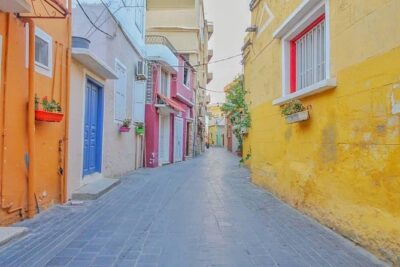
The souks bring you from formal architecture into everyday commerce. Their narrow lanes form a maze of kiosks, shops, cafés, and small businesses. You might find butchers, grocers, shoemakers, tailors, jewelers, and street merchants working close together.
The allotted 15 minutes is brief for a market area like this. If you enjoy local shopping or want to pause for coffee, tell your guide early and ask what can be adjusted. The tour also highlights Sidon’s traditional soap-making, and the Soap Museum is part of the experience described for the city, though the timed stop list does not assign it a separate duration. Soap production gives the visit a practical connection to local craft rather than leaving you with only monuments.
Maghdouche and the Our Lady of Mantara shrine
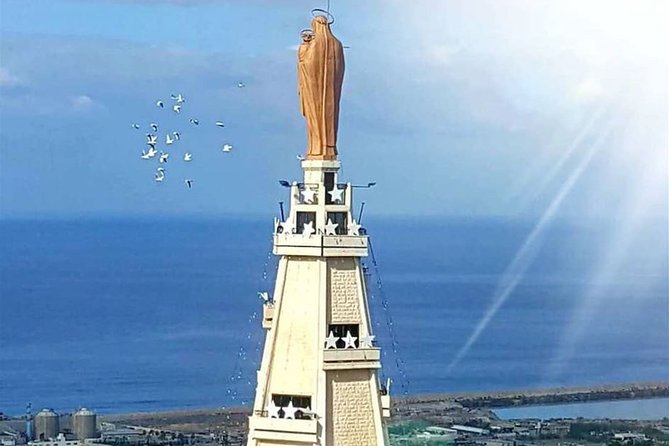
Maghdoucheh sits inland from Sidon and provides a short, quieter stop. The Basilica of Our Lady of Mantara, also called Our Lady of Awaiting, is a Melkite Greek Catholic shrine. Local tradition links its sacred cave with the place where the Virgin Mary rested while waiting for Jesus.
The site includes a tower topped by a statue of the Virgin and Child, a cathedral, a cemetery, and the cave. A young shepherd is said to have discovered the shrine on September 8, 1721. You have about 20 minutes here, so expect an overview and time for a look around rather than a lengthy religious visit.
You do not need to be religious to appreciate the stop. It adds a human and cultural dimension to a day otherwise dominated by military ruins and ancient stone. At the same time, the visit may feel less essential if your main interest is archaeology. That is part of the tour’s balance: it is not a pure ancient-history excursion.
A few more Beirut days worth weighing up
- Jeita Grotto,Harissa&Byblos Full-Day PRIVATE-CAR Trip from Beirut
★ 5.0 · 222 reviews - Private Anjar and Baalbek Tour from Beirut with Departure Ticket
★ 5.0 · 79 reviews - Guided Private Full Day Tour to Baalbek, Anjar and Chateau Ksara
★ 5.0 · 60 reviews - Semi-Private Tour to Jeita Grotto, Harissa & Byblos with Lunch
★ 5.0 · 52 reviews
Tyre: the day’s biggest archaeological reward
Tyre, or Sour, was another major Phoenician port. Its foundations date to about 2750 BC, and the city later came under Egyptian rule before prospering under King Hiram. It was associated with purple dye made from murex sea snails and with the Phoenician princess Elissar, traditionally linked to the founding of Carthage.
Tyre’s long sequence of rulers includes Assyrians, Neo-Babylonians, Greeks, Seleucids, Romans, Byzantines, Arabs, Crusaders, Mamluks, and Ottomans. You do not need to memorize that list to enjoy the place. The point is that the city’s ruins record many layers of Mediterranean power in one location.
The modern city also has a seaside setting and beaches, but this tour is built around the archaeological remains. You have about two hours in Tyre, including a separate hour at Al-Bass. That gives you a useful introduction, though you may wish for more time if you want to study every ruin.
Tyre is recognized as a UNESCO World Heritage site, and the archaeological areas explain why. The city was not simply a port with a few scattered stones. It was a major center tied to trade, engineering, public entertainment, burial customs, and imperial rule.
Al-Bass: Roman roads, tombs, and the hippodrome
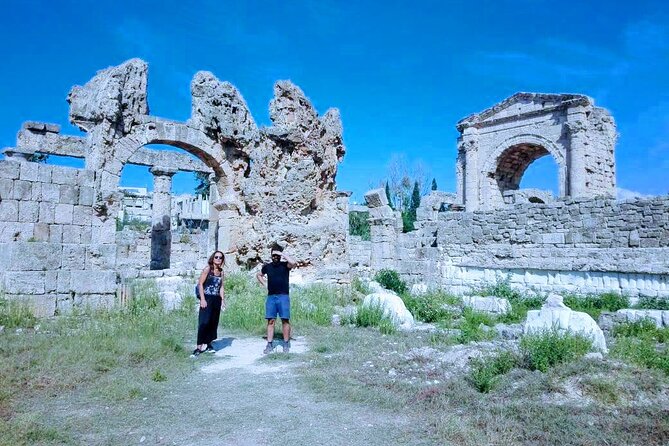
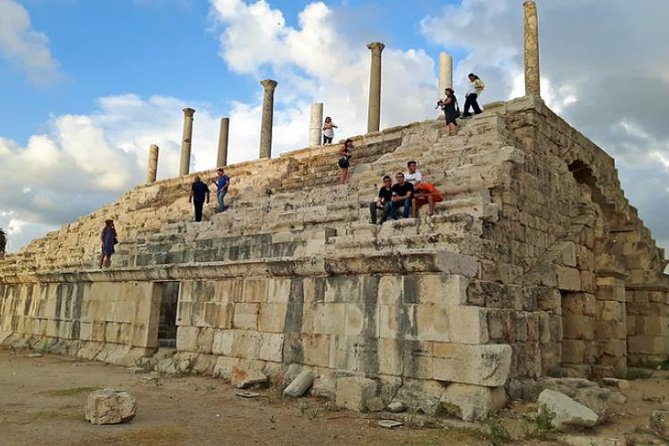
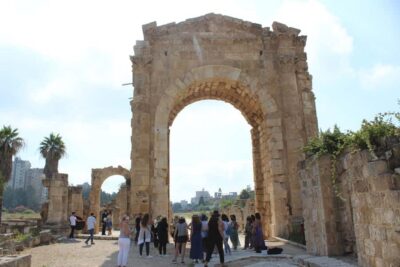
Al-Bass is the strongest stop for anyone who loves Roman archaeology. The site includes a necropolis with hundreds of preserved sarcophagi, an intact Roman road, an aqueduct, and a monumental triumphal arch from the second century AD.
The arch once marked a principal entrance into the ancient town. Walking along the causeway and road helps you understand how people approached Tyre in antiquity. The ruins are not just isolated objects. They show movement through the city, from burial grounds and formal entrances toward public buildings.
The Roman hippodrome is the highlight. It is described as one of the largest in the Roman world and one of the best-preserved examples of its kind. Stand along the track and picture the scale of the crowds that once watched chariot races. Even without a long guided lecture, the size of the structure makes its purpose clear.
Admission to Al-Bass is not included. The same applies to the Sea Castle, so keep some local currency or another accepted payment method available, though the exact payment arrangements are not specified here. Ask your guide about current entrance costs before you arrive.
The main limitation is time. One hour is enough to see the principal remains, but the site can reward a slower pace. Wear comfortable shoes, since archaeological ground may be uneven, and bring sun protection if conditions are bright. These are sensible precautions rather than special tour requirements.
The guide and the private vehicle
The quality of this experience depends on the person assigned to your group. The company has used guides and drivers named Hassane, Kamil, and Kassim on its Lebanon tours. Hassane is specifically associated with a full Sidon and Tyre day, while Kamil and Kassim have led other private routes. Your booking does not guarantee one of these individuals, so it is reasonable to ask who will accompany you.
The strongest descriptions of the service focus on punctual pickup, comfortable vehicles, polite drivers, and clear explanations of history and local context. That combination matters more than polished presentation on a day that covers several towns. A good guide can connect Tyrian purple, Phoenician shipping, Crusader warfare, Roman entertainment, and Lebanese religious traditions without making the day feel like a lecture.
The private setup also lets you ask for context that interests you. You might want more detail about the murex dye trade, the Crusades, the Roman games, or contemporary life in southern Lebanon. You can also ask about a breakfast or lunch stop. Food is not included, and one account of the day included a very good breakfast stop on the way to Sidon, while another praised the lunch. Those stops can add pleasure, but they use time that could otherwise go toward the sights.
Lunch, entrance fees, and the true price
The advertised cost is $100 per person. Included are private transportation, hotel pickup and drop-off, the tour leader, a professional guide, and an air-conditioned vehicle. Lunch is extra, as are entrance fees for the Sea Castle and Al-Bass Archaeological Site.
That makes the price easiest to assess as a transport-and-guiding package rather than an all-inclusive admission ticket. If you are nervous about driving in Lebanon, the private transfer has real value. You avoid arranging several separate rides between Beirut, Sidon, Maghdouche, and Tyre, and you have a local person handling the route.
The group discount is worth checking if you are booking for several people. Since the tour is private, the per-person figure may compare well with separate taxis, a hired car, and individual guides. If you are alone, compare the total cost with other day trips before booking.
The duration is approximately eight hours, beginning at 9:00 a.m. The timing leaves room for a substantial day but does not promise a relaxed seaside afternoon. Bring water, plan to pay for your own meal, and avoid assuming that every museum or ruin has admission included simply because the main tour price is paid.
Who should book this southern Lebanon tour?
I would choose this tour if you want to see the major historical sights south of Beirut in one day without driving yourself. It suits first-time visitors who want structure, families or small groups who prefer a private vehicle, and anyone who values a guide who can explain local context along the way.
It is also a good fit if your interests stretch beyond one period. You get Phoenician trade and mythology, Crusader architecture, Ottoman-era commercial design, Roman urban remains, traditional craft, and Christian pilgrimage in a single route.
You may want another plan if you prefer long museum visits, extensive shopping, or a slow beach day. The schedule is full, and the short stops in Khan al-Franj and the souks leave limited room for lingering. Tyre receives the most archaeological attention, while Sidon offers the strongest street atmosphere.
The tour has a 4.6 rating from nine recorded ratings, with especially strong praise for the private vehicle, balanced schedule, food stops, friendly local service, and explanations of history and current context. One caution is important: an unrelated account describes a major itinerary change on a different Baalbek tour. That does not establish a problem with this route, but it is still sensible to confirm your destinations with the company before departure.
Should you book it?
Book this day trip if you want an efficient, private introduction to Sidon and Tyre, with Maghdouche added for cultural variety. The best reason to choose it is the combination of Al-Bass’s remarkable Roman remains and the ease of door-to-door transport from Beirut.
Go in with realistic expectations. You will not have unlimited time at the ruins, lunch and admissions are extra, and the experience depends partly on the guide assigned to your group. If those conditions suit you, $100 per person can be fair value, especially for a small group that wants history without the stress of Lebanese traffic.
FAQ
What is included in the tour price?
The price includes comfortable private transportation, hotel pickup and drop-off, a tour leader, a professional guide, and an air-conditioned vehicle.
Are entrance fees included?
No. Entrance fees are not included. Admission is specifically listed as extra for the Crusaders Sea Castle and Al-Bass Archaeological Site.
Is lunch included?
No. Lunch is not included in the tour price. Food stops may be arranged during the day, but you pay for your own meal.
How long does the experience last?
The tour lasts approximately eight hours and starts at 9:00 a.m.
Is this a private tour?
Yes. Only your group participates, with a private driver and guide.
Can I cancel for a full refund?
Yes, if you cancel at least 24 hours before the local start time. Cancellations made less than 24 hours before the start time are not refunded, and changes within that period are not accepted.
Just added around Beirut
- Beirut to Sidon, Tyre and Maghdouché: Daily Tours with Lunch★ 5.0 · 3 reviews
- Exploring Beirut’s Past: A Private Guided Historical Tour★ 5.0 · 3 reviews
- Chouf Charm: Private Journey Through Lebanon’s Historic Heartland★ 4.5 · 3 reviews
- Private Trip to Beiteddine, Deir el Qamar & Maaser el Chouf Cedars★ 4.5 · 3 reviews
- Hike Chouwen★ 5.0 · 3 reviews
- Small-Group Tour with Lunch to Baalbek, Anjar and Ksara★ 5.0 · 3 reviews
- Baalbek, Anjar & Wine: A Journey Through Lebanon’s Heritage★ 5.0 · 3 reviews
- Lebanese wineries guided tour with tastings & lunch★ 4.9 · 3 reviews
Sidon & Tyre Day Trips, compared.
Small-Group Adventure Tour to Sidon Tyre & Maghdouche-Day Trip
Read our review →Sidon, Tyre & Maghdouche Day Trip – With Lunch (4G on Board)
Read our review →
Guided Small-Group Tour to Sidon, Tyre & Maghdouche with Lunch
Read our review →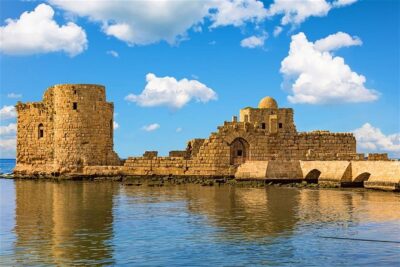
Lebanon tour Sidon & Tyre ruins with pick-up, guide,lunch+entries
Read our review →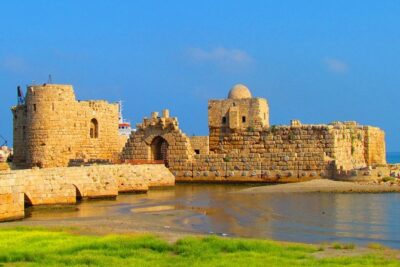
Lebanon Unveiled: Exclusive Private Tours to Sidon & Tyre
Read our review →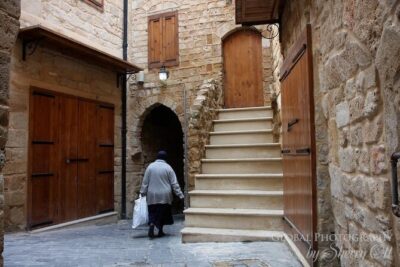
Sidon & Tyre Unesco Heritage w/pick-up, guide, entries+lunch
Read our review →Browse the lists this tour appears in