
Reviewed · QADISHA VALLEY & CEDARS TOURS
Private Trip to Qadisha Valley, Bcharri and Cedars of God
Qadisha Valley gives this day its real force: Christian monasteries and hermit caves sit among steep Lebanese mountains, far removed from Beirut’s traffic and seaside bustle. You also get the Cedars of God, one of Lebanon’s strongest national symbols, plus Bcharre and its connection to Kahlil Gibran.
I like the ease of private hotel pickup and the freedom to explore with only your own group. I also like the range of the day: fortification, monastery, forest, mountain town, and museum all fit into one route. The main drawback is time. Eight hours is enough for a strong introduction, but not enough for long walks or a slow visit at every stop.
Key points to know before booking
- Mseilha Fort adds a dramatic first stop, with stone walls built along a narrow limestone ridge beside the Nahr el-Jawz River.
- Qadisha Valley is the heart of the outing, with ancient monasteries, caves, terraces, and rugged mountain views.
- Bcharre connects nature with culture, as the hometown of Kahlil Gibran and the gateway to the cedar forest.
- The Cedars of God contains 375 trees, among the last surviving pieces of Lebanon’s old cedar forests.
- Deir Qozhaya brings you into a working monastic setting, with roots reaching back to the early centuries of Christianity.
- The $75 price covers private transport and a guide, but lunch and the Gibran Museum admission cost extra.
Why this private day trip works so well
This is not a quick city excursion with one photo stop and a long drive back. It is a full mountain day that shows you several sides of northern Lebanon. You move from a medieval-looking fort to a valley shaped by Christian religious life, then on to Bcharre, Gibran, the cedars, and another major monastery.
The private format matters here. You are not tied to strangers or a fixed group mood. You can ask questions as the road climbs, spend more time at a favorite stop when possible, and enjoy the ride with your own companions. The vehicle is air-conditioned, and pickup and drop-off at your Beirut hotel are included.
The day begins at 8:30 am and lasts about eight hours. That makes it a substantial outing, not a spare half-day add-on. The route covers several mountain sites, so much of the value comes from the changing views between stops as well as the attractions themselves.
Guides connected with this experience include Albert, Hassan, Natasha, and Kasem. Albert is noted for careful driving, good humor, and attention to practical matters such as delayed food. Natasha is described as especially caring and enthusiastic about Lebanon, while Hassan and Kasem have also led private outings. You cannot assume a particular guide unless the company confirms one, but these names give you a useful idea of the human side of the service.
More Qadisha Valley and Cedars days:
- Bcharre – Qadisha Valley & Cedars Forest From Beirut
★ 5.0 · 78 reviews - Guided Small-Group Tour to Qadisha, Bcharee & Cedars with Lunch
★ 5.0 · 39 reviews - Cedars of Lebanon, Qozhaya, & Bcharre – With Lunch (4G on Board)
★ 4.5 · 34 reviews
Mseilha Fort and the road north
Mseilha Fort is an excellent opening stop because it gives the day a clear sense of place before you reach the high mountains. Emir Fakhreddine II built the fort in the 17th century to guard the route between Tripoli and Beirut.
The fort occupies a long, narrow limestone rock near the Nahr el-Jawz River. Its walls use small sandstone blocks taken from the nearby coast and were built right along the edge of the rock. That setting is the point: the structure seems to grow out of the ridge, with the river and road below.
The supplied schedule does not give a set visit length for Mseilha Fort, so your actual time here may depend on traffic, opening conditions, and the guide’s plan. Treat it as a scenic and historical introduction rather than the main event. If you enjoy fortifications and old roads, you will want to ask your guide how this route connected Beirut and Tripoli.
Qadisha Valley, where faith meets the cliffs
Qadisha Valley is the day’s main attraction. It contains caves, monasteries, cultivated terraces, and places linked with some of the earliest Christian monastic communities in the world. The valley is not simply pretty mountain scenery. Its value comes from the way human religious life has occupied these difficult cliffs and ravines for centuries.
The setting is rugged and often feels remote. Monasteries appear among steep rock faces, and the route gives you glimpses of the caves and religious sites associated with hermits. You may not have time for a long hike into the valley during this eight-hour trip, so you should see the outing as an overview by vehicle with selected visits rather than a walking expedition.
A listed visit at Qadisha Valley is about 10 minutes, with no admission charge. That is brief, and it is the clearest reason to set your expectations carefully. The valley deserves much longer if you want to walk, study individual churches, or explore remote caves. Still, even a short stop can help you understand why this area matters and why the surrounding mountains have protected its monastic tradition.
I would use the drive to ask about the communities that lived here, the monasteries you pass, and the connection between Qadisha Valley and Deir Qozhaya later in the day. A private guide is most useful when you turn scenery into a conversation rather than simply taking photographs.
Bcharre, Lebanon’s mountain town of churches
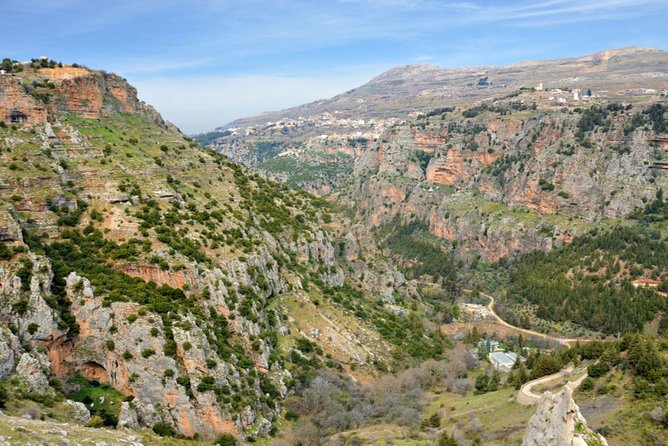
Bcharre gives the excursion a human center. The town is known as the home of the remaining original Cedars of God and as the birthplace of Kahlil Gibran, the Lebanese poet, painter, and sculptor. It is also called the city of churches, with about 37 churches.
The planned stop lasts around 30 minutes and has no admission charge. That is enough to get a feel for Bcharre and its setting, but not enough for a full town exploration. The town is also associated with Lebanon’s oldest skiing area, the Cedars Ski Resort, and the country’s first ski lift, built in 1953. If you are interested in how mountain communities use the same region for farming, worship, art, and winter sports, Bcharre offers plenty to discuss.
This is a useful pause between the valley and the museum. You are no longer looking only at cliffs and monasteries. You are seeing the town that grew beside them. Bring comfortable shoes, since even a short stop in a mountain town can involve uneven ground and slopes.
A few more Beirut days worth weighing up
- Jeita Grotto,Harissa&Byblos Full-Day PRIVATE-CAR Trip from Beirut
★ 5.0 · 222 reviews - Private Anjar and Baalbek Tour from Beirut with Departure Ticket
★ 5.0 · 79 reviews - Guided Private Full Day Tour to Baalbek, Anjar and Chateau Ksara
★ 5.0 · 60 reviews - Semi-Private Tour to Jeita Grotto, Harissa & Byblos with Lunch
★ 5.0 · 52 reviews
Kahlil Gibran Museum and the artist’s private world
The Gibran Museum occupies what was formerly the Monastery of Mar Sarkis. It is dedicated to Kahlil Gibran and holds 440 original paintings and drawings, along with his tomb, furniture, studio belongings from New York, and private manuscripts.
The scheduled visit is 30 minutes. Admission is not included, so budget for a separate ticket. The short visit means you will need to choose your focus. You can look at the art, learn about Gibran’s life, and see personal objects, but you may not have time to examine every work in detail.
I find the museum especially worthwhile if you know Gibran mainly as a writer. It places his words beside his visual art and personal story. The former monastery setting also keeps the visit tied to Bcharre and the religious culture of the surrounding valley, rather than treating the artist as an isolated figure.
Ask your guide to help you connect Gibran’s work with Lebanon before entering. That context can make a 30-minute museum visit feel much fuller. If art museums are your main reason for booking, you may wish the schedule allowed more time here.
The Cedars of God and Lebanon’s national symbol
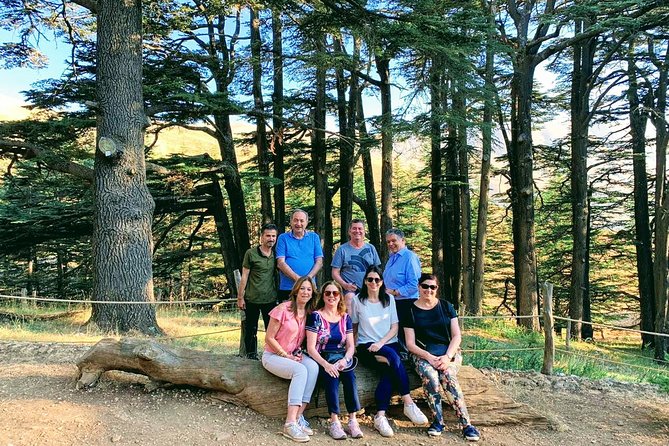
The Cedars of God forest is the most recognizable stop on the route. It contains 375 cedar trees and preserves one of the last remnants of Lebanon’s ancient cedar forests. The cedar appears on the Lebanese flag, so this is not just another wooded park. It is a direct encounter with a national emblem.
Ancient people valued cedar wood for major religious buildings and other important construction. The cedar is cited 103 times in the Bible, which helps explain its place in the religious and cultural imagination of the region.
The planned visit lasts about 45 minutes and admission is listed as free. That gives you time to walk among the trees, take photographs, and listen to the guide’s explanation. The forest is also a seasonal stop. One booking described snow still on the ground, making the cedar visit feel very different from a warm-weather outing. Conditions can change, so bring clothing suited to mountain weather rather than Beirut’s temperature.
Do not expect an endless forest. The importance here lies in the age, survival, and symbolism of the remaining trees. You are seeing a protected remnant, not a vast woodland. That makes the guide’s explanation useful, especially if you want to understand how cedar became tied to Lebanon itself.
Deir Qozhaya and the story of mountain monastic life
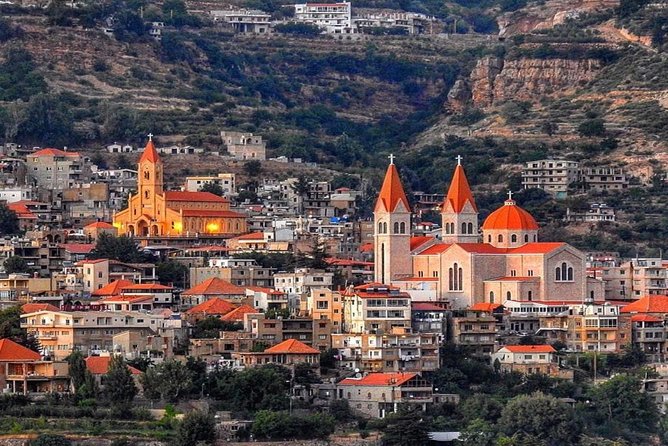
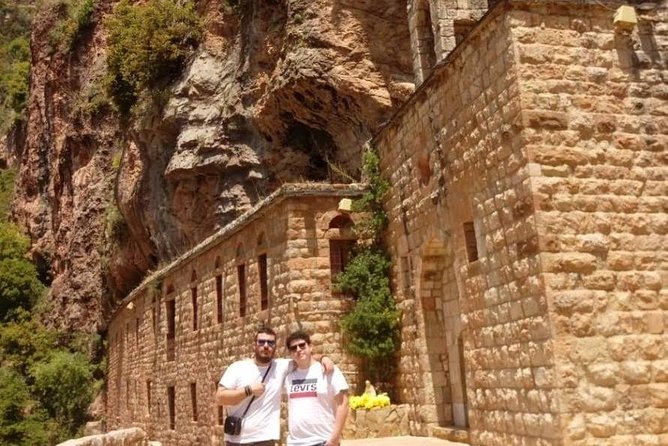
Deir Qozhaya, also known as the Monastery of Saint Anthony the Great, sits about 950 meters above sea level in the Qozhaya Valley. Pine and oak cover the surrounding hills, while fruit trees grow along the valley. The Qozhaya Valley extends toward Qannubin and forms part of the wider Qadisha area.
The monastery is thought to have been first built and occupied by hermits at the beginning of the fourth century. It was looted, burned, and destroyed several times, but remains from the seventh century still exist. Those details give the visit weight. You are not simply looking at an old religious building. You are seeing a place shaped by repeated rebuilding and long periods of eremitic life.
The planned visit lasts 30 minutes and has no admission charge. That is enough for an introduction, though the site could reward a slower visit for anyone interested in religious architecture or monastic history. The monastery also gives the valley experience a strong ending because it shows how the caves, cliffs, trees, and religious communities fit together.
I would pay attention to the contrast between the quiet monastery and the difficult terrain around it. The isolation was part of the appeal for hermits, but it also explains why the trip takes most of a day from Beirut.
What the $75 price really covers
At $75 per person, the cost is easiest to judge by group size. You are paying for a private vehicle, an air-conditioned ride, a professional guide, hotel pickup, and return transport. For a couple or small group, that can be fair value because the price buys privacy and removes the need to arrange mountain transport yourself.
The price does not include lunch or admission to the Gibran Museum. These are modest but important additions to your budget. The schedule places several stops across a long day, so plan ahead for food rather than assuming it is part of the service.
Group discounts are offered, which may improve the value for families or friends traveling together. The private setup also means you are not paying only for entrance tickets. You are paying for the vehicle, the route, the driver, the guide’s local explanation, and the convenience of starting and ending at your hotel in Beirut.
One practical point comes from the way the guides handle the day. A private tour can be flexible enough to accommodate special plans, and the company has arranged a two-day itinerary with an overnight stay in Qadisha Valley at a fair price. That does not mean this standard booking includes an overnight stay, but it suggests you can ask about a longer version if eight hours feels too short.
Who will enjoy this outing most
You should consider this tour if you want Lebanon’s mountain heritage in one day and prefer a private setting. It suits couples, families, and small groups who value hotel pickup and a guide who can explain what they are seeing.
It is particularly good for you if you want a mix of:
- Mountain scenery and short sightseeing stops
- Early Christian monasteries and hermit sites
- Lebanese history connected with roads and fortifications
- Art and literature at the Gibran Museum
- A visit to the cedar trees on the national flag
It may be less suitable if your main goal is serious hiking. The Qadisha Valley visit is listed at only 10 minutes, and the other stops are also limited. The day provides access and context, but not a long walking program.
It may also feel rushed if you want extended time in Bcharre, a detailed museum visit, or a full exploration of each monastery. If that sounds like you, ask about a customized or overnight version before booking.
Practical details for a smoother day
Your start time is 8:30 am, and hotel pickup and drop-off in Beirut are included. The vehicle is private and air-conditioned, which matters on a long route that climbs from the capital into mountain country.
Wear shoes suitable for uneven ground and bring a layer for the higher elevations. The Cedars of God and Deir Qozhaya are at mountain sites, and snow can remain in the cedar area during some visits. That does not guarantee cold conditions, but Beirut clothing may not be enough.
Keep some time and money for lunch. The meal is not included, and the tour schedule does not specify a restaurant or a fixed meal break. A private guide can often help you manage the timing, but you should still ask at the start of the day how lunch will fit into the route.
The booking includes a mobile ticket and confirmation at the time of booking. Most people can participate, but the information does not give detailed accessibility notes. If you have mobility concerns, ask the operator how much walking and uneven ground to expect at each stop.
Free cancellation is available if you cancel at least 24 hours before the 8:30 am start. Changes or cancellations made within 24 hours are not accepted for a refund.
Should you book this Qadisha Valley tour?
I would book it if you have one day from Beirut and want a broad, personal introduction to northern Lebanon. The combination of Qadisha Valley, Bcharre, Gibran, the Cedars of God, and Deir Qozhaya gives you far more variety than a simple forest visit.
The strongest reasons are the private transport, the mountain route, and the chance to ask questions throughout the day. Albert, Hassan, Natasha, and Kasem are names associated with the guiding team, and the service has shown flexibility with custom plans. Ask about your guide when you reserve, especially if a particular guiding style matters to you.
I would choose another arrangement if you want a long hike, a slow museum visit, or several hours at one monastery. In that case, ask about an overnight stay or a longer private plan. For most people with limited time, though, $75 per person is a sensible way to reach places that would be difficult to combine independently in one day.
FAQ
What is included in the $75 tour price?
The price includes hotel pickup and drop-off, private comfortable transportation, a professional guide, and an air-conditioned vehicle.
Does the tour include lunch?
No. Lunch is not included, so you should plan for the cost and timing of a meal during the day.
Is admission to the Gibran Museum included?
No. The Gibran Museum has a separate admission fee.
What time does the tour start?
The tour starts at 8:30 am and lasts about eight hours.
Is this a private group tour?
Yes. Only your own group participates in the private tour or activity.
Which places does the tour visit?
The route includes Mseilha Fort, Qadisha Valley, Bcharre, the Kahlil Gibran Museum, the Cedars of God, and Deir Qozhaya.
Can I cancel for a full refund?
Yes, if you cancel at least 24 hours before the experience start time. Cancellations or changes made less than 24 hours before the start are not accepted for a refund.
Just added around Beirut
- Beirut to Sidon, Tyre and Maghdouché: Daily Tours with Lunch★ 5.0 · 3 reviews
- Exploring Beirut’s Past: A Private Guided Historical Tour★ 5.0 · 3 reviews
- Chouf Charm: Private Journey Through Lebanon’s Historic Heartland★ 4.5 · 3 reviews
- Private Trip to Beiteddine, Deir el Qamar & Maaser el Chouf Cedars★ 4.5 · 3 reviews
- Hike Chouwen★ 5.0 · 3 reviews
- Small-Group Tour with Lunch to Baalbek, Anjar and Ksara★ 5.0 · 3 reviews
- Baalbek, Anjar & Wine: A Journey Through Lebanon’s Heritage★ 5.0 · 3 reviews
- Lebanese wineries guided tour with tastings & lunch★ 4.9 · 3 reviews
Qadisha Valley & Cedars Tours, compared.
Bcharre – Qadisha Valley & Cedars Forest From Beirut
Read our review →
Guided Small-Group Tour to Qadisha, Bcharee & Cedars with Lunch
Read our review →Cedars of Lebanon, Qozhaya, & Bcharre – With Lunch (4G on Board)
Read our review →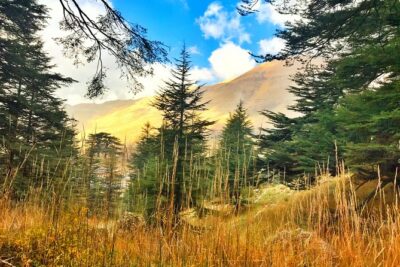
Cedars Shouf & Beiteddine w/pick-up, guide, entries+lunch
Read our review →
Guided small group to Cedars Reserve & Beiteddine w/lunch+entries
Read our review →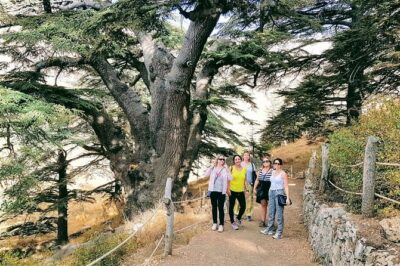
Small-Group Tour with Lunch to Qadisha Valley, Bcharre and Cedars
Read our review →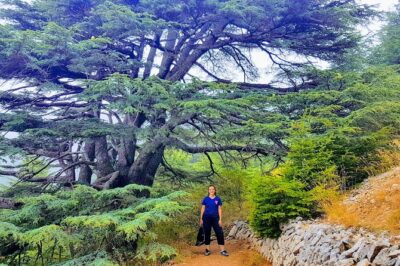
Guided Full-Day Private Trip to Cedars, Baalbek and Chateau Ksara
Read our review →Browse the lists this tour appears in