
Reviewed · QADISHA VALLEY & CEDARS TOURS
Small-Group Tour with Lunch to Qadisha Valley, Bcharre and Cedars
Qadisha Valley gives you Lebanon at its most dramatic: cliffs, caves, old monasteries, cultivated terraces, and a long Christian tradition spread through a rugged mountain gorge. This full-day trip from Beirut adds the town of Bcharre, the Gibran Museum, the Cedars of God, and the Maronite Monastery of Saint Anthony the Great, so you get nature, art, religion, and mountain culture in one outing.
I like the small group of no more than 15 and the fact that the $60 price includes lunch, entrance fees, transport, and pickup from Beirut’s city center. I also like the clear mix of stops: the Gibran Museum gives the day a personal story, while the cedar forest and Qadisha Valley supply the big views.
The main thing to consider is time. Eight hours is enough for an excellent introduction, but not enough for long hikes or a slow exploration of every monastery and village. This is a sightseeing day by vehicle, with short visits at several stops rather than a dedicated trekking trip.
Key points to know before booking
- Qadisha Valley combines nature and early Christian sites: Caves, monasteries, and old terraces fill one of Lebanon’s most striking mountain areas.
- Bcharre is the home of Kahlil Gibran: The town’s museum holds 440 original paintings and drawings, along with his personal items and manuscripts.
- The Cedars of God are a national symbol: The protected grove contains 375 trees and preserves part of Lebanon’s ancient cedar forests.
- Saint Anthony Monastery sits in the Qozhaya Valley: Its setting reaches about 950 meters above sea level and includes remains linked to early hermit life.
- The $60 fee covers the useful extras: Lunch, admission tickets, an air-conditioned vehicle, and Beirut city-center hotel pickup and drop-off are included.
- The schedule begins at 8:30 a.m.: The day lasts about eight hours, and the group is capped at 15 people.
Leaving Beirut for Mount Lebanon
The tour starts at 8:30 a.m. with pickup from your hotel or other location within Beirut’s city center. That is a practical advantage in a city where arranging separate transport can take time and patience. You do not need to find your way to a distant meeting point.
Transport is by air-conditioned vehicle with an English-speaking driver. The small-group format matters here because the trip involves several stops in mountain country. A group of up to 15 is still large enough to keep the price down, but less unwieldy than a full coach excursion.
The day lasts about eight hours. You should think of it as a broad introduction to northern Mount Lebanon rather than a walking tour. The route gives you several short visits, scenic views from the vehicle, and time to see the main cultural sites without asking you to plan every transfer yourself.
The trip’s current rating is 4.9 from 12 ratings, with a 100 percent recommendation figure. That is a small sample, so I would not treat it as a guarantee, but it does fit the strongest qualities of the experience: attractive scenery, polite service, comfortable transport, and useful background about the sights.
More Qadisha Valley and Cedars days:
- Bcharre – Qadisha Valley & Cedars Forest From Beirut
★ 5.0 · 78 reviews - Guided Small-Group Tour to Qadisha, Bcharee & Cedars with Lunch
★ 5.0 · 39 reviews - Cedars of Lebanon, Qozhaya, & Bcharre – With Lunch (4G on Board)
★ 4.5 · 34 reviews
Qadisha Valley and the roots of Christian monastic life
Qadisha Valley is the day’s main setting, even when you are visiting another named stop. Its importance comes from the way natural and religious history meet here. Caves, monasteries, and cultivated terraces are tied to an early phase of Christian monastic life, with buildings and retreats placed among steep mountain slopes.
The valley is not simply a viewpoint with a quick photo stop. It represents centuries of people seeking solitude and religious life in difficult terrain. The rough cliffs and secluded side valleys help explain why hermits and monastic communities established themselves here.
You should expect the scenery to do much of the work. The valley is rugged rather than manicured, and the road journey gives you changing views of the mountains. The tour does not promise a long hike through Qadisha, so visitors who want serious walking should treat this as an overview and plan a separate hiking day.
This is also where the tour’s short format creates a tradeoff. You get access to an important part of Lebanon without giving up a full day to one valley, but you will not have unlimited time to investigate every cave, monastery, or terrace.
Bcharre, Lebanon’s town of churches and cedar country
Bcharre is the first major town stop and a useful bridge between the cultural and natural parts of the tour. It is known as the birthplace of Kahlil Gibran, the Lebanese writer, philosopher, and artist whose work is honored in the town’s museum.
The town is also sometimes called the city of churches, with about 37 churches. That detail helps you read Bcharre as more than a base for mountain scenery. Its identity is closely tied to Maronite Christian life and the surrounding valley communities.
Bcharre has another claim to fame. It is home to the Cedars Ski Resort and Lebanon’s first ski lift, built in 1953. Snow in the Middle East may surprise you, but the mountain setting makes it entirely possible. The tour information does not promise skiing or a stop at the resort, so consider this an interesting piece of local context rather than a planned activity.
You have about 30 minutes in Bcharre, and admission is free. That gives you time to take in the town’s setting and character, but not enough for a long independent walk. If your main reason for visiting is Gibran, save your attention for the museum next.
The Gibran Museum in a former monastery
The Gibran Museum is housed in the former Monastery of Mar Sarkis. Its location gives the visit a strong sense of place, linking Gibran’s work to the town and religious setting where his story began.
Founded in 1935, the museum holds 440 original paintings and drawings. It also displays furniture and belongings from Gibran’s studio in New York, along with private manuscripts. His tomb is part of the museum complex as well.
You get about 30 minutes here, with admission included. That is enough to see the main collection if you keep moving, but art lovers may wish the schedule allowed more time. The museum is one of the day’s most specific experiences, so I would not treat it as a filler stop.
Gibran is often known through his writing, but this collection also presents him as a painter and sculptor. That wider view makes the visit worthwhile even if you arrive with only a passing interest in his books. The museum gives the mountain day a human focus after the broad views of Qadisha.
A helpful way to approach the stop is to focus on what is actually preserved: original artwork, manuscripts, studio belongings, and the tomb. You are not just looking at a display about a famous local figure. You are seeing objects connected to his working life in Lebanon and New York.
A few more Beirut days worth weighing up
- Guided Small-Group Tour to Baalbek, Anjar and Ksara with Lunch
★ 5.0 · 511 reviews - Guided Small-Group Tour to Jeita, Harissa, Byblos with Lunch
★ 5.0 · 361 reviews - Anjar, Baalbek & Ksara Day Trip – With Lunch (4G on Board)
★ 4.5 · 181 reviews - Byblos, Jeita Grotto & Harissa Day Trip -With Lunch (4G on Board)
★ 4.5 · 145 reviews
Walking among the Cedars of God
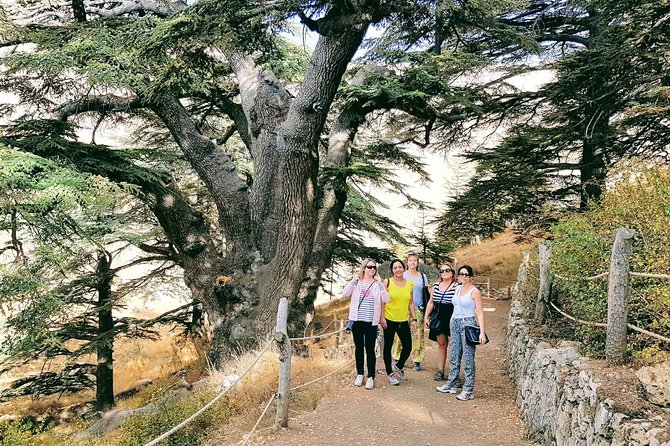
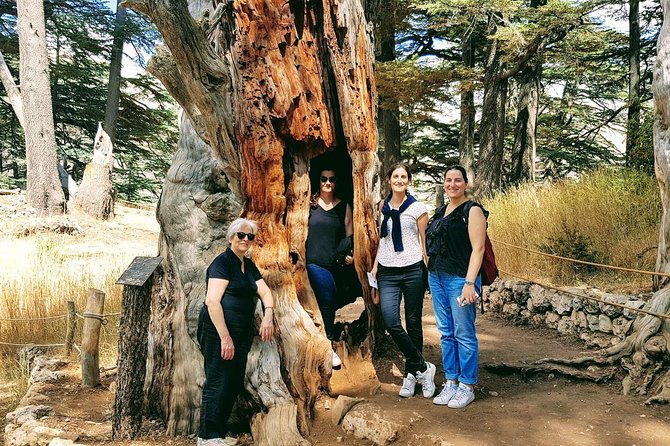
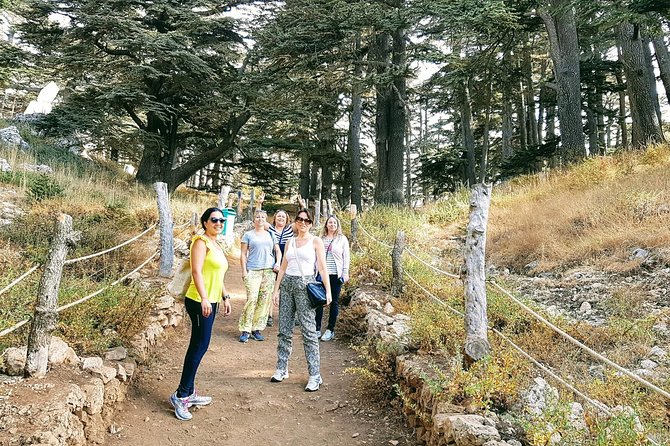
The Cedars of God are the tour’s most recognizable natural stop. The forest contains 375 trees and is described as one of the few places where Lebanon’s cedar still grows. The cedar is the country’s national symbol and appears on the Lebanese flag, so this is a chance to see a living part of an image you have encountered across Lebanon.
The trees were prized in ancient times as building material, including for major religious structures. The cedar is also cited 103 times in the Bible. Those facts give the grove meaning beyond its beauty, connecting the forest to religion, construction, trade, and national identity.
The visit lasts about 45 minutes, with admission included. That is the longest scheduled stop, which makes sense. You need time to walk among the trees, look at the trunks and branches, and take photographs without feeling rushed from the vehicle.
Do not expect a huge wilderness area. The grove is a surviving remnant of much larger ancient forests, not an endless forest trek. Its value lies in the age and scarcity of the trees, along with the chance to see Lebanon’s emblem in its natural setting.
The experience can change with the season. One of the strongest comments about the region points to snow in the middle of the Middle East, so winter conditions may give the cedars a very different appearance from a warm-season visit. The tour details do not specify seasonal operating changes, so check current conditions if snow or road access is central to your plans.
Saint Anthony Monastery in the Qozhaya Valley
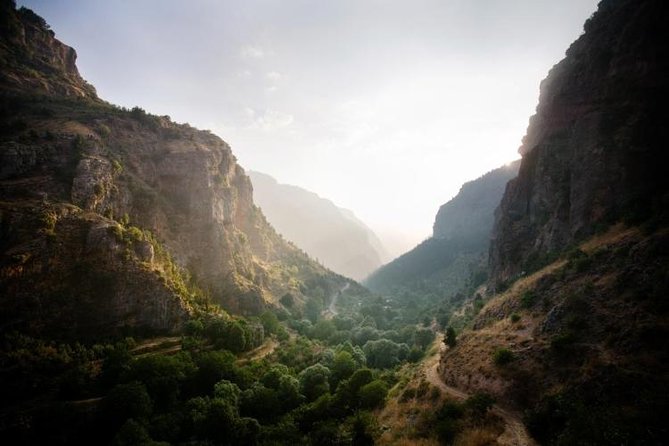
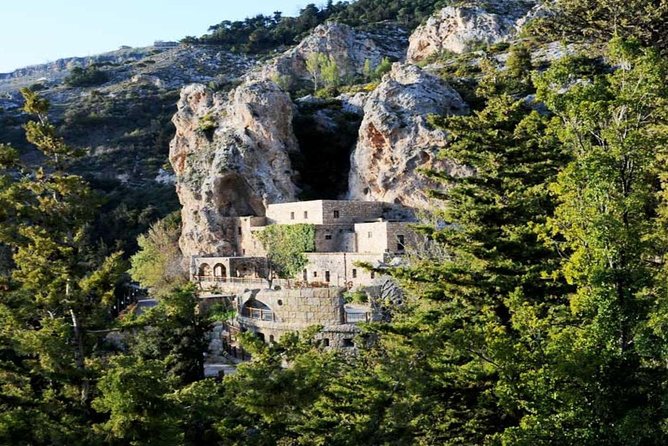
The Maronite Monastery of Saint Anthony the Great is set about 950 meters above sea level in the Qozhaya Valley. Pine and oak cover the surrounding hills, while fruit trees grow along the valley. This setting helps you understand why the area supported a long tradition of hermits and religious communities.
The monastery is linked to the wider Qadisha Valley, where the valleys of Qozhaya and Qannubin form part of the larger religious and natural area. Historians and scholars place its first construction and occupation by hermits at the beginning of the fourth century.
The site has had a rough past. It was looted, burned, and destroyed several times, yet remains dating to the seventh century still survive. That combination of damage and survival gives the monastery a weight that a newly restored building could not quite match.
You have about 30 minutes here, and admission is free. The time is enough for a focused visit and views over the surrounding valley, but not for a detailed study of every part of the complex. If monasteries are your main interest, this is another reason to consider a separate return visit to Qadisha.
The monastery also gives the tour a quieter close. After the art collection and cedar grove, you get a place where the mountain setting and religious history come together. The tour’s strongest praise centers on the views of Qadisha and the Saint Anthony Monastery, and that pairing makes sense: one gives you the broad natural setting, while the other puts human history inside it.
Lunch, transport, and the real value of $60
At $60 per person, this tour offers solid value because the price includes more than a seat in a vehicle. You receive an authentic Lebanese lunch, admission to the Gibran Museum and Cedars of God, air-conditioned transport, an English-speaking driver, and hotel pickup and drop-off within Beirut’s city center.
Lunch is described as a local-style Lebanese meal. The exact restaurant and menu are not specified, so you should not book expecting a named venue or a particular dish. Still, having lunch included makes the day easier to budget and avoids losing sightseeing time while arranging food on your own.
The included tickets matter too. Two of the four main stops have paid admission, and those costs are already handled. Bcharre and Saint Anthony Monastery do not charge an admission fee as part of the tour.
For a full day outside Beirut, the price is especially useful for visitors who would otherwise need to arrange a private car, driver, guide, lunch, and separate entry tickets. A private trip might give you more control, but this small-group option keeps the cost far lower while still providing a planned route.
The air conditioning is another practical feature. Mountain roads and a long day in a vehicle are easier when you can ride comfortably between stops. The English-speaking driver also provides background about the sights, according to the tour description and direct comments about the explanations given during the day.
Timing, group size, and what to expect at each stop
The schedule is carefully spread across four principal visits:
- Qadisha Valley provides the setting and the larger story of caves, monasteries, and terraces.
- Bcharre gives you about 30 minutes to see the town’s character.
- The Gibran Museum takes about 30 minutes and includes admission.
- The Cedars of God receives about 45 minutes and includes admission.
- Saint Anthony Monastery takes about 30 minutes, with free entry.
That leaves the remaining time for pickup, driving, lunch, and the route between sites. You should expect a full day, not eight hours of continuous sightseeing.
The small-group limit of 15 is a good middle ground. You may not get the flexibility of a private car, but you are unlikely to face the scale of a large sightseeing bus. The trip is best for you if you value a straightforward route, included services, and a guide who can explain the background while you concentrate on the scenery.
The main limitation is the number of short stops. You will see more places, but you may sometimes feel ready to stay just as the schedule moves on. That is a fair exchange for covering Bcharre, the museum, the cedars, and two major valley sites in one day.
Who should book this Mount Lebanon day trip
I would recommend this tour to a first-time visitor to Lebanon who wants to see beyond Beirut without arranging a complicated mountain itinerary. It suits you especially well if you want a blend of art, religious sites, scenery, and local food.
It is also a good choice for visitors with limited time. You can cover several important places in roughly eight hours, with transport and admission already arranged. The city-center pickup saves additional planning.
You may want something else if your priority is hiking. Qadisha Valley is a major attraction here, but the schedule does not describe long walks or extended trail time. Likewise, the Gibran Museum receives only 30 minutes, so dedicated art enthusiasts may prefer more time on their own.
Confirmation arrives at booking, and the activity is listed as suitable for most people. The group maximum is 15. Free cancellation is available if you cancel at least 24 hours before the start time. Cancellations or changes inside that window are not accepted for a refund.
Should you book the Qadisha Valley tour?
Book it if you want an efficient, good-value day from Beirut that reaches the Cedars of God and Qadisha Valley while adding Bcharre and the Gibran Museum. The included lunch, tickets, air-conditioned vehicle, and hotel pickup make the $60 price easy to justify.
Skip it only if you need a private schedule, a long hike, or a slow museum visit. For most first visits, this is a well-balanced way to meet northern Lebanon’s mountain culture, Christian heritage, cedar forests, and one of its most famous artists in a single day.
FAQ
Where does the tour start?
The tour starts with pickup at 8:30 a.m. from any location within Beirut’s city center.
How long does the experience last?
The tour lasts approximately eight hours.
What is included in the $60 price?
The price includes lunch, an air-conditioned vehicle, an English-speaking driver, hotel pickup and drop-off, admission to the included paid sites, and transportation during the tour.
How many people can join the tour?
The group can include a maximum of 15 people.
Which places does the tour visit?
The route includes Qadisha Valley, Bcharre, the Gibran Museum, the Cedars of God, and the Maronite Monastery of Saint Anthony the Great.
Is lunch included?
Yes. An authentic Lebanese lunch is included in the tour price.
Can I cancel for a full refund?
Yes. You can cancel for a full refund if you do so at least 24 hours before the experience starts. Cancellations or changes made less than 24 hours before the start time are not accepted for a refund.
Just added around Beirut
- Beirut to Sidon, Tyre and Maghdouché: Daily Tours with Lunch★ 5.0 · 3 reviews
- Exploring Beirut’s Past: A Private Guided Historical Tour★ 5.0 · 3 reviews
- Chouf Charm: Private Journey Through Lebanon’s Historic Heartland★ 4.5 · 3 reviews
- Hike Chouwen★ 5.0 · 3 reviews
- Private Trip to Beiteddine, Deir el Qamar & Maaser el Chouf Cedars★ 4.5 · 3 reviews
- Small-Group Tour with Lunch to Baalbek, Anjar and Ksara★ 5.0 · 3 reviews
- Baalbek, Anjar & Wine: A Journey Through Lebanon’s Heritage★ 5.0 · 3 reviews
- Lebanese wineries guided tour with tastings & lunch★ 4.9 · 3 reviews
Qadisha Valley & Cedars Tours, compared.
Bcharre – Qadisha Valley & Cedars Forest From Beirut
Read our review →
Guided Small-Group Tour to Qadisha, Bcharee & Cedars with Lunch
Read our review →Cedars of Lebanon, Qozhaya, & Bcharre – With Lunch (4G on Board)
Read our review →
Cedars Shouf & Beiteddine w/pick-up, guide, entries+lunch
Read our review →
Guided small group to Cedars Reserve & Beiteddine w/lunch+entries
Read our review →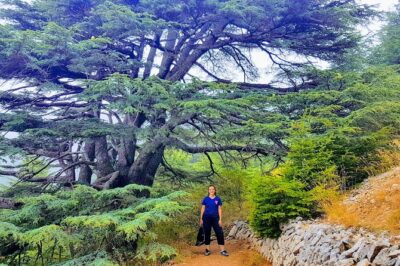
Guided Full-Day Private Trip to Cedars, Baalbek and Chateau Ksara
Read our review →
Small Group Tours to Qadisha Valley, Bcharre and Cedars with lunch and all fees
Read our review →Browse the lists this tour appears in