
Reviewed · BYBLOS TOURS
Private Full-Day Tour to Byblos and Tripoli from Beirut
Byblos and Tripoli give you two very different views of northern Lebanon in one long day. In Byblos, you move from Phoenician temples and a Crusader castle to a sea-facing port. In Tripoli, the focus shifts to Mamluk mosques, Ottoman-era khans, and working souks.
I like the private car and hotel pickup because they remove the day’s biggest nuisance: arranging transport between scattered sights. I also like the mix of major monuments and smaller places, including a hammam, a tailor’s khan, and the old soap market. The trade-off is time. Eight hours is efficient, but Tripoli deserves a slower visit, and lunch is not included.
Key points to know before booking
- Two historic cities in one day: See Byblos and Tripoli without arranging separate transport.
- Byblos has the stronger guided introduction: A local guide explains the Phoenician site while your tour leader supports the day.
- Tripoli is a city of layered architecture: Mosques, Crusader remains, Mamluk additions, Ottoman buildings, souks, and hammams appear close together.
- The private vehicle matters: Air-conditioning and door-to-door Beirut transfers make the long northern route easier.
- Budget for two extras: Entry to Byblos Castle and the Citadel of Tripoli is not included, and you must arrange lunch yourself.
- Best for history-focused visitors: The pace suits you if you want a broad look at northern Lebanon rather than a relaxed day in one town.
Why Byblos and Tripoli work as a pair
This tour links two of Lebanon’s oldest coastal cities, but they offer different moods and different historical stories. Byblos is compact, scenic, and easy to read as an archaeological site. Tripoli is larger and more urban, with its history woven into streets, religious buildings, workshops, and market lanes.
That contrast is the main reason to choose this outing. You do not spend the whole day looking at one type of ruin. Instead, you move from Bronze Age remains and a Phoenician port to medieval religious buildings and Ottoman commercial structures.
The day begins at 9:00 a.m. with pickup from your Beirut hotel. Since this is a private activity, only your group takes part. That gives you more control than a large shared coach, though the route still has a fixed shape because both cities are packed into roughly eight hours.
A tour leader accompanies you throughout the day, while a local guide provides the Byblos explanation. The information does not specify a named guide, so do not book this expecting a particular person. What you can count on is support during the day and local interpretation at the Byblos archaeological site.
More days out in Byblos:
- Guided Small-Group Tour to Jeita, Harissa, Byblos with Lunch
★ 5.0 · 361 reviews - Jeita Grotto,Harissa&Byblos Full-Day PRIVATE-CAR Trip from Beirut
★ 5.0 · 222 reviews - Jeita Grotto – Harissa – Byblos Trip
★ 5.0 · 169 reviews
Byblos: Phoenician ruins beside the sea
Byblos is the first major stop, with about two hours for the city and its historic area. Its importance reaches back to Neolithic times, and its Phoenician connections tie it to the spread of the alphabet and the wider Mediterranean world.
The most useful thing about seeing Byblos with a guide is the context. Ancient stone walls can look like disconnected fragments when you walk through them alone. Here, the temples, dwellings, port, and later fortress can be read as parts of one long coastal settlement.
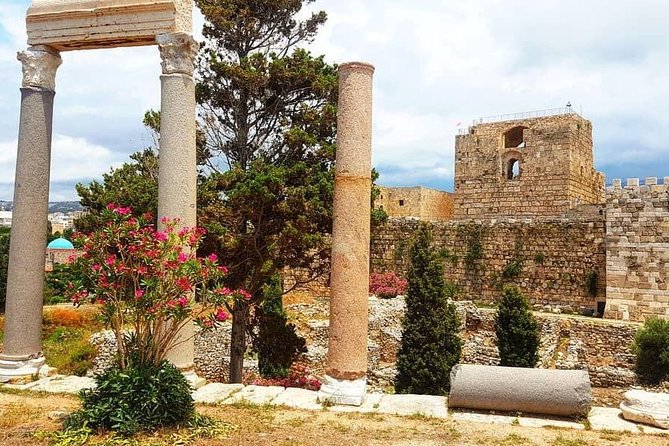
The archaeological site includes the ruins of the Temple of Baalat Gebal and the Temple of the Obelisks. Bronze Age dwellings are visible around the castle area, giving you a sense of how close daily life once was to the major religious buildings.
This is a good place to slow down for photographs, but do not expect a full archaeological excavation tour. The scheduled time is short, and the day still has a long route ahead. If ancient sites are your main reason for booking, pay close attention during the guide’s explanation and avoid spending too much time shopping before seeing the ruins.
Byblos Castle and the view from its keep
Byblos Castle takes about 30 minutes. Entry is not included, so you should allow for that extra cost when judging the $65 price.
The castle is a restored 12th-century Crusader fortress surrounded by a dry moat about 10 meters wide. Its square keep gives you a useful view across the archaeological site, toward the Bronze Age remains and out toward the sea.
That high viewpoint is what makes the castle more than another stone building. From above, the layers of Byblos become easier to understand. Phoenician temples, ancient homes, the later Crusader structure, and the coastline all occupy one compact setting.
Inside, a small museum and information panels outline the city’s past. If you prefer a large museum with extensive displays, this will feel modest. If you value a clear view and a quick historical orientation, the castle earns its place in the itinerary.
You will need sensible shoes for uneven ground and stairs. The tour data does not give specific accessibility details, so ask before booking if you have mobility concerns.
Old Souk and Byblos Port
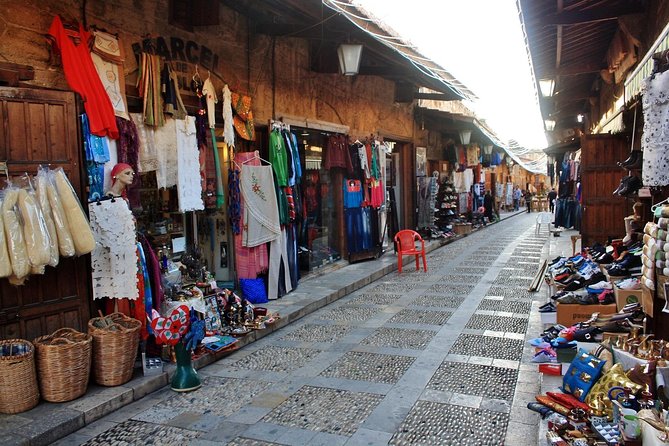
After the archaeological area, the visit moves briefly through the Old Souk. You have about 15 minutes to walk the cobblestone streets, look at the architecture, and browse souvenirs or antiques.
Fifteen minutes is enough to get your bearings, but not enough for a serious shopping session. If you see something you want, ask the tour leader how much free time remains before making a purchase. The souk is best treated as a short change of pace after the ruins, not as the main shopping stop of the day.
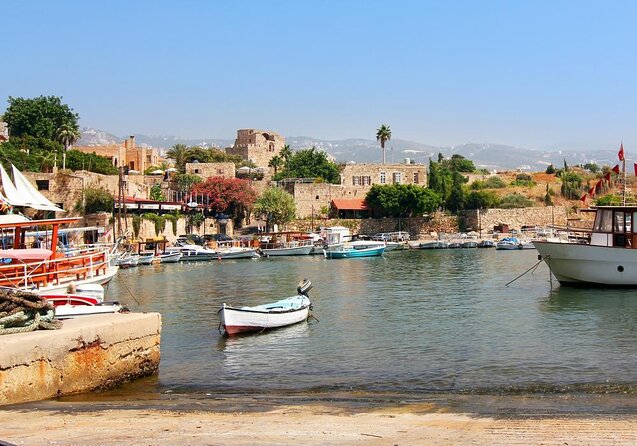
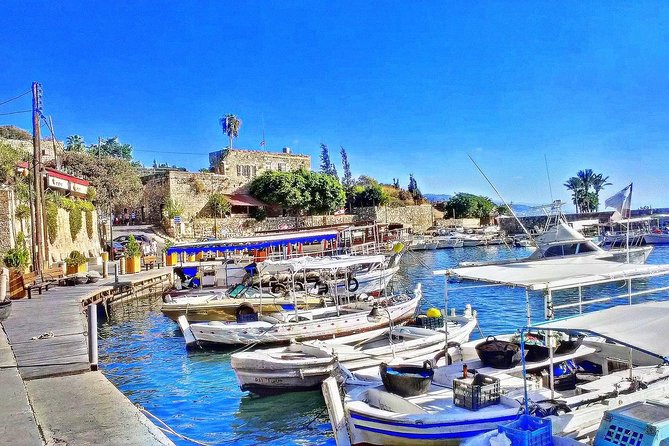
Byblos Port receives another 15 minutes. Lebanese tradition identifies it as one of the oldest ports in the world, and around 3000 BC it was an important timber shipping center in the eastern Mediterranean.
The port is scenic, but the visit is brief. You will have time to look around and connect the sea with Byblos’s Phoenician trading role. You will not have time for a long waterfront meal or an extended harbor walk.
More of the northern coast:
- Aaqoura Lakes – Baatara Waterfall – Batroun
★ 4.5 · 55 reviews - PRIVATE city Tour of authentic Tripoli and vibrant Batroun
★ 5.0 · 51 reviews - Guided Small-Group Tour to Tripoli and Batroun with Lunch
★ 5.0 · 16 reviews - Tripoli City Lebanon Trip
★ 5.0 · 7 reviews
Tripoli: a city best understood on foot
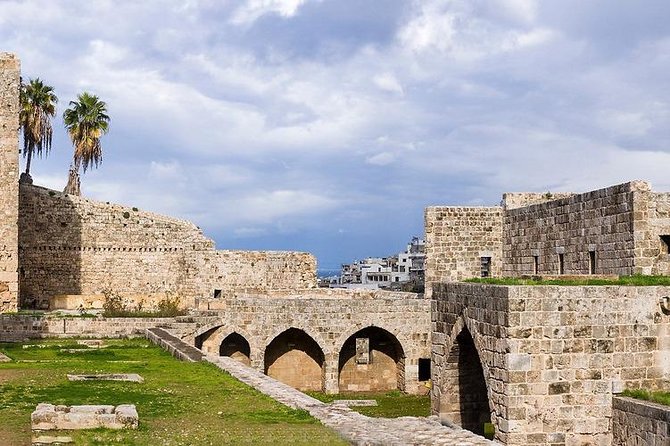
The Tripoli portion takes about three hours, making it the largest part of the day. The city dates to the Phoenician era, and its historic center contains buildings from Mamluk and Ottoman times, along with earlier Crusader elements.
Tripoli’s appeal is not one single monument. It is the way many buildings sit together: mosques, khans, baths, marketplaces, and fortress walls. Forty-five buildings are registered as historic sites, and twelve mosques from the Mamluk and Ottoman periods have survived.
This is where the tour leader becomes especially useful. Streets and buildings can be difficult to interpret without help, particularly when an older church has been converted into a mosque or when one structure contains several periods of construction.
You should expect a walking-heavy section. The listed stops are short, often only five or 15 minutes, so the aim is to see a broad range of places rather than study each one at length. The private format helps, but it cannot change the fact that Tripoli is being covered in a compressed afternoon.
Citadel Saint Gilles and Tripoli’s upper view
The Citadel of Tripoli, also called Qal’at Sinjil or Saint Gilles, receives about 30 minutes. Entry is not included.
This huge fortress measures about 140 meters long and 70 meters wide, and it has been altered many times. Its story includes an octagonal Fatimid structure, Crusader buildings from the 12th and 13th centuries, Mamluk additions from the 14th century, and Ottoman work from the 16th century.
The present form also reflects extensive restoration by Mustafa Barbar Agha, who governed Tripoli in the early 19th century. That mixture is the point. You are not looking at a single, untouched castle from one period. You are seeing a military site repeatedly adapted by different rulers.
The citadel overlooks the city, so it provides one of the best broad views of Tripoli. Give yourself time to look beyond the walls. The view helps you understand the relationship between the fortress, the old city, and the coast.
Again, admission is extra. The 30-minute visit is enough for the main view and a quick look at the structure, but not for every corner of the fortress.
Al Mansouri Great Mosque and Taynal Mosque
Al Mansouri Great Mosque was begun in 1294 and completed in 1315. It was built over the remains of the 12th-century Crusader cathedral of St. Mary of the Tower.
You have 15 minutes here. The courtyard is surrounded by a vaulted prayer hall, and parts of the earlier Western structure remain visible. The northern entrance and a Lombard-style bell tower were incorporated into the mosque, with the bell tower later serving as the minaret.
That architectural reuse gives the mosque unusual historical value. It also shows why a guide matters. Without explanation, you might simply see a mosque with an unusual tower. With context, you can notice how the building records a change in power and religious use.
The many foundation plaques and decrees also offer clues about daily life during the Mamluk period. You will not have time to read everything in 15 minutes, so focus on the visible structural details and listen for the guide’s main points.
Taynal Mosque, built in 1336, offers another example of buildings layered over earlier foundations. It occupies the site of a ruined Crusader church, and its adjoining domed mausoleum contains the founder’s tomb.
The mosque reuses two rows of granite columns with late Roman capitals in the first prayer hall. The entrance to the second prayer hall has a distinctive Mamluk decorative style. The scheduled 15 minutes is short, but the stop is worthwhile because the architectural story is so concentrated.
As with any religious site, follow the instructions given by your tour leader. The supplied information does not specify clothing rules or visiting conditions, so ask for practical guidance on the day.
Tripoli’s khans, soap, and hammam
The smaller Tripoli stops reveal the city’s commercial life. Khan Al-Khayyatin is a long rectangular building, about 40 by 80 meters, with a covered central courtyard and shops along both sides.
Its name means the tailors’ khan. Tailors and related trades, including needles, thread, and sewing machines, have worked there. You receive only five minutes, so think of this as a quick look at a living commercial building rather than a full market visit.
The Tripoli Soap Factory, known as Khan As Sabon or the Soap Khan, also receives five minutes. Built at the start of the 17th century, it was first used as a military barracks for Ottoman troops. Its location in the center of the city helped the pasha control possible uprisings.
The building has two-story arcaded corridors around a fountain courtyard. The name may suggest a simple factory tour, but the site’s architecture and original military purpose are just as important as the soap trade. Do not expect a long hands-on production demonstration based on the information provided.
Hammam Al Jadid, also called Hammam El-Abed, is described as the only functioning hammam in Tripoli. It was probably built near the end of the 17th century and has the pierced domes typical of Mamluk and Ottoman public baths.
The interior includes cushions, a central fountain, and traditional fittings. You have five minutes, so you may only get a quick look, but this stop adds something the castles and mosques cannot: a glimpse of public bathing and ordinary urban life.
El Mina Port and the end of the route
The final stop is El Mina Port, about 15 minutes from the old city. Al-Mina is the coastal town associated with modern Tripoli and occupies the location of the old Phoenician city of Tripoli.
The area includes nine islands, four of which have been declared natural reservations to support fish breeding and protect their habitat. The short stop gives you a coastal finish after a day focused on ruins, religious buildings, and market streets.
El Mina is not presented as a long beach visit or a full harbor excursion. Think of it as a final connection between ancient settlement, modern port life, and the Mediterranean coast before returning to Beirut.
What the $65 price really covers
At $65 per person, this is a strong value if you want private transport and two northern cities in one day. The price includes an air-conditioned vehicle, private transportation, a tour leader, hotel pickup and drop-off in Beirut, and a local guide in Byblos.
The private format is the key value. You avoid organizing taxis or public transport between Byblos, Tripoli, the citadel, the mosques, the souks, and the coast. For a first visit to Lebanon, that convenience can be worth as much as the sightseeing.
Two costs are outside the price. Lunch is not included, and admission to both Byblos Castle and the Citadel of Tripoli is extra. Set aside money for those entries and ask when and where lunch will fit into the route.
A useful food lead is Al Hallab 1881 in Tripoli, known for Lebanese sweets. It is not listed as a guaranteed stop, so do not assume the tour includes it. If sweets are important to you, ask the tour leader whether there is time to visit or buy something during the Tripoli portion.
The experience has a five-star rating from three published reviews, but that is a small sample. The strongest praise focuses on the helpful driver and tour guide, the easy transfers, the historic variety, the castles, and the northern Lebanese views. Those are also the areas where this tour makes its best case.
Who should book this northern Lebanon day trip?
I would choose this tour if you have limited time in Beirut and want to see more than the capital. It suits you especially well if castles, ancient ruins, mosques, markets, and historical explanation matter more than a slow lunch or long time in one town.
The private car also makes sense for couples, families, or small groups that want to stay together. Group discounts are available, though the exact price reduction is not stated. Since the activity is private, you can ask about the pace, photo stops, and the amount of time spent in shops.
I would hesitate if you dislike packed schedules or short visits. The five-minute stops in Tripoli are introductions, not full experiences. Byblos is given more room, but even there you will need to keep moving.
The tour is also a better fit for people comfortable with walking on old streets, uneven archaeological ground, and fortress surfaces. The data says most people can participate, but it does not provide detailed accessibility information.
Free cancellation is available if you cancel at least 24 hours before the 9:00 a.m. start time. Cancellations or changes within 24 hours are not refunded or accepted.
My verdict on the Byblos and Tripoli tour
Book it if you want an efficient, private introduction to northern Lebanon and you value a driver, hotel transfers, and historical guidance over free time. The combination of Byblos’s Phoenician ruins and Tripoli’s Mamluk and Ottoman center gives you a broad view of the country’s past in one day.
Skip it if your ideal day means lingering in a souk, taking a long meal, or exploring one city in depth. The route is ambitious, but that is also its strength. For $65, with transport and support included, it is a practical choice for a first northern Lebanon outing, as long as you budget for lunch and the two castle entries.
FAQ
How long is the tour?
The tour lasts approximately eight hours.
What time does the tour start?
The scheduled start time is 9:00 a.m.
Is hotel pickup included?
Yes. Hotel pickup and drop-off in Beirut are included.
Is the tour private?
Yes. Only your group participates in the activity.
What transportation is provided?
You travel in a private, air-conditioned vehicle.
Is a guide included?
A tour leader accompanies you throughout the day, and a local guide is included in Byblos.
Are entrance fees included?
No. Admission to Byblos Castle and the Citadel of Tripoli is not included. Other listed stops have no admission fee stated.
Is lunch included?
No. Lunch is not included in the price.
Can I cancel for a full refund?
Yes, if you cancel at least 24 hours before the experience start time. Cancellations within 24 hours are not refunded, and changes within that period are not accepted.
More Full-Day in Beirut
- Guided Private Full Day Tour to Baalbek, Anjar and Chateau Ksara
★ 5.0 · 60 reviews - Jeita Grotto, Byblos and Harissa Full-Day Tour from Beirut
★ 5.0 · 23 reviews - Full-Day Private Tour to Jeita Grotto, Harissa and Byblos
★ 5.0 · 20 reviews - Beirut Full Day Walking Tour
★ 5.0 · 14 reviews
Just added around Beirut
- Beirut to Sidon, Tyre and Maghdouché: Daily Tours with Lunch★ 5.0 · 3 reviews
- Exploring Beirut’s Past: A Private Guided Historical Tour★ 5.0 · 3 reviews
- Chouf Charm: Private Journey Through Lebanon’s Historic Heartland★ 4.5 · 3 reviews
- Hike Chouwen★ 5.0 · 3 reviews
- Private Trip to Beiteddine, Deir el Qamar & Maaser el Chouf Cedars★ 4.5 · 3 reviews
- Small-Group Tour with Lunch to Baalbek, Anjar and Ksara★ 5.0 · 3 reviews
- Baalbek, Anjar & Wine: A Journey Through Lebanon’s Heritage★ 5.0 · 3 reviews
- Lebanese wineries guided tour with tastings & lunch★ 4.9 · 3 reviews
Byblos Tours, compared.
Guided Small-Group Tour to Jeita, Harissa, Byblos with Lunch
Read our review →
Jeita Grotto,Harissa&Byblos Full-Day PRIVATE-CAR Trip from Beirut
Read our review →

Byblos, Jeita Grotto & Harissa Day Trip -With Lunch (4G on Board)
Read our review →
Semi-Private Tour to Jeita Grotto, Harissa & Byblos with Lunch
Read our review →
Small Group Tour to Jeita Grotto, Harisa & Byblos with Hotel pickup
Read our review →
Private Guided Tour to Jeita Grotto through Harissa and Byblos
Read our review →
New Guided Semi-Private Tour to Jeita Grotto, Harissa & Byblos
Read our review →Browse the lists this tour appears in