
Reviewed · BEITEDDINE & CHOUF TOURS
Chouf Charm: Private Journey Through Lebanon’s Historic Heartland
The best part of this day trip is its mix of grand architecture, old village streets, and mountain forest. From Beirut, you reach the Chouf region without worrying about directions, parking, or mountain roads. Beiteddine Palace gives you Lebanon on a royal scale, while Deir el Qamar brings the story down to stone lanes and village squares.
I like the private door-to-door service, especially if you want a relaxed day without joining a large group. I also like the freedom to make the journey your own. The guide on one reported outing was punctual, helpful with Lebanese history, and willing to accept requests. The main thing to consider is that this is primarily a transport-based tour, so you should not expect a fully guided museum visit at every stop.
Key points to know before you book
- A private day from Beirut: Hotel pickup and drop-off, an air-conditioned vehicle, and a private group make this an easy way to reach the Chouf.
- Beiteddine Palace takes center stage: Allow about 90 minutes for the palace and note that admission is not included.
- Deir el Qamar packs several sights into a small area: The mosque, churches, and traditional houses are close enough for a short, focused visit.
- The cedar reserve adds fresh mountain air: You get about an hour at the Al-Shouf Cedar Nature Reserve, with entry fees not included.
- The schedule is flexible in spirit: A private chauffeur can respond to your wishes, though the supplied timing gives you a clear eight-hour framework.
- Plan for lunch separately: Lunch is not included, so ask about timing or choose a place before setting out.
Why this private Chouf trip works from Beirut
The Chouf is close enough to visit in a day but different enough from Beirut to feel like a proper change of scene. The route brings together three sides of Lebanon: the courtly world of Emir Bashir Chehab II, the mixed religious story of Deir el Qamar, and the high mountain cedars tied to Lebanon’s national identity.
At $75 per person, the value depends on the size of your party. For one or two people, it buys convenience, private transport, and a full day away from the city. For a larger group, the cost can look even better because the vehicle and service are shared only by your party. You still need to budget for palace and reserve admission, plus lunch.
The tour lasts about eight hours and starts at 9:00 a.m. That gives you a full daytime outing rather than a rushed half-day transfer. Since pickup and drop-off are included, you do not need to arrange separate transport to a meeting point.
This is described as transport-only, but the inclusions also name a tour leader. That suggests you should expect help with the route and general background, while treating the palace and religious sites as places you may explore on your own. One account describes a punctual and helpful guide who explained Lebanese history and accepted requests, which is encouraging for visitors who want some context without signing up for a formal lecture.
More Beiteddine and Chouf mountain days:
- Guided small group to Cedars Reserve & Beiteddine w/lunch+entries
★ 5.0 · 12 reviews - Beirut, Beiteddine & DeirElQamar Day Trip-With Lunch(4G on Board)
★ 4.5 · 12 reviews - Cedars Shouf & Beiteddine w/pick-up, guide, entries+lunch
★ 4.7 · 12 reviews
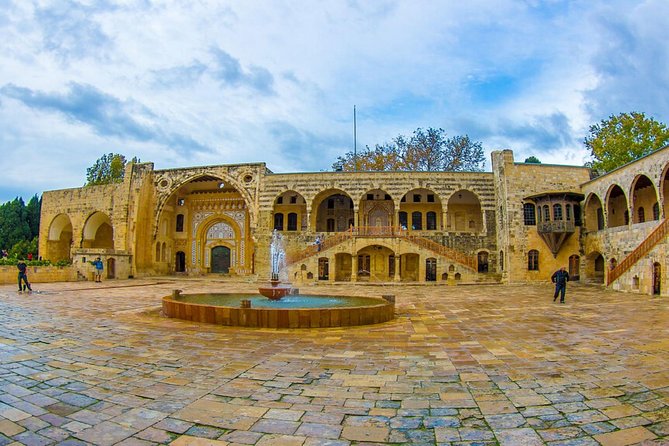
Beiteddine Palace and its 90-minute royal visit
Beiteddine Palace is the most substantial stop on the route. Emir Bashir Chehab II built it between 1788 and 1818, creating the House of Faith as a seat of power in Mount Lebanon. It is not an ancient ruin. Its importance comes from the way it shows Lebanon’s 19th-century political and architectural world.
You get about an hour and a half here, longer than at any other cultural stop. That is useful because the palace needs time. A quick walk through would give you impressive walls and courtyards, but the longer visit lets you pay attention to the building’s changing roles.
After 1840, the Ottomans used the palace as a government building. During the French Mandate, it became a local administrative office. In 1943, it was declared the official summer residence of the Lebanese president. Parts remain a presidential summer residence today, while other sections are open to the public as the Beiteddine Palace Museum.
The palace was heavily damaged during the Lebanese Civil War, so its current condition also reflects Lebanon’s modern story. That gives the visit more weight than a simple stop at a pretty old building. You are looking at a place that has served rulers, governments, and the modern Lebanese state.
Admission is not included. The tour information does not give the current entrance fee, so check it before departure and carry money suitable for the local payment arrangements. If you care most about architecture and political history, this is likely the strongest stop of the day.
Deir el Qamar, a village with several faiths in one walk
Only about five kilometers from Beiteddine Palace, Deir el Qamar makes a natural second stop. The name means Monastery of the Moon. Its narrow streets and traditional stone houses give the visit a more human scale after the formal palace.
You get about 30 minutes at the municipality area, followed by 15 minutes at Fakhreddine’s Mosque and 15 minutes at Saydet El Talle Church. That adds up to an hour of scheduled sightseeing, though the private format may make the pace feel less rigid.
Deir el Qamar was Lebanon’s first village to have a municipality, established in 1864. It is also known as the birthplace of artists, writers, and politicians. The village once had a mosque, a synagogue, and Christian churches, with people of different religious backgrounds living there. That detail matters. You are not simply seeing a preserved old town. You are seeing a place shaped by several communities.
The town was destroyed and set on fire during the 1860 civil conflict between Druze and Christians. Napoleon III sent a French contingent to help rebuild it. The rebuilt stone setting, religious buildings, and civic identity all carry traces of that difficult past.
The short time here means you should arrive ready to walk and look closely. This is not the place for a long café break or an unhurried wander unless your driver adjusts the plan. Ask the tour leader to point out the main buildings early, then use your remaining minutes for the lanes and facades that catch your eye.
Fakhreddine’s Mosque and the old religious center
Fakhreddine’s Mosque has an octagonal minaret and dates to 1493. It was restored in the 16th century by Fakhreddine I and is described as the oldest mosque in Mount Lebanon.
The scheduled visit lasts only 15 minutes, so think of this as a focused architectural stop. Its value lies in the setting and age rather than a long interior tour. The mosque helps explain why Deir el Qamar was once an important center, and it adds a Muslim landmark to a village often introduced through its Christian churches.
Admission is listed as free. The tour data does not specify opening hours, interior access, or any dress requirements, so your visit may depend on local conditions at the time. Ask your tour leader for the proper approach before entering.
More ancient sites near Beirut:
- PRIVATE Beirut Historical Walking Half Day Tour
★ 5.0 · 27 reviews - Historical Beirut Tour (AM) Half Day – (4G on Board)
★ 4.0 · 16 reviews - Temple of Eshmun – Mleeta Landmark – Beaufort Castle
★ 5.0 · 9 reviews - Guided Half-Day Private Beirut Historical Tour
★ 5.0 · 6 reviews
Saydet El Talle Church and the hilltop story
Saydet El Talle, or Our Lady of the Hill, is one of Deir el Qamar’s key religious sites. The church dates to the 15th century and was built over the remains of an older Phoenician temple dedicated to Astarte. That earlier site was later destroyed by an earthquake in 859.
The church also carries a local story linking the hill to both Druze and Christian traditions. According to the account supplied for the tour, a Druze emir saw a light coming from the hill and sent soldiers to investigate. The instructions were to build a mosque if they found an Islamic symbol, or a church if they found a Christian one.
You get 15 minutes here, so the stop is best approached as a brief look at the building and its layered religious past. The information does not promise an interior tour or a religious service, and the schedule is tight. Still, it is an effective counterpoint to Fakhreddine’s Mosque and helps you understand Deir el Qamar as a place where different traditions meet.
The Al-Shouf Cedar Reserve and Lebanon’s national tree
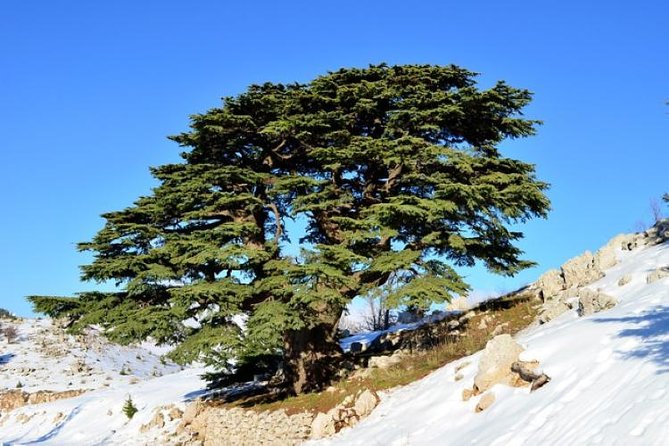
The final major stop is the Al-Shouf Cedar Nature Reserve, also called the Maaser Al Shouf Cedar Nature Reserve. It lies on the slopes of Barouk Mountain and covers about 550 square kilometers. That is nearly 5.3 percent of Lebanon’s territory and about 70 percent of its green area, making it the largest nature reserve in the Middle East according to the supplied details.
You get about an hour here. That is enough for a taste of the reserve, a walk among the cedars, and time to enjoy the mountain air, but it is not a full hiking day. The tour does not state which trail you will use or how difficult it is, so do not book this expecting a particular trek.
The reserve is part of the Al-Shouf Cedar Nature Reserve and was recognized by UNESCO as a biosphere reserve in 2005. The cedars are the emotional finish to the day. They connect the present-day visit with the cedar tree associated with Lebanon itself.
The reserve can also be the most weather-sensitive stop. The supplied information does not give seasonal conditions, trail rules, or facilities. Wear practical shoes and bring water, even though the outing is mainly by car. Entry is not included, so add that cost to your planning.
The private vehicle, timing, and pace
Private transportation is the practical reason to choose this experience. The driver handles the route from Beirut and returns you to your hotel, while you avoid the strain of finding Beiteddine, Deir el Qamar, and the reserve on your own.
An air-conditioned vehicle matters on a long summer outing. The Chouf route combines city departure, village roads, palace grounds, and mountain terrain, so having a private car keeps the day comfortable and simple.
The group is limited to your own party. That gives you room to ask for a little more time at a favorite stop or to move along when a short visit is enough. The advertised plan still has fixed estimates, so flexibility should be treated as a benefit rather than a guarantee of a completely open schedule.
The main limitation is the transport-only design. If you want detailed explanations of every room, inscription, and religious feature, confirm before booking how much commentary the tour leader provides. The available account describes helpful historical background and a willingness to accept requests, but it does not promise a specialist guide at each attraction.
Lunch, admission, and the real cost
Lunch is not included. That is a small but important detail in an eight-hour outing. You should ask when lunch will fit into the day, since the listed stops do not assign a meal break.
Palace admission and cedar reserve admission are also extra. Deir el Qamar’s listed stops have free admission, but the schedule and access rules can still vary. The $75 price therefore covers the core convenience: private pickup, private drop-off, air-conditioned transport, and tour leadership, not every expense once you arrive.
For a couple, family, or small group that values privacy, this is a fair convenience price. You are paying to reach several spread-out sights in one day without arranging a car and driver yourself. Solo visitors may find the per-person cost less attractive, especially after adding entrance fees and lunch.
Who should book the Chouf Charm journey?
I would recommend this outing to you if you have one free day in Beirut and want to see Mount Lebanon without changing hotels. It suits first-time visitors who want a broad introduction, history lovers who prefer a palace and village to a long museum day, and families or small groups that value their own vehicle.
It also works well if you want to set the pace within a clear plan. The reported guide service was punctual, helpful, and open to requests, which is exactly what you want from a private day.
I would hesitate if your main goal is serious hiking. The cedar reserve receives only about an hour, and no specific trail is promised. I would also hesitate if you need a fully guided, highly detailed interpretation at every site. This is best understood as a comfortable private route with helpful historical guidance, not an intensive specialist tour.
Cancellation is free up to 24 hours before the 9:00 a.m. start time. Changes or cancellations inside that window are not accepted for a refund. Most people can participate, and confirmation is provided when you book.
FAQ
Where does the Chouf Charm tour start?
The tour starts in Beirut, with hotel pickup offered. The scheduled start time is 9:00 a.m.
How long does the experience last?
The full private outing lasts approximately eight hours.
Is transportation private?
Yes. The tour includes comfortable private transportation in an air-conditioned vehicle, and only your group participates.
Is hotel drop-off included?
Yes. Hotel pickup and drop-off are included.
Is a guide included?
A tour leader is included. The experience is described mainly as transport-based, so confirm how much detailed guiding will be provided inside each attraction.
Is lunch included?
No. Lunch is not included in the tour price.
Are entrance tickets included?
No. Admission to Beiteddine Palace and the Al-Shouf Cedar Nature Reserve is not included. The listed Deir el Qamar stops have free admission.
How long do you spend at each main stop?
The schedule allows about 90 minutes at Beiteddine Palace, 30 minutes at the Deir el Qamar municipality area, 15 minutes at Fakhreddine’s Mosque, 15 minutes at Saydet El Talle Church, and one hour at the cedar reserve.
Can I cancel for a full refund?
Yes, if you cancel at least 24 hours before the experience start time. Cancellations or changes made less than 24 hours before the start are not refunded or accepted.
Should you book it?
Book this tour if you want an easy, private day from Beirut that combines Beiteddine Palace, Deir el Qamar, and Lebanon’s cedar country. The strongest reasons are the door-to-door transport, flexible private setting, and broad range of sights in one day.
Skip it if you want a long forest hike, a meal included, or a specialist guide at every monument. For most visitors seeking a comfortable first look at the Chouf, the $75 price is reasonable, especially when shared by a small group.
Just added around Beirut
- Beirut to Sidon, Tyre and Maghdouché: Daily Tours with Lunch★ 5.0 · 3 reviews
- Exploring Beirut’s Past: A Private Guided Historical Tour★ 5.0 · 3 reviews
- Private Trip to Beiteddine, Deir el Qamar & Maaser el Chouf Cedars★ 4.5 · 3 reviews
- Hike Chouwen★ 5.0 · 3 reviews
- Small-Group Tour with Lunch to Baalbek, Anjar and Ksara★ 5.0 · 3 reviews
- Baalbek, Anjar & Wine: A Journey Through Lebanon’s Heritage★ 5.0 · 3 reviews
- Lebanese wineries guided tour with tastings & lunch★ 4.9 · 3 reviews
- Small-Group Tour with Lunch to Jeita Grotto, Byblos and Harissa★ 4.5 · 3 reviews
Beiteddine & Chouf Tours, compared.
Cedars Shouf & Beiteddine w/pick-up, guide, entries+lunch
Read our review →
Beirut, Beiteddine & DeirElQamar Day Trip-With Lunch(4G on Board)
Read our review →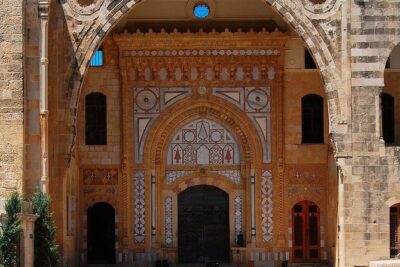
Guided small group to Cedars Reserve & Beiteddine w/lunch+entries
Read our review →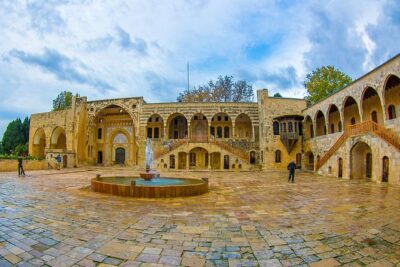
Small Group Tours to Beirut, Beiteddine & Deir el Qamar with lunch and all fees
Read our review →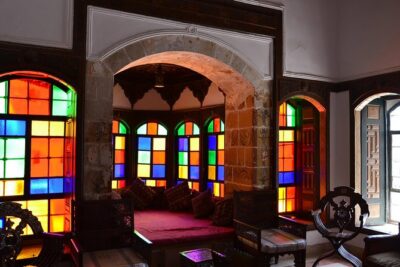
Deir el Qamar – Beiteddine Palace – Chouf Cedars From Beirut
Read our review →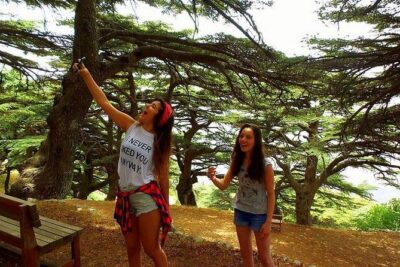
Deir Al-Qamar, Beiteddine Palace and Barouk Cedars Tour
Read our review →
PRIVATE tour to Beirut history museum, Beiteddine & Deir elQamar
Read our review →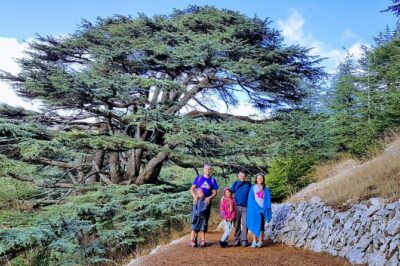
Private Trip to Beiteddine, Deir el Qamar & Maaser el Chouf Cedars
Read our review →Browse the lists this tour appears in