
Reviewed · SIDON & TYRE DAY TRIPS
Lebanon Unveiled: Exclusive Private Tours to Sidon & Tyre
Sidon’s sea castle, Tyre’s enormous Roman hippodrome, and Maghdouche’s hilltop shrine make this private day trip from Beirut a strong way to see Lebanon’s southern coast without driving yourself. The route joins Phoenician, Roman, Crusader, Ottoman, and modern religious history in one long day.
I like the door-to-door transport, especially on a nine-hour outing, and I like the mix of major ruins with ordinary places such as Sidon’s narrow souk and the old soap workshop. Guides Hassan and Georgette are specifically praised for clear, enthusiastic explanations. The drawback is pace: with three towns and several stops, you get a useful introduction rather than a slow, free-form exploration.
Key things to know before booking
- Sidon packs in the variety: sea castle, khan, soap museum, and a maze of working souks.
- Tyre’s Al-Bass site is the historical centerpiece, with a Roman triumphal arch, aqueduct, necropolis, and one of the best-preserved hippodromes of its kind.
- The tour is private, so only your group participates and the vehicle handles hotel pickup and return.
- Traditional olive oil soap is demonstrated at Sidon’s Soap Museum, inside a former factory with parts thought to date as far back as the 13th century.
- Maghdouche adds a religious stop at Our Lady of Mantara, linked to the story of Mary waiting for Jesus.
- The $75 price excludes lunch and some admission fees, so budget a little extra beyond the advertised fare.
Why this southern Lebanon route works
The appeal here is the range. In Sidon, you move from a fortress in the harbor to a covered commercial courtyard, then into a museum devoted to a trade that shaped daily life in the Levant. In Tyre, the focus shifts to large-scale Roman remains and the city’s Phoenician past. Maghdouche offers a quieter change of mood before or after the coastal stops.
You are not simply ticking off ancient ruins. You are seeing how port cities worked: ships and trade at Sidon, international commerce at Khan al-Franj, craft production at the Soap Museum, and imperial building on a grand scale at Tyre.
The private format matters most because the route covers a lot of ground. You get hotel pickup and drop-off, an air-conditioned vehicle, and a private driver rather than having to manage Lebanese roads yourself. That saves time and removes a major practical worry, while still leaving the sightseeing itself in your hands.
This is described as a transport-focused private tour, so do not expect a fully scripted group excursion with every minute filled by a guide. A tour leader is included, along with a local guide in Tyre. The strongest guide feedback concerns Hassan, an archaeologist who explains both ancient and recent history with enthusiasm. Georgette is also singled out as a friendly guide who presented the sites in an interesting way.
More trips down to Sidon and Tyre:
- Small-Group Adventure Tour to Sidon Tyre & Maghdouche-Day Trip
★ 5.0 · 45 reviews - Sidon, Tyre & Maghdouche Day Trip – With Lunch (4G on Board)
★ 4.5 · 44 reviews - Guided Small-Group Tour to Sidon, Tyre & Maghdouche with Lunch
★ 5.0 · 41 reviews
Sidon’s sea castle and Phoenician beginnings
Sidon, also called Saida, is the first major stop. It is one of the oldest Phoenician cities, founded in the 3rd millennium BC and prosperous by the 2nd millennium BC. Its wealth came in part from purple dye and glassware, and the city also appears in the New Testament story of Jesus visiting the area.
The first hour in Sidon gives you a broad look at the city rather than one tightly defined attraction. That is useful because Sidon’s importance makes more sense when you see the port, old streets, and commercial quarter together. The city changed hands repeatedly during the Crusades, suffered destruction, and was rebuilt many times, so layers of different periods are part of the experience.
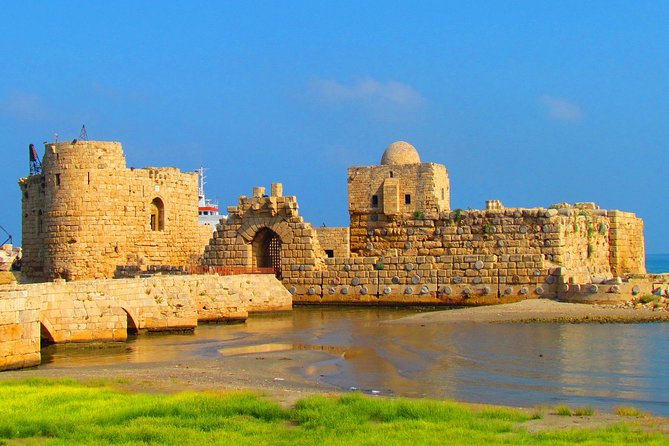
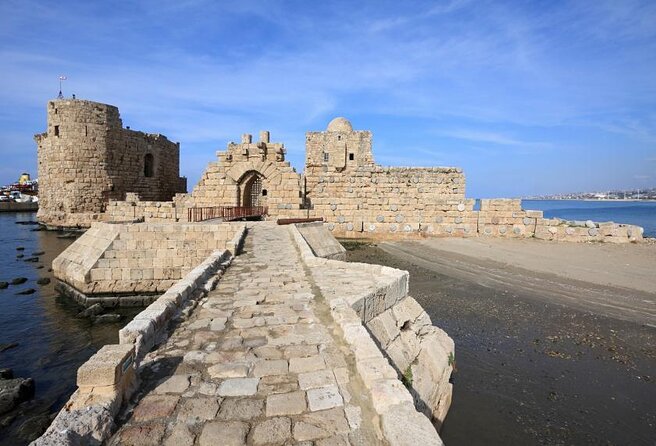
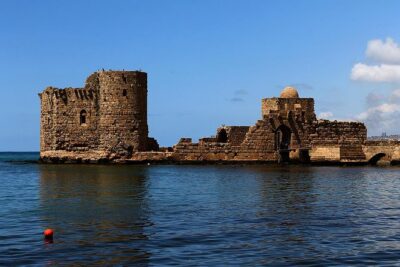
At the harbor, the Crusaders Sea Castle is the instantly recognizable sight. Built in the 13th century on a small island and joined to shore by a causeway, it served as a fortress in the Crusader Holy Land. The Mamluks destroyed much of it in 1291, and Fakhr el-Dine Maan II later restored it in the early 17th century.
Allow about 30 minutes here. Admission is not included, so check the entrance cost when you book or arrive. The castle is more evocative than complete. Old prints show a much more finished fortress, while what you see today is a partial structure with the harbor and causeway doing much of the visual work. Wear shoes suitable for uneven historic surfaces, and keep your expectations focused on atmosphere and position rather than intact interiors.
Khan al-Franj and Sidon’s commercial past
A short visit to Khan al-Franj follows. This 17th-century courtyard building was created by Emir Fakhreddine II as a hotel for ambassadors and a place for commercial exchange between Lebanon and France.
Its design is classic khan architecture: a large rectangular courtyard, a central fountain, and covered galleries around the edges. The building later served as a center for literature, religion, history, industry, and diplomacy. Fifteen minutes is not much time, but the stop works as a quick look at how trade and hospitality once operated in Sidon.
I would pay attention to the proportions of the courtyard rather than rush through it as another old building. The open center and covered walkways show how a commercial compound could also serve as a meeting point for culture and politics. Admission is free.
Soap making inside a former Sidon factory
The Soap Museum is one of the tour’s most distinctive stops. It occupies a soap factory built by the Hammoud family in the 17th century, with parts of the structure thought to date to the 13th century.
Inside, you learn how Levantine soap developed and how traditional olive oil soap is made. A demonstration gives the visit a practical edge: this is not just a display of objects behind glass. The museum also explains hammam bathing customs, linking soap production to the social life of the region.
The building itself adds interest. Excavations revealed clay pipe heads from the 17th to 19th centuries and fragments of pottery. You can expect around 30 minutes here, with admission extra. For me, this is exactly the kind of stop that improves an ancient-city tour. It shows a living craft and an everyday product, not just rulers, battles, and ruins.
A few more Beirut days worth weighing up
- Jeita Grotto,Harissa&Byblos Full-Day PRIVATE-CAR Trip from Beirut
★ 5.0 · 222 reviews - Private Anjar and Baalbek Tour from Beirut with Departure Ticket
★ 5.0 · 79 reviews - Guided Private Full Day Tour to Baalbek, Anjar and Chateau Ksara
★ 5.0 · 60 reviews - Semi-Private Tour to Jeita Grotto, Harissa & Byblos with Lunch
★ 5.0 · 52 reviews
Sidon’s narrow souks
The Sidon souks are allotted another 30 minutes. These lanes form the center of the city’s retail and craft activity, with small kiosks, cafés, street sellers, butchers, grocers, shoemakers, tailors, and jewelers.
The point is not to cover every alley. Use the time to get a feel for the maze and notice how much commercial life still fits into these narrow passages. You might find the pace more interesting than a polished museum display, but the short visit means you will need to stay aware of the meeting time.
If you want food during the day, this is one place where you may see cafés and local shops, but lunch is not included. The tour does not promise a restaurant meal, so plan to ask the tour leader how and when lunch will fit into the route.
Maghdouche and Our Lady of Mantara
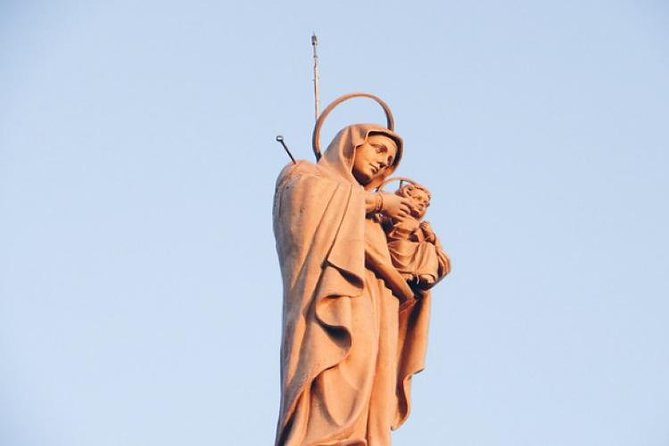
The Basilica of Our Lady of Mantara in Maghdouche provides a change from the port cities. The Melkite Greek Catholic shrine was discovered in 1721 by a young shepherd. It includes a tower topped by a statue of the Virgin and Child, a cathedral, a cemetery, and a sacred cave.
The cave is believed to be the place where Mary rested while waiting for Jesus. The stop lasts about 15 minutes and has no admission charge. It is brief, but it adds religious context to a route otherwise dominated by Phoenician, Roman, and Crusader remains.
You should treat this as an active place of worship, not merely a photo stop. The tower and statue are the main visual points, while the cave gives the site its devotional meaning. The short visit may suit you if you want variety, though anyone hoping for extended quiet time or a detailed religious tour may find it limited.
Tyre and the scale of the Roman ruins
Tyre, or Sour, is the longest-distance part of the route and one of its major rewards. The city was an ancient Phoenician port and is tied to Elissar, the Phoenician princess said to have founded Carthage. Tyre became famous for purple dye made from murex sea snails, a luxury product that helped give the city international reach.
Its foundations date to roughly 2750 BC. Egyptians, King Hiram, Assyrians, Greeks, Seleucids, Romans, Byzantines, Arabs, Crusaders, Mamluks, and Ottomans all shaped its story. That list can feel abstract until you reach the archaeological sites and see how much building material and city planning survived.
You get about an hour in Tyre itself, followed by a separate hour at Al-Bass. The town also has a seaside setting and beaches, though this is not a beach day. The route gives you an introduction to the city, not time for a full coastal break.
Al-Bass: hippodrome, triumphal arch, and necropolis
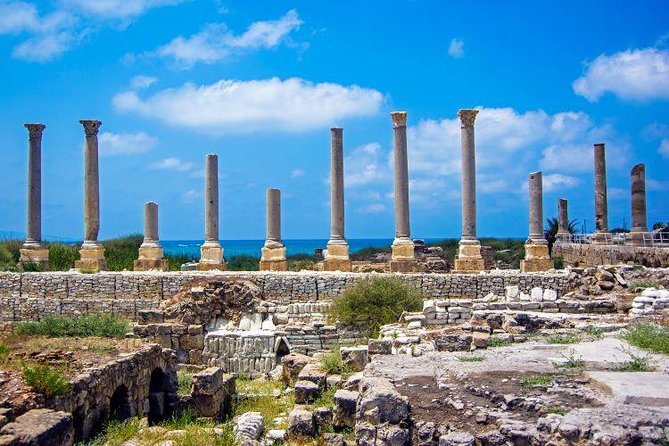
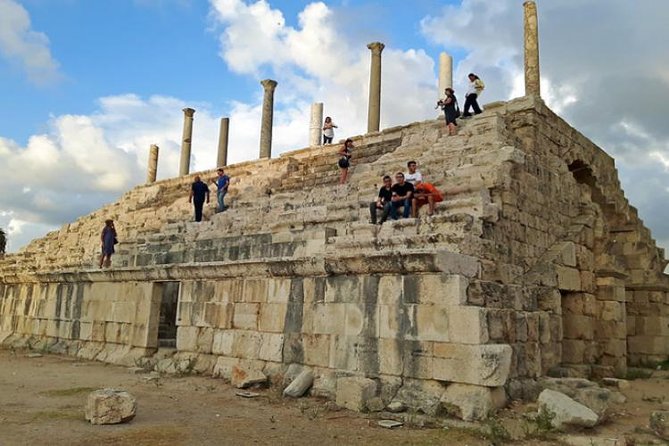
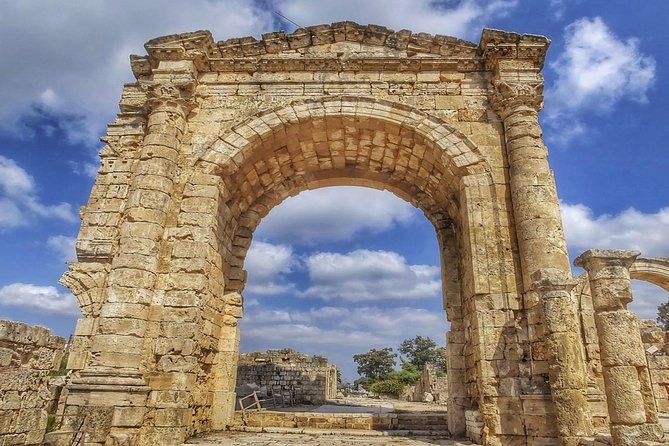
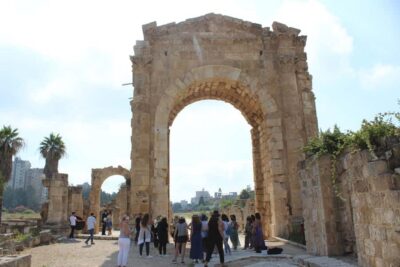
Al-Bass Archaeological Site is the tour’s biggest archaeological stop. It contains a wide monumental causeway, a Roman triumphal arch dating from the 2nd century AD, an aqueduct, an ancient road, a necropolis, and a vast hippodrome.
The hippodrome is the star. It is described as the largest and best-preserved Roman hippodrome of its type, and its scale helps you picture public entertainment in the Roman world far better than a small fragment would. The necropolis contains hundreds of well-preserved sarcophagi, while the intact road and aqueduct show the practical infrastructure behind the grand monuments.
Admission is not included. Give yourself the full hour and listen closely to the local Tyre guide, since the site covers a broad area and the remains can be hard to read without context. The open archaeological setting may also mean sun exposure, so a hat, water, and comfortable footwear are sensible.
This is where the guide quality matters most. Hassan’s background as an archaeologist is especially well suited to a place where you need help connecting scattered stones, roads, tombs, and public buildings into a working ancient city.
Tyre’s old souk and a practical food stop
The final stop is Tyre’s Old Souk Heritage Square. Small shops sell gold, copper, vegetables, fish, meat, clothes, and antiques. The area also has popular stops for sandwiches, foul, and hummus.
Only 15 minutes is scheduled here, so think of it as a quick look and perhaps a chance to identify a snack rather than a long shopping session. It is a useful ending because it brings you back from monumental Roman remains to the ordinary business of a port town.
Lunch remains your responsibility. Since no meal is included, ask about the timing before the day begins. The souk may offer food options, but the tour information does not promise that lunch will happen there.
Is $75 a fair price?
At $75 per person, the value depends on how many people are in your private group. The fare includes hotel pickup and drop-off, a private air-conditioned vehicle, a driver, a tour leader, and a local guide in Tyre. For a nine-hour route between Beirut, Sidon, Maghdouche, and Tyre, that combination can be sensible if you would otherwise need to arrange several transfers.
The price does not include lunch or admission at the Crusaders Sea Castle, Soap Museum, and Al-Bass Archaeological Site. Those extras are worth confirming before departure. The private setup also means the cost is easier to justify for a small group that wants its own vehicle and schedule, while solo visitors may compare it against shared transport options.
The main value is convenience with historical depth. You get major sites, local commercial quarters, and a religious shrine in one day without having to navigate the roads yourself. The tradeoff is that the schedule is full, and you may have limited time for spontaneous wandering.
Who should book this day trip?
I would recommend it to you if you are based in Beirut, want to see southern Lebanon in one day, and prefer a private car to independent road travel. It suits history-minded visitors who want both major archaeological sites and smaller cultural stops.
It is also a good fit for couples, families, or friends who value a vehicle reserved for their group. The private format allows a more personal experience than a large coach, though the published details do not promise unlimited flexibility at every stop.
You may want another plan if your priority is a relaxed beach day, long shopping sessions, or extended time at one archaeological site. This route covers a lot. Its strength is range, not slow travel.
Cancellation is free if you cancel at least 24 hours before the 9:00 am start. Changes or cancellations inside that window are not accepted for a refund. Most people can participate, and the activity is private, with only your group taking part.
Should you book it?
Book this tour if you want the practical ease of private transport and a strong first look at Sidon and Tyre. The best parts are the unusual mix of a working souk, an old soap factory, a Crusader sea fortress, and the Roman remains at Al-Bass. Ask who will guide your group, especially if Hassan or Georgette is available, since the historical explanation is an important part of the day.
Skip it if you want to set your own slow pace or spend most of the day at the coast. At $75, it offers solid value for a private nine-hour route, but you should allow extra money for lunch and entry fees.
FAQ
What cities does the tour visit?
The tour visits Sidon, Tyre, and Maghdoucheh. Stops include Sidon’s sea castle, khan, Soap Museum, and souks, Tyre’s town and Al-Bass Archaeological Site, and Our Lady of Mantara in Maghdoucheh.
How long does the experience last?
The experience lasts approximately nine hours. It starts at 9:00 am.
Is hotel pickup and drop-off included?
Yes. Hotel pickup and drop-off are included in the tour.
Is the tour private?
Yes. This is a private activity, so only your group participates.
What type of transportation is provided?
Transportation is provided in a comfortable, air-conditioned private vehicle with a private driver.
Are admission fees included?
No. Admission is not included for the Crusaders Sea Castle, Soap Museum, or Al-Bass Archaeological Site. The listed stops in Sidon, Khan al-Franj, Sidon’s souks, Our Lady of Mantara, and Tyre have no admission charge listed.
Is lunch included?
No. Lunch is not included.
Can I cancel for a full refund?
Yes, if you cancel at least 24 hours before the experience’s start time. Cancellations made less than 24 hours before the start time are not refunded, and changes within that period are not accepted.
Just added around Beirut
- Beirut to Sidon, Tyre and Maghdouché: Daily Tours with Lunch★ 5.0 · 3 reviews
- Exploring Beirut’s Past: A Private Guided Historical Tour★ 5.0 · 3 reviews
- Chouf Charm: Private Journey Through Lebanon’s Historic Heartland★ 4.5 · 3 reviews
- Hike Chouwen★ 5.0 · 3 reviews
- Private Trip to Beiteddine, Deir el Qamar & Maaser el Chouf Cedars★ 4.5 · 3 reviews
- Small-Group Tour with Lunch to Baalbek, Anjar and Ksara★ 5.0 · 3 reviews
- Lebanese wineries guided tour with tastings & lunch★ 4.9 · 3 reviews
- Baalbek, Anjar & Wine: A Journey Through Lebanon’s Heritage★ 5.0 · 3 reviews
Sidon & Tyre Day Trips, compared.
Small-Group Adventure Tour to Sidon Tyre & Maghdouche-Day Trip
Read our review →Sidon, Tyre & Maghdouche Day Trip – With Lunch (4G on Board)
Read our review →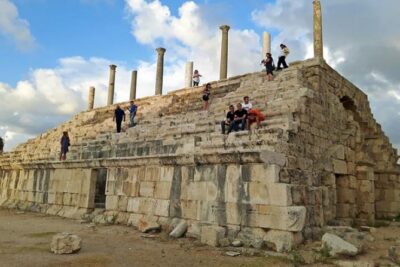
Guided Small-Group Tour to Sidon, Tyre & Maghdouche with Lunch
Read our review →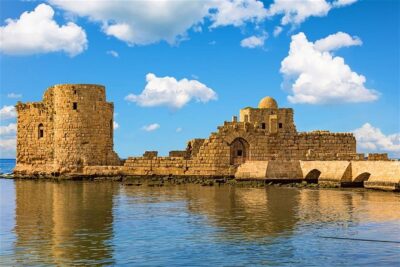
Private Guided Tour to Sidon, Tyre and Maghdouche from Beirut
Read our review →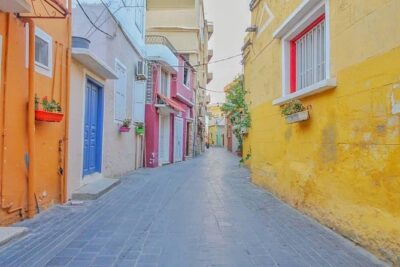
Lebanon tour Sidon & Tyre ruins with pick-up, guide,lunch+entries
Read our review →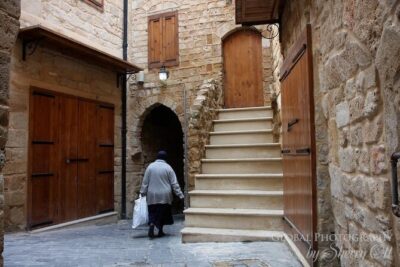
Sidon & Tyre Unesco Heritage w/pick-up, guide, entries+lunch
Read our review →Browse the lists this tour appears in