
Reviewed · WINE TOURS
Wine Tasting and Culture
Baalbek and Lebanese wine make an excellent one-day pairing. You spend the morning among some of the Roman world’s grandest ruins, then head through the Bekaa Valley for tastings at two working wineries. The contrast is the point: ancient stone, fertile soil, and a modern Lebanese wine industry in one long but rewarding day.
I like the private transport and hotel pickup, since Beirut traffic and the road into the Bekaa Valley are easier to handle with a dedicated vehicle. I also like the chance to visit both Château Ksara and Château St Thomas, giving you more than one view of Lebanese winemaking. The main drawback is the pace: eight hours is a full day, and lunch is not included.
Key points to know before booking
- Baalbek is the main event: Allow about three hours for the town, temple complex, and Stone of the Pregnant Woman.
- The Roman ruins are enormous: The Temple of Bacchus and Temple of Jupiter show Imperial Rome on a truly monumental scale.
- Two wineries provide contrast: Château Ksara dates to 1857, while Château St Thomas began in 1990.
- Hassan and Hassane are named guides: Hassan is noted for useful explanations and courteous help, while Hassane is also praised for attentive service.
- The $100 price covers the framework of the day: Private transportation, hotel pickup and drop-off, a tour leader, and a professional guide are included.
- Plan for lunch separately: Food is not included, so ask about the lunch stop and bring money for the meal.
Why Baalbek and wine work so well together
Many day trips from Beirut ask you to choose between ancient monuments and food or drink. This one combines all three. Baalbek gives the day its historical weight, while the two winery visits make the outing more relaxed and sensory.
You begin at about 8:30 a.m. and spend much of the day on the road or at major sites. That may sound long, but the private vehicle makes the schedule more manageable. You are not tied to a large group, and only your own party participates.
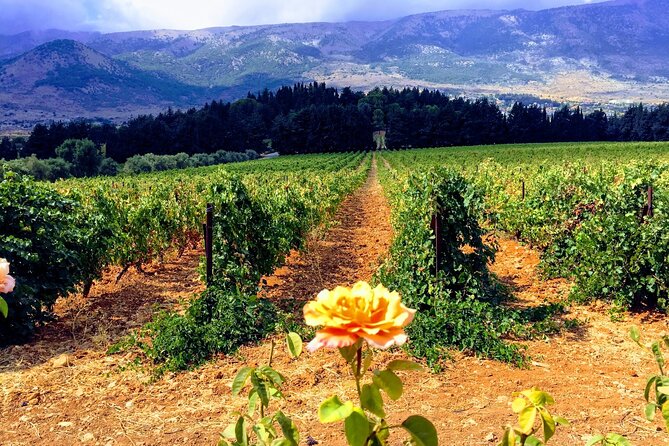
The route leads from Beirut toward the Bekaa Valley, an important agricultural area between mountain ranges. The tour description points to the fertility of the soil as one reason local wineries can produce quality wine. You do not need to be a wine expert to enjoy this setting. The visit works just as well for anyone curious about Lebanon’s food and drink traditions.
The price is $100 per person. That is not a budget city walk, but it can be fair value if you want a full private day with transport from Beirut. A separate driver, car, guide, and visits to Baalbek and two wineries would be difficult to arrange for less once you add fuel, parking, and planning. The value drops if you are not interested in either Roman archaeology or wine, since both are central to the day.
More Beirut wineries worth an afternoon:
- Lebanon Wine Tasting Tour From Beirut
★ 4.5 · 25 reviews - PRIVATE Tour of Baalbek Temples, Umayyad Anjar & Ksara Winery
★ 5.0 · 12 reviews - Anjar, Baalbek & Ksara Winery
★ 5.0 · 11 reviews
Seeing Baalbek’s Roman giants
Baalbek was known as Heliopolis during the Hellenistic period and had already served as a religious center before the Roman period. Under Rome, the sanctuary drew pilgrims to a trio of deities linked with Jupiter, Venus, and Bacchus.
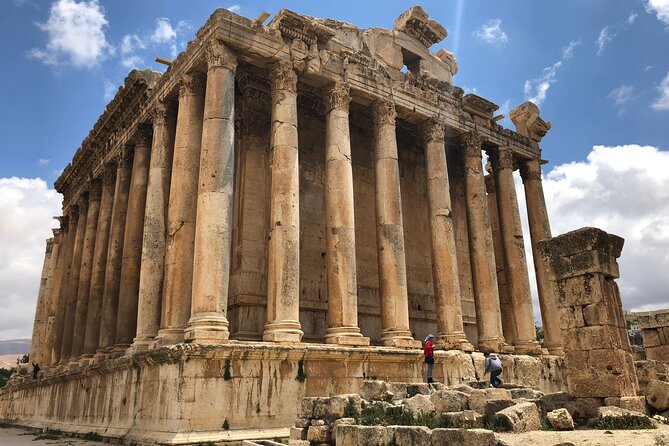
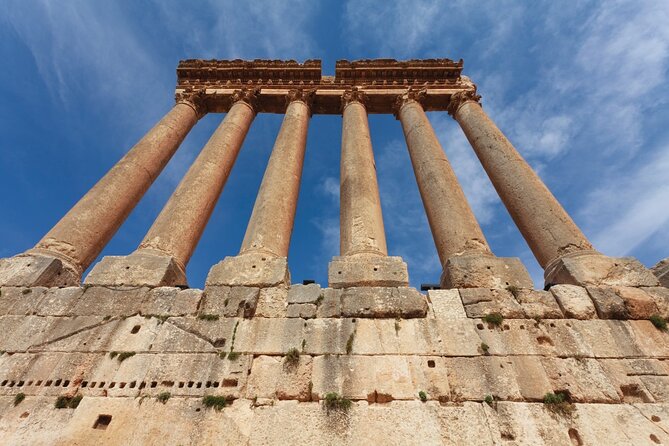
The scale is what makes Baalbek so memorable. The site contains two of the largest and grandest Roman temple ruins, the Temple of Jupiter and the Temple of Bacchus. Colossal foundations and massive columns help you grasp the ambition of the builders better than a museum display ever could.
You have roughly one and a half hours at Baalbek itself, followed by another hour and a half focused on the temples. The timing suggests a substantial visit rather than a quick photo stop. You should wear comfortable shoes and expect time spent walking across an open archaeological site.
The Temple of Bacchus is especially striking because much of its structure remains recognizable. Despite its name, the temple was part of the larger Heliopolitan sanctuary and should be understood within the wider religious complex. The Temple of Jupiter, meanwhile, gives you the strongest sense of the site’s former scale.
The admission details matter. The Baalbek town stop is listed with free admission, but admission to the temple complex is not included. Confirm the current entrance fee before departure and keep local currency or a suitable payment method available. The tour includes a professional guide, but the site ticket is your responsibility.
A local guide can make a major difference here. The ruins are impressive on their own, yet the religious connections, Roman building program, and Phoenician roots can blur together without explanation. Hassan is specifically praised for giving extensive information, and the Baalbek guide is described as very well informed. Ask questions as you walk rather than saving them all for the end.
The Stone of the Pregnant Woman
The short stop at the Stone of the Pregnant Woman lasts about 15 minutes. It is a compact visit, but it adds an engineering puzzle to the temples.
The stone is a worked Roman monolith, one of two enormous blocks quarried near Baalbek. The blocks were probably intended for the nearby temple complex. Their size reflects the same taste for monumental construction that you see in the sanctuary itself.
Do not expect a long guided visit here. Fifteen minutes is enough to see the stone, hear its purpose, and take photographs. The stop also breaks up the larger temple visit before the route turns toward wine.
The unusual name often grabs attention, but the more useful question is how ancient builders planned to move and place such a block. Since the tour provides only limited time, listen closely to the explanation and use the stop as a quick extension of your Baalbek visit.
Château Ksara and Lebanon’s oldest winery tradition
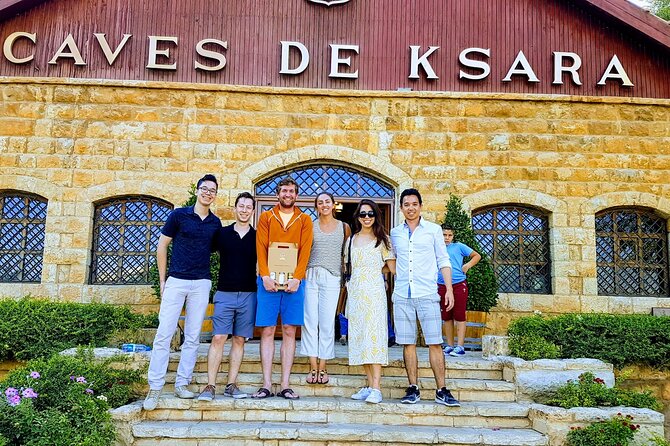
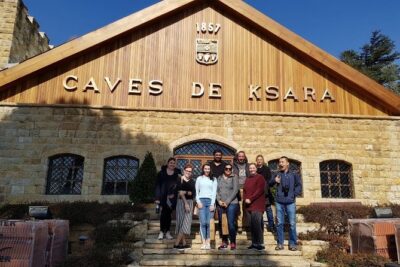
Château Ksara was founded in 1857 by Jesuit priests and developed Lebanon’s first dry wine. It now produces about three million bottles each year, with exports to more than 40 countries.
Those figures give you useful context before tasting. This is not a small experimental cellar with a handful of bottles. Ksara is a major Lebanese producer with a long commercial history and an international reach.
The schedule lists only one minute for Château Ksara, and admission is not included. That timing is likely a planning placeholder rather than a meaningful winery tour, so confirm exactly what your visit includes before booking. The supplied details do not promise a specific cellar tour, tasting length, or number of pours at Ksara.
That uncertainty is the one part of the wine section I would clarify in advance. Ask whether the one-minute listing means a photo stop, a brief arrival point, or a longer tasting recorded incorrectly. You should also ask if tasting fees are included in the $100 price. The tour clearly includes visits to two wineries, but it does not explicitly say that winery admission or tasting charges are covered.
Even with that caveat, Ksara adds important historical context. Its founding date connects modern Lebanese wine to the work of Jesuit priests and to a tradition that has continued for more than a century and a half.
More Beirut food tours:
- PRIVATE Wine Tasting Tour to the Bekaa Valey Fabulous Wineries
★ 5.0 · 7 reviews - Full-Day Private Wine Tasting Tour
★ 5.0 · 6 reviews - Beirut Street Food Tour, Lebanon
★ 5.0 · 3 reviews
Château St Thomas in the Bekaa Valley
Château St Thomas offers a younger contrast. The winery was established in 1990 on a hill overlooking the Bekaa Valley and makes wine from vineyards in fertile local soil.
The visit is scheduled for about one hour. That gives you more room for a proper explanation and tasting than the published timing at Ksara. The tour description emphasizes the scientific process of making and tasting wine, and Kefraya is specifically praised for explaining that process clearly. Note that the winery listed in the route is Château St Thomas, while the praise names Kefraya, so confirm which wine professional will lead your tasting.
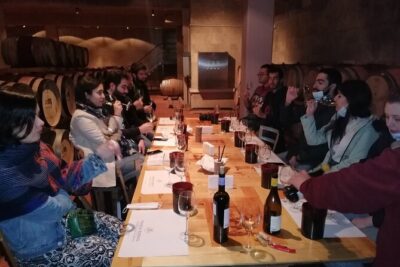
A good tasting is not only about deciding which glass you prefer. You can learn how grapes, fermentation, storage, and tasting technique affect the final wine. If you are new to wine, ask for plain explanations. If you already know your way around a tasting room, ask about grape varieties, aging, and the connection between the Bekaa soil and the finished bottle.
The tour promises different kinds of Lebanese wine, but it does not list the exact bottles or varieties. That is normal for a winery visit, since selections can change. If you have allergies, dietary concerns, or simply prefer a smaller tasting, raise that with the operator before the day begins.
The lunch question and the shape of the day
Lunch is not included in the $100 price. One account of the experience describes a good lunch stop, but no restaurant, meal cost, or menu is specified. You should budget separately and ask the guide where the meal will take place.
This is not a minor detail. Baalbek, the Stone of the Pregnant Woman, and two wineries make for a full day, and the start time is early. Bring water and a small snack in case the schedule shifts, but do not assume food is provided in the vehicle.
The private format gives you a useful advantage at lunch. You can ask Hassan or Hassane about timing, local dishes, and how long to stay. Still, the tour is not advertised as a food tour, so the meal should be treated as a practical pause rather than a central feature.
Transport, guiding, and group size
Air-conditioned private transportation is included, along with hotel pickup and drop-off. That is valuable for this route because Baalbek and the Bekaa Valley are outside Beirut, and the day involves several separate stops.
You also receive a tour leader and professional guide. The names Hassan and Hassane appear in the service details. Hassan is praised for being helpful and for giving a large amount of information, while Hassane is described as courteous and helpful. Kefraya is noted for explaining the wine-making and tasting process.
Because this is a private activity, only your group participates. That makes it easier to ask questions, adjust the pace within reason, and discuss wine without feeling rushed by strangers. It does not turn the day into a leisurely custom itinerary, however. The advertised duration is still about eight hours, and the fixed stops require a fairly early start.
Most people can participate, according to the practical details supplied for the tour. The experience is also near public transportation, though hotel pickup is offered, making that option more useful for most visitors staying in Beirut.
Who will get the most from this tour
I would choose this outing if you want one day that combines Lebanon’s ancient monuments with a look at its modern wine industry. It suits couples, families with older children, and small groups who prefer a private vehicle to a scheduled coach.
It is also a good fit for people who want historical context rather than a simple sightseeing transfer. Baalbek is too important to rush through without explanation, and the guide’s role is a real part of the experience.
Wine enthusiasts should book only after confirming the tasting details at both wineries. The route includes Château Ksara and Château St Thomas, but the information does not specify tasting fees, exact pours, or how long you will spend at Ksara. Those details can affect the value for you.
I would be more cautious if you dislike long days, have limited mobility, or want a slow wine-country visit. The itinerary contains several stops, a morning departure, and substantial travel from Beirut. The supplied information says most people can participate, but it does not provide detailed accessibility information for the ruins, winery buildings, or vehicle.
Booking details that matter
The tour costs $100 per person and offers group discounts. Pickup is offered from hotels, and you receive a mobile ticket after booking. Confirmation is provided at the time of booking.
Free cancellation is available if you cancel at least 24 hours before the local start time. Cancellation within 24 hours is not refundable, and changes inside that period are not accepted. Since this is a full-day private booking, check your plans before the cutoff.
I would contact Lebanon Tours & Travels before paying to confirm four points: the current Baalbek entrance fee, winery tasting charges, the lunch plan, and what the brief Château Ksara timing means. These questions are especially important because the advertised price excludes lunch and lists admission as not included at the temples and wineries.
Should you book this Baalbek and wine tour?
Book it if you want a private, well-filled day that joins Lebanon’s most imposing Roman ruins with two winery visits. The included vehicle, hotel pickup, and guide make the $100 price reasonable for a small group, especially if you value comfort and clear explanations.
Before booking, confirm the tasting arrangements and lunch cost. If you do that, this tour offers a strong mix of archaeology, local wine, and practical transport, with Hassan or Hassane helping connect the separate parts of the day.
FAQ
Where does the tour begin?
The tour begins in Beirut with hotel pickup. The scheduled start time is 8:30 a.m.
How long does the experience last?
The full experience lasts approximately eight hours.
Is transportation included?
Yes. The tour includes an air-conditioned vehicle, private transportation, hotel pickup, and hotel drop-off.
Is this a private tour?
Yes. Only your group participates in the activity.
What is the price?
The listed price is $100 per person. Group discounts are offered.
Is lunch included?
No. Lunch is not included in the tour price.
Which historical sites are visited?
The route includes Baalbek, the Baalbek temple complex, and the Stone of the Pregnant Woman. The temple complex includes the Temple of Bacchus and the Temple of Jupiter, and the wider sanctuary is linked with Jupiter, Venus, and Bacchus.
Which wineries are included?
The tour visits Château Ksara and Château St Thomas in the Bekaa Valley.
Is admission included?
Admission is not included for the Baalbek temple complex or the wineries. The Baalbek town stop and Stone of the Pregnant Woman are listed with free admission. Confirm current fees before departure.
Can I cancel for a refund?
Yes, if you cancel at least 24 hours before the experience start time. Cancellations made within 24 hours are not refundable, and changes during that period are not accepted.
Just added around Beirut
- Beirut to Sidon, Tyre and Maghdouché: Daily Tours with Lunch★ 5.0 · 3 reviews
- Exploring Beirut’s Past: A Private Guided Historical Tour★ 5.0 · 3 reviews
- Chouf Charm: Private Journey Through Lebanon’s Historic Heartland★ 4.5 · 3 reviews
- Hike Chouwen★ 5.0 · 3 reviews
- Private Trip to Beiteddine, Deir el Qamar & Maaser el Chouf Cedars★ 4.5 · 3 reviews
- Small-Group Tour with Lunch to Baalbek, Anjar and Ksara★ 5.0 · 3 reviews
- Lebanese wineries guided tour with tastings & lunch★ 4.9 · 3 reviews
- Baalbek, Anjar & Wine: A Journey Through Lebanon’s Heritage★ 5.0 · 3 reviews
Wine Tours, compared.
PRIVATE Tour of Baalbek Temples, Umayyad Anjar & Ksara Winery
Read our review →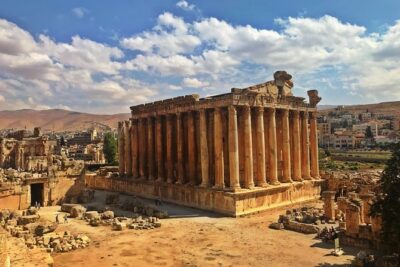
PRIVATE Wine Tasting Tour to the Bekaa Valey Fabulous Wineries
Read our review →
Journey Through Lebanese Wine: A Private Tour in the Beqaa Valley
Read our review →
Baalbek, Anjar & Wine: A Journey Through Lebanon’s Heritage
Read our review →Browse the lists this tour appears in