
Reviewed · BAALBEK & ANJAR DAY TRIPS
Guided Small-Group Tour to Baalbek, Anjar and Ksara with Lunch
Baalbek is the reason to book this day. Its immense Roman temples, set high in the Bekaa Valley, are not polite little ruins behind a rope. The Temple of Jupiter and Temple of Bacchus give you a real sense of Roman scale. I like the two UNESCO World Heritage Sites and the chance to see them with local archaeological guides rather than trying to piece the story together alone.
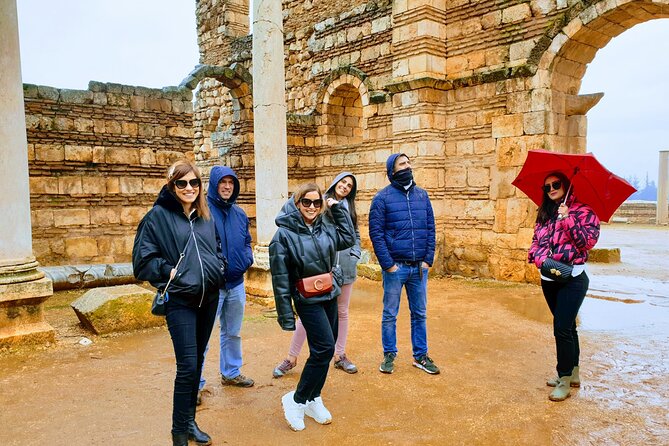
I also like the practical setup: hotel pickup, a driver, lunch, and a group of no more than 15. Guides including Albert, Hassan, Hassane, and Mariana are praised for clear explanations, good humor, and patience with photo stops. The drawback is the long, full day. Summer heat can make the walking tiring, and the winery visit may involve an extra charge for wine tasting.
Key points at a glance
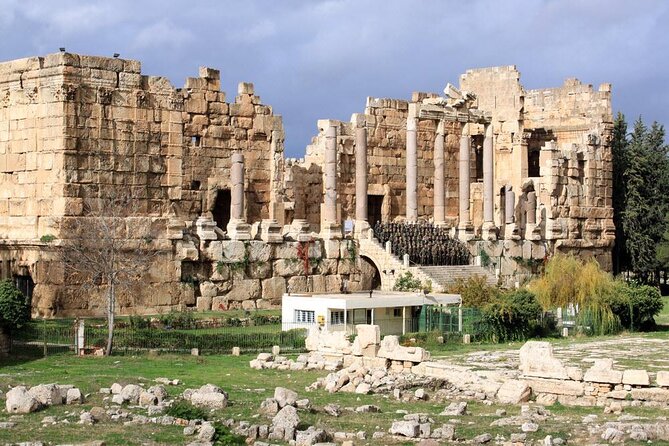
- Baalbek is the star: Allow roughly three hours around one of the finest Roman sanctuary sites in the world.
- Anjar adds a different era: Its straight streets and Umayyad palace ruins contrast sharply with Baalbek’s massive temples.
- Lunch is included: You get a Lebanese meal at a local restaurant, though food and service can vary.
- Guides make the difference: Site specialists, including archaeologists, may join you at Baalbek and Anjar.
- Chateau Ksara completes the day: The historic winery offers a look at Lebanese wine production, with tasting possibly costing extra.
- The $65 price is strong value: Transport, a guide, lunch, and three major stops are included, but check what entrance fees and tasting charges apply.
Why Baalbek makes this Beirut day trip worthwhile
Lebanon’s Bekaa Valley is a rewarding change from Beirut’s busy streets. The drive takes you toward the Anti-Lebanon range and the fertile valley around Baalbek, at an altitude of about 1,150 meters. You are not simply checking off ancient stones here. Baalbek shows what happened when Roman builders, local religious traditions, and imperial money met in one enormous sanctuary.
The site was called Heliopolis, or City of the Sun, during the Hellenistic and Roman periods. Its religious life grew from a Phoenician cult, later expressed through the Romanized triad of Jupiter, Venus, and Bacchus. That blend is one reason a good guide matters. Without context, you see columns. With context, you begin to understand why pilgrims crossed the region to reach this place.
The tour gives you about three hours at Baalbek, split between the general site and the temple complex. That is a sensible amount of time for the main monuments. You can study the surviving walls, walk through the monumental courtyards, and take photographs without reducing the visit to a rushed stop.
More Baalbek and Anjar circuits:
- Anjar, Baalbek & Ksara Day Trip – With Lunch (4G on Board)
★ 4.5 · 181 reviews - Baalbek – Anjar – Ksara Trip From Beirut
★ 4.5 · 80 reviews - Private Anjar and Baalbek Tour from Beirut with Departure Ticket
★ 5.0 · 79 reviews
Walking through the Temple of Jupiter and Temple of Bacchus
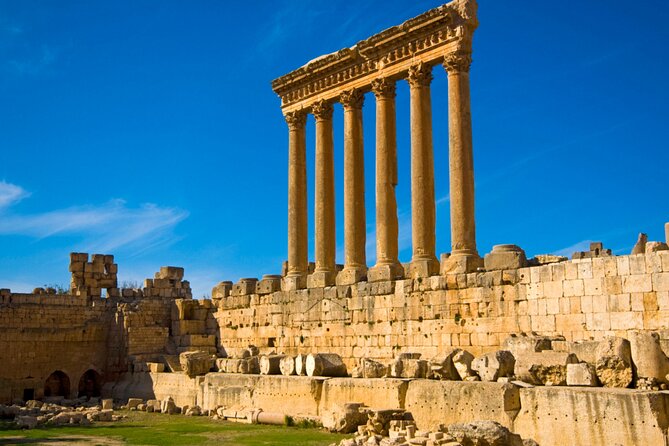
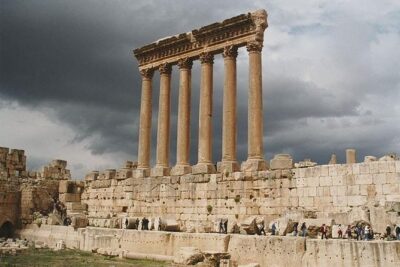
The Temple of Jupiter is the eye-catching giant. Some of its huge columns still rise above the sanctuary, giving you a clear idea of the original scale. The building program took more than two centuries, and the result was one of the grandest religious complexes in the Roman world.
The Temple of Bacchus is smaller, but do not mistake smaller for ordinary. Its carved details and impressive preservation often make it the favorite part of the visit. You can look closely at the doorway, columns, and decorative stonework, while your guide explains how Roman design was adapted to this particular religious center.
The archaeological guides assigned at Baalbek are an important feature. Several people praised having an archaeologist explain the ruins, and that can turn a visually impressive stop into a much more useful history lesson. Guides such as Albert and Hassan are also described as willing to answer questions and pause for extra photographs.
The site includes uneven ground and open walking areas. A summer visit may feel hot, especially during the longer temple visit, so wear sensible shoes and bring water. The tour description does not specify a separate entrance arrangement for every section, so confirm which site admissions are covered when booking. The main Baalbek temple visit is listed with admission not included.
A short stop at the Mosque of Sayyeda Khawla
The day may also include a stop at the Mosque of Sayyeda Khawla in Baalbek. It is linked to the local belief that Sayyida Khawla, daughter of Imam al-Hussein, was buried here after the caravan of captives from Karbala passed through the city.
This stop adds a living religious layer to a day otherwise focused on ancient ruins. You are not only looking backward to the Roman period. You are also seeing a place that remains meaningful to local people today.
The supplied details do not give a fixed duration for this visit, so think of it as an additional stop rather than one of the tour’s main timed sections. Dress and behavior should be respectful at a religious site, and follow the guide’s instructions.
Anjar, an Umayyad city with a Roman-looking grid
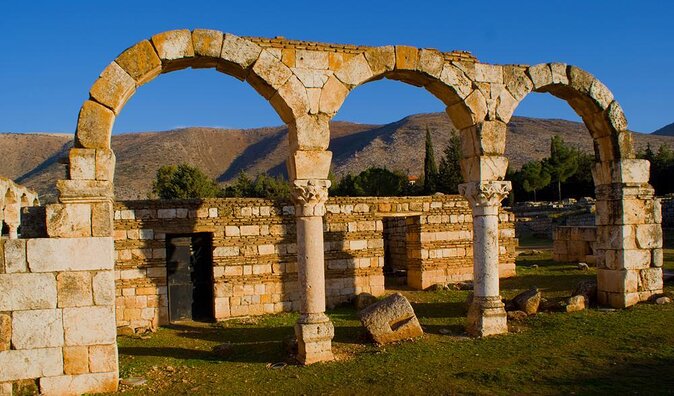
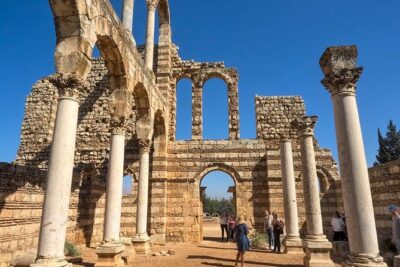
Anjar is a useful counterpoint to Baalbek. Founded by Caliph Walid I at the start of the eighth century, the city was built as an inland commercial center at the meeting point of routes linking Beirut, Damascus, Homs, and Tiberias.
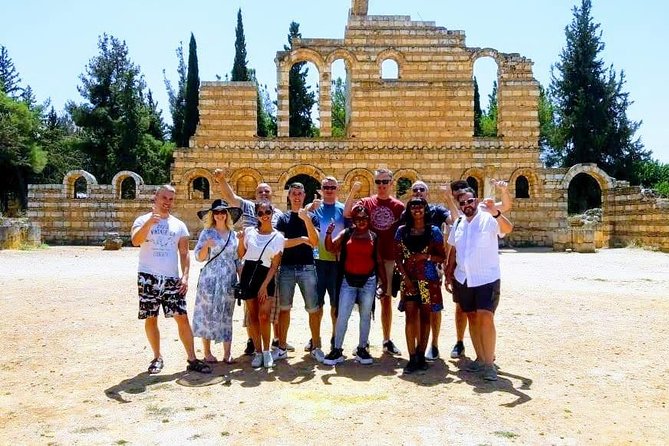
The first thing you notice is the order. Anjar’s streets and blocks follow a regular plan, more like a carefully designed palace city than an organic old town. The ruins include a palace, harems, a mosque, thermal baths, and other structures. Roman architectural elements appear in the columns and details, but the city itself belongs to the Umayyad period.
You have about 90 minutes here, enough to understand the layout and see the principal remains. The archaeological guide is particularly useful because Anjar can be harder to read than Baalbek. Baalbek announces itself with enormous temples. Anjar asks you to imagine streets, shops, courtyards, and administrative buildings from foundations and fragments.
The site is open and exposed, with walking on historic surfaces. As at Baalbek, hot weather can make the visit more strenuous than the schedule suggests. Admission to the Umayyad ruins is listed as not included, so ask about the current fee before you go.
More Bekaa wine afternoons:
- Guided Private Full Day Tour to Baalbek, Anjar and Chateau Ksara
★ 5.0 · 60 reviews - Lebanon tour Baalbek ruins & Ksara w/pick-up, lunch,guide+entries
★ 5.0 · 35 reviews - Baalbek Temples & Ksara Caves w/pick-up,guide, entries+lunch
★ 4.9 · 34 reviews - Small Group Tours to Baalbek, Anjar & Chateau Ksara with lunch and Tickets
★ 5.0 · 29 reviews
Lebanese lunch in the Bekaa Valley
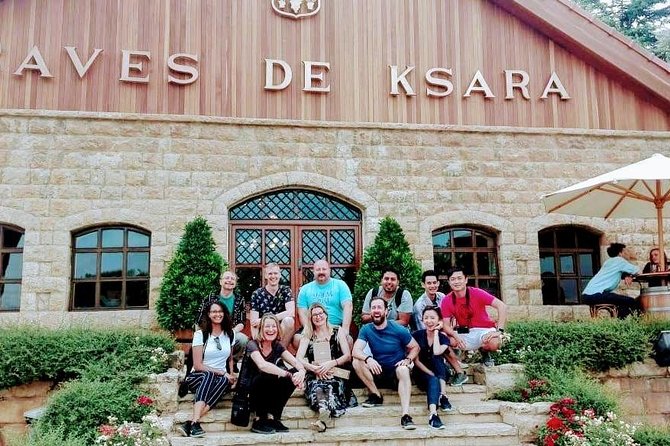
Lunch is included, and it is more than a quick sandwich between monuments. The tour promises a fresh Lebanese meal at an authentic local restaurant, and several comments describe the food as generous, filling, and one of the day’s pleasures.
Lebanese meals often work best when shared, with several dishes arriving for the table. The supplied information does not name the restaurant or set out a menu, so do not book this expecting a specific dish. Instead, see the meal as a chance to try local food without having to search for a suitable place during a tightly timed day.
I would keep expectations sensible. One published account found the food and restaurant service disappointing, while other accounts praised the meal warmly. That difference is worth noting because restaurant quality can vary, even when the tour itself is well run.
The tour leader may also use lunch to explain more about Lebanon and the places you have passed. That is a nice benefit of eating with the group rather than grabbing food independently. If you have dietary restrictions, ask the operator before departure, since the supplied information does not state what alternatives are available.
Chateau Ksara and the Lebanese wine story
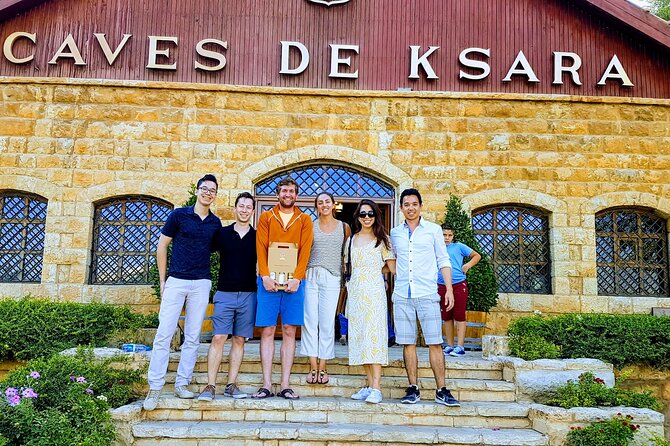
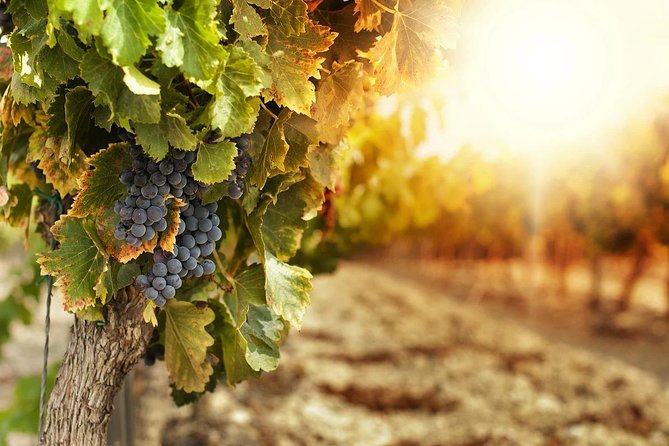
Chateau Ksara is the final major stop. The winery was founded by Jesuit priests in 1857 and is credited with developing Lebanon’s first dry wine. It now produces about three million bottles a year and exports to more than 40 countries.
That background gives the stop some weight. You are not visiting a random tasting room added to fill the afternoon. Ksara is part of Lebanon’s modern agricultural and commercial story, and it provides a change of pace after several hours of temples and ruins.
The visit lasts about an hour. The supplied details do not promise a fixed number of tastings or a particular wine flight. One account specifically notes that wine tasting cost extra, although it was considered worthwhile. Treat the winery as an optional spending decision, and confirm the price before ordering.
If you do not drink wine, the stop may be less important to you than Baalbek or Anjar. Still, it gives the day variety and lets you see another side of the Bekaa Valley. For wine enthusiasts, it is a useful addition. For everyone else, it is a pleasant final stop if the timing and extra cost suit you.
How the transport and group size affect the day
This is a roughly nine-hour outing, beginning around 8:30 a.m. with pickup from central Beirut hotels. Door-to-door transfers remove the need to arrange an intercity car, navigate unfamiliar roads, or manage parking near major archaeological sites.
That matters in Lebanon, where the day covers several destinations and the route is too long to handle casually. You can look out the window, listen to explanations, and save your energy for the ruins instead of concentrating on driving.
The vehicle is air-conditioned, and the tour includes a designated driver. This is especially useful in warm weather, although air conditioning does not remove the need for walking shoes, water, and sun protection.
The group is capped at 15 people. That is not a private tour by definition, but it is small enough for questions and conversation. Several accounts describe situations where the group was even smaller, sometimes nearly private, though you should book on the assumption that the full group size is possible.
Guide quality appears to be one of the strongest parts of the experience. Albert is described as professional, warm, funny, and clear about pickup times. Hassan and Hassane are praised for patience, practical help, historical explanations, and a relaxed sense of humor. Mariana is noted for being informative and helpful. The exact guide is not guaranteed, but the operating style seems to favor an active tour leader plus specialist guides at the archaeological sites.
What the $65 price really gives you
At $65 per person, this is a good-value day if you want to see the Bekaa Valley without arranging separate transport. The price includes hotel pickup and drop-off, an air-conditioned vehicle, a tour leader, professional guides, lunch, and a small-group format.
To price it fairly, compare the package rather than the admission fee alone. You are covering a long round trip from Beirut, three major destinations, local guiding, and a meal. Booking separate transport and guides could easily make the day less simple and less predictable.
The important qualifications are entrance fees and wine tasting. Baalbek temple admission and Anjar admission are marked as not included in the supplied details, while the general Baalbek stop is marked free. Since the wording separates the areas, ask exactly which tickets you will pay for on the day. Chateau Ksara tasting may also be extra.
The tour is generally booked about 25 days ahead, which suggests you should not leave it until the last morning if Baalbek is a priority. Confirmation is sent at booking, and free cancellation is available up to 24 hours before the start time. Changes or cancellations inside that window are not accepted for a refund.
Who should book this Bekaa Valley excursion
I would choose this tour if you have limited time in Beirut and want the main historic sights handled in one day. It suits first-time visitors who value explanation, transport, and a fixed plan more than independent wandering.
It also works well for people who dislike self-driving. The distance, multiple stops, and unfamiliar roads make a driver and tour leader worth paying for. If you are traveling alone, the small group gives you some company without the scale of a large coach party.
History fans should give it serious attention, especially if you like seeing different periods in one day. Baalbek brings Phoenician, Hellenistic, and Roman traditions together. Anjar shifts to the Umayyad period. Ksara then moves into nineteenth-century and modern Lebanon.
You may want a different plan if you prefer long, slow visits at one site. Three destinations, lunch, and a winery make this an active day, not a leisurely archaeological study. The heat, uneven walking, and early start are also worth considering.
Practical tips for a smoother day
Wear shoes with a firm sole. Baalbek and Anjar involve walking around open archaeological areas, and the schedule gives you enough time to cover real ground.
Bring water, sun protection, and a hat during warmer months. One account specifically noted that the walks were hot in summer. The air-conditioned vehicle offers relief between stops, but the ruins themselves are exposed.
Keep some extra money available for site admissions and wine tasting. The included lunch and transport make the base price attractive, but the final cost may be higher once optional or excluded items are added.
Use the pickup instructions carefully. Pickup begins around 8:30 a.m., and accounts of the tour describe clear communication about meeting times. Central Beirut hotel pickup is offered, but the supplied details do not promise pickup from every address.
Give your guide your priorities early. If Baalbek is your main reason for booking, say so. Guides such as Hassane are described as happy to wait for extra photographs, but the day still has a schedule, so a little communication helps.
Should you book it?
Book this tour if you want Baalbek, Anjar, and Chateau Ksara in one organized day, with lunch and transport included. The strongest reasons are the site specialists, the compact group size, and the sensible mix of ancient ruins, local food, and wine culture.
I would be cautious only if you want a private, slow-paced experience or need a guaranteed menu and fixed wine tasting. The lunch can vary, extra charges may apply, and summer walking is hard work. For most visitors based in Beirut, though, the $65 package offers a practical way to reach the Bekaa Valley and gives Baalbek the time and attention it deserves.
FAQ
How long does the tour last?
The tour lasts approximately nine hours.
What time does the tour start?
The stated start time is 8:30 a.m.
Where does the tour begin?
Hotel pickup is offered from central Beirut hotels.
Is hotel drop-off included?
Yes. The tour includes round-trip hotel pickup and drop-off.
How many people can join the tour?
The maximum group size is 15 people.
Is lunch included?
Yes. Lunch at a local Lebanese restaurant is included.
Are Baalbek and Anjar UNESCO World Heritage Sites?
Baalbek is a UNESCO World Heritage Site, and Anjar is also listed as a UNESCO World Heritage Site.
Are entrance fees included?
The supplied information lists admission to the Baalbek temple complex and the Umayyad ruins of Anjar as not included. Confirm the current ticket details before departure.
Is wine tasting at Chateau Ksara included?
Wine tasting is not clearly included in the base package. An account from the tour notes that tasting cost extra, so confirm the price before taking part.
Can I cancel for a full refund?
You can cancel up to 24 hours before the experience start time for a full refund. Cancellations or changes made less than 24 hours before the start time are not accepted for a refund.
More Lunch Experiences in Beirut
- Guided Small-Group Tour to Jeita, Harissa, Byblos with Lunch
★ 5.0 · 361 reviews - Byblos, Jeita Grotto & Harissa Day Trip -With Lunch (4G on Board)
★ 4.5 · 145 reviews - Semi-Private Tour to Jeita Grotto, Harissa & Byblos with Lunch
★ 5.0 · 52 reviews - Sidon, Tyre & Maghdouche Day Trip – With Lunch (4G on Board)
★ 4.5 · 44 reviews
Just added around Beirut
- Beirut to Sidon, Tyre and Maghdouché: Daily Tours with Lunch★ 5.0 · 3 reviews
- Exploring Beirut’s Past: A Private Guided Historical Tour★ 5.0 · 3 reviews
- Chouf Charm: Private Journey Through Lebanon’s Historic Heartland★ 4.5 · 3 reviews
- Hike Chouwen★ 5.0 · 3 reviews
- Private Trip to Beiteddine, Deir el Qamar & Maaser el Chouf Cedars★ 4.5 · 3 reviews
- Small-Group Tour with Lunch to Baalbek, Anjar and Ksara★ 5.0 · 3 reviews
- Baalbek, Anjar & Wine: A Journey Through Lebanon’s Heritage★ 5.0 · 3 reviews
- Lebanese wineries guided tour with tastings & lunch★ 4.9 · 3 reviews
Baalbek & Anjar Day Trips, compared.
Anjar, Baalbek & Ksara Day Trip – With Lunch (4G on Board)
Read our review →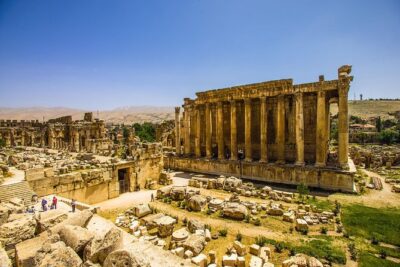
Private Anjar and Baalbek Tour from Beirut with Departure Ticket
Read our review →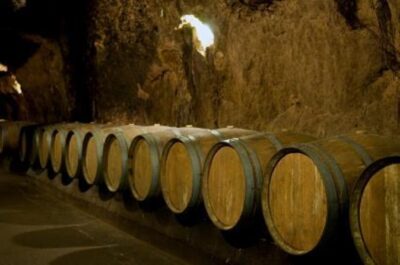
Guided Private Full Day Tour to Baalbek, Anjar and Chateau Ksara
Read our review →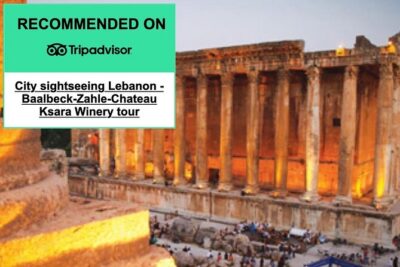
Lebanon tour Baalbek ruins & Ksara w/pick-up, lunch,guide+entries
Read our review →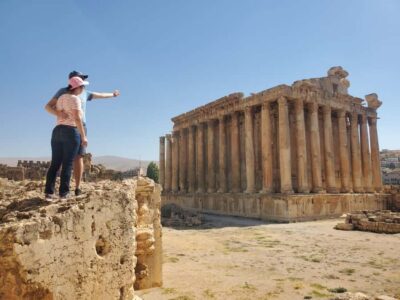
Baalbek Temples & Ksara Caves w/pick-up,guide, entries+lunch
Read our review →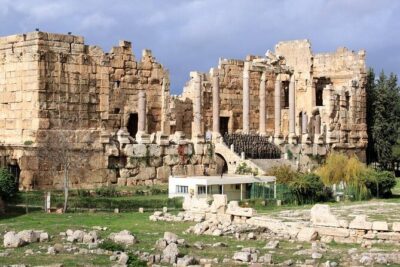
Small Group Tours to Baalbek, Anjar & Chateau Ksara with lunch and Tickets
Read our review →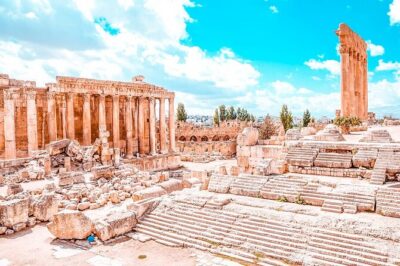
Private Tour: Anjar, Baalbek and Ksara Day Trip from Beirut
Read our review →Browse the lists this tour appears in