
Reviewed · BEIRUT CITY TOURS
Private Beirut City Tour with Boat Ride at Raouche Rock
Beirut’s best introduction may be the combination of ancient artifacts and sea views. This private day tour takes you from the National Museum to the Roman Baths, then out by boat around and between the great Pigeon Rocks at Raouche.
I like the door-to-door transport, since Beirut traffic can make self-driving a nerve-racking chore. I also like the mix of major sights: the Phoenician and Roman past, downtown’s religious landmarks, and a short boat ride on the Mediterranean. The main caution is timing. One review found the tour did not really fill seven hours, and the English guiding may be uneven.
Key points to know before booking
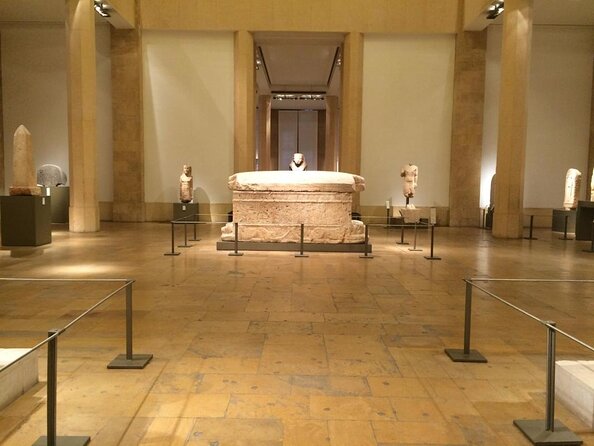
- The National Museum gets a full two hours, including its basement displays of Phoenician sarcophagi and a Roman tomb.
- The Raouche boat ride takes you under and between the Pigeon Rocks, not just to a roadside viewpoint.
- This is a private tour, so only your party joins the vehicle and guide.
- Hotel and vacation-rental pickup is offered across Beirut, a useful perk in difficult city traffic.
- Downtown sightseeing includes several stops in one walk, from Martyrs’ Square and the Mohammad Al-Amin Mosque to the Roman Baths and Beirut Souks.
- The English-language experience deserves a check before booking, since one booking found the guide’s English weaker than his Arabic or French.
Why this private Beirut day works well

Beirut is a city best seen with someone else at the wheel. Traffic can be chaotic, directions may not be obvious, and the city’s sights are spread between the museum district, the seafront, and downtown. A private pickup removes much of that friction.
The price is $108.35 per person. That is not a budget city walk, but it covers about seven hours, private transportation, a guide, hotel or vacation-rental pickup, and the boat experience at Raouche. For a couple or small group that wants one organized day, the cost can make sense. For a solo visitor, it is harder to call a bargain.
You begin at 9:45 a.m., which gives the day a clear starting point without forcing you into an especially early departure. The tour is private, so the pace should be more adaptable than a large coach excursion, although the listed schedule remains fairly fixed. The operator offers group discounts, which may improve the value if you are booking with several people.
One practical point matters here: the tour is non-refundable and cannot be changed after booking. Check your date, pickup location, and language preference carefully before paying.
More ways to see Beirut on foot:
- City Sightseeing Beirut Hop-On Hop-Off Bus Tour
★ 4.5 · 87 reviews - Airport Arrival Transfer to Your Beirut Hotel
★ 5.0 · 87 reviews - Authentic Lebanese Cooking Lesson and Meal with Tania’s Family in Beirut
★ 5.0 · 62 reviews
Two hours inside the National Museum of Beirut
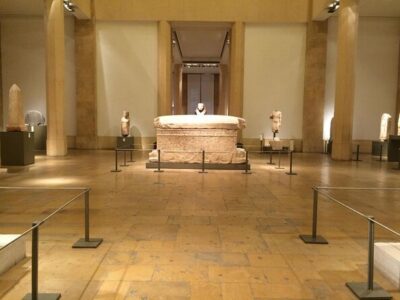
The National Museum is the intellectual center of this outing. Its collection gives you a compact guide to Lebanon as a crossroads of cultures, with objects connected to the civilizations that passed through and settled in the country.
You have two hours here, the longest scheduled stop. That is welcome. Museums covering thousands of years can become a blur of names and dates if you rush through them, while two hours gives your guide time to point out the objects that matter most.
Look for the famous Phoenician gilded bronze figurines found near the Obelisk Temple at Byblos. These small figures are among the museum’s most photographed pieces, and they help make the Phoenician period feel more concrete than a string of dates in a guidebook.
The human-faced Phoenician sarcophagi are another major highlight. Their faces give the stone a surprisingly personal quality. You are not just looking at burial containers, but at carefully made portraits connected to the beliefs and craft of an ancient society.
The basement is especially important. It contains a frescoed Roman tomb and was reopened in 2016. The setting adds weight to the visit because the objects are presented as part of a burial space rather than as isolated pieces in glass cases.
I would treat the museum as the anchor of the day, not a warm-up before the boat ride. If you care about archaeology, this stop may be worth the tour price by itself. If museums are not your thing, two hours could feel long, so tell your guide how much explanation you want and how much time you prefer to spend looking on your own.
A short boat ride through Raouche’s Pigeon Rocks
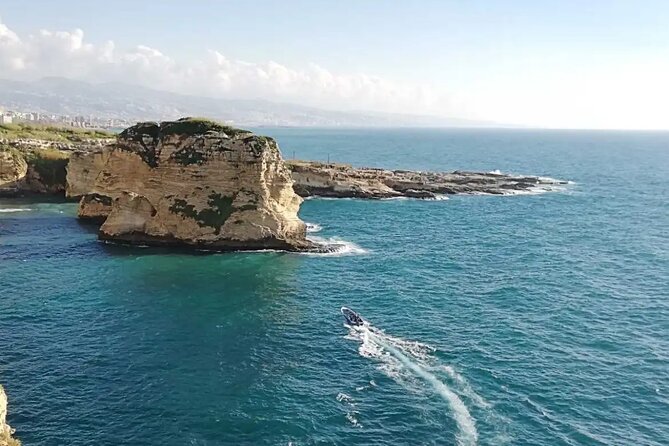
The visit to Raouche brings a welcome change of pace. After the museum and city streets, you head to the sea rocks for a boat ride lasting about 30 minutes.
The point is not simply to photograph the Pigeon Rocks from the shore. The boat takes you under and between the enormous formations, giving you a closer view of their shape and scale. From the water, the rocks become the main event rather than a distant backdrop.
Thirty minutes is enough for a taste, not a full coastal outing. You should expect a short scenic ride rather than a long cruise with extensive commentary or a meal. The tour information does not specify boat size, seating, or weather arrangements, so ask about those details if they are important to you.
This stop also adds balance to the history-heavy museum visit. You get a sense of Beirut as a coastal city, not only as a place of ancient sites and downtown monuments. Bring a phone or camera if you want photographs, but keep the timing in mind. The boat ride is brief, and the day still has several downtown stops ahead.
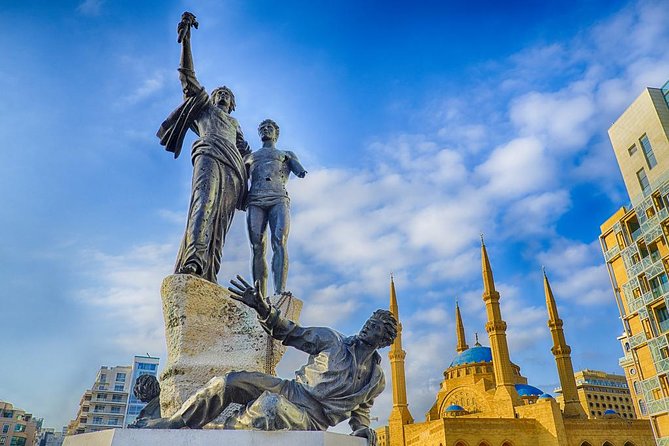
Martyrs’ Square and the story behind the name
Martyrs’ Square is one of Beirut’s key public spaces. Its name dates to 1931, when it was established to honor martyrs executed under Ottoman rule.
The scheduled visit lasts about 20 minutes. That is enough for an introduction and a look around, but not enough for a long historical discussion. Your guide’s explanation matters here because a square can appear ordinary if you do not know why it carries its name.
This is also a useful transition into the downtown portion of the tour. You are moving from the city’s ancient collections and coastal views toward its modern civic center, religious buildings, and commercial streets.
Since the stop is short, wear comfortable shoes and stay aware of the group’s meeting point. The overall day includes walking around downtown, and small delays can shorten the time available later.
A few more Beirut days worth weighing up
- Jeita Grotto,Harissa&Byblos Full-Day PRIVATE-CAR Trip from Beirut
★ 5.0 · 222 reviews - Private Anjar and Baalbek Tour from Beirut with Departure Ticket
★ 5.0 · 79 reviews - Guided Private Full Day Tour to Baalbek, Anjar and Chateau Ksara
★ 5.0 · 60 reviews - Semi-Private Tour to Jeita Grotto, Harissa & Byblos with Lunch
★ 5.0 · 52 reviews
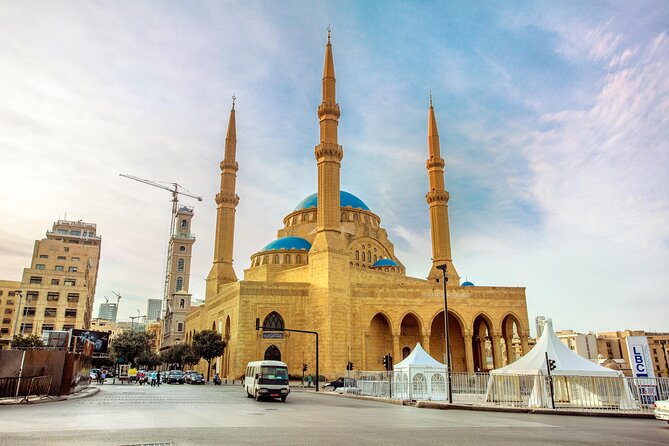
Mohammad Al-Amin Mosque beside the church
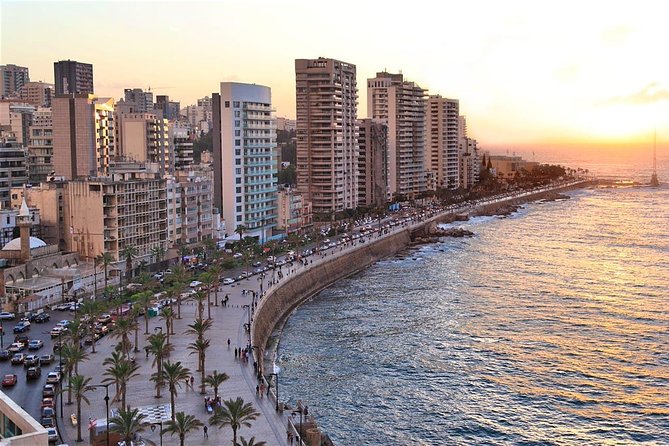
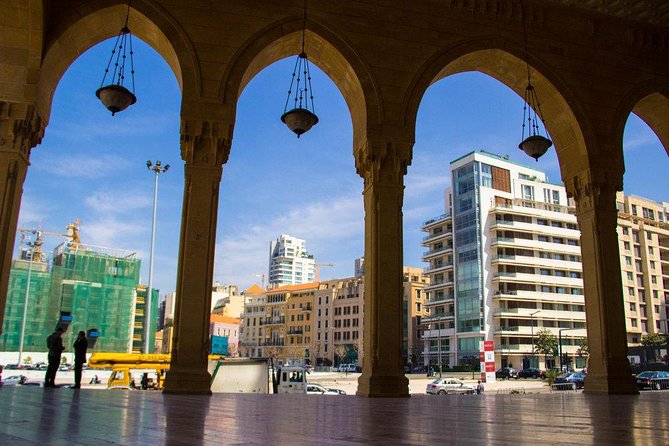
From Martyrs’ Square, you visit the Mohammad Al-Amin Mosque. It was built next to a church, creating one of the city’s most striking visual pairings.
The tour description points out that from Martyrs’ Square you can see the cross and the crescent together. That detail gives the stop more meaning than a quick exterior photograph. It reflects the way different religious buildings occupy the same downtown setting.
You should expect about 30 minutes here. The information provided does not promise an interior visit, so consider this primarily a chance to see the mosque and its setting with an explanation from your guide. Dress and behave respectfully around the religious site, even if your visit remains outside.
I like this part of the route because it gives you a simple visual way to understand Beirut’s religious mix. The experience is not presented as a formal religious tour, but the pairing of the mosque and church says a great deal in a very small space.
Old churches, Roman Baths, and Beirut Souks
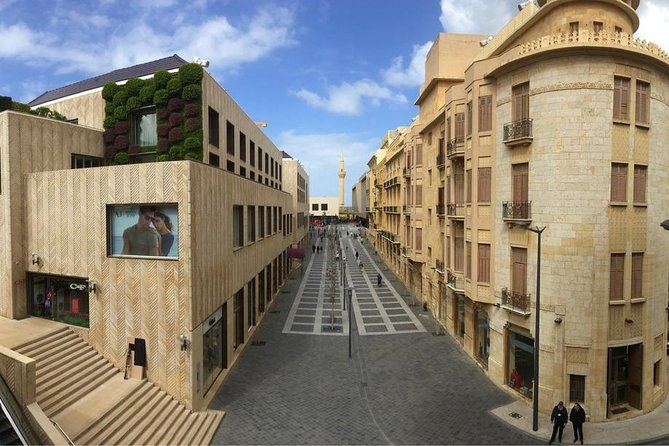
The final downtown section is scheduled for about two hours and brings several sights together: old churches, the Roman Baths, and Beirut Souks.
This is the least tightly defined part of the day. You are not given a precise list of churches or a detailed sequence, so your experience will depend heavily on the guide and the time available. Ask at the start of the downtown walk which churches you will see and how long the stops will last.
The Roman Baths connect modern Beirut to the Roman city beneath it. The remains help you picture the scale and organization of the ancient settlement, even though the visit is not described as a full archaeological tour.
The Beirut Souks provide a different kind of contrast. They are part of the city center’s commercial identity, and the route gives you a chance to see Beirut beyond monuments and museum cases. The schedule says explore, but it does not promise dedicated shopping time, so do not book this tour mainly for retail browsing.
One review raised a concern about the Souks portion, with the impression that the tour was shorter than the advertised seven hours. Sunday traffic was described as fairly easy, which may have helped the group move quickly. That can be good if you dislike wasting time in a vehicle, but it can also mean less time at individual stops. If you want a slow downtown walk, say so clearly.
The guide and language question
A private guide can make this tour much better than a simple transfer between sights. At the National Museum, a guide can explain why the Phoenician figurines, sarcophagi, and Roman tomb matter. Downtown, the guide can connect the mosque, church, square, and Roman remains into a readable story.
The available feedback is mixed on English. One booking was made as an English-language tour, but the guide reportedly spoke English less comfortably than Arabic or French. Another described the guide as hospitable and well informed, and wished there had been more time to see the wider region with him.
That tells you two useful things. First, the human side of the tour can be a real strength. Second, you should confirm the guiding language before departure if clear historical explanation is central to your plans. If you speak French or Arabic, mention that when arranging the tour. If English is your only language, ask the provider to confirm that the guide can comfortably handle detailed questions.
The tour has a 4.7 rating from 10 reviews, with 90 percent recommending it. That is encouraging, but the small number of ratings means you should pay attention to the specific concerns rather than treating the score as a guarantee.
Does seven hours mean seven full hours?
The advertised duration is approximately seven hours, beginning at 9:45 a.m. The planned stops add up to about five hours: two hours at the museum, 30 minutes at Raouche, 20 minutes at Martyrs’ Square, 30 minutes at the mosque, and two hours downtown.
The remaining time presumably allows for pickup, driving between districts, and returning to the meeting point. Beirut traffic can make those transfers unpredictable, though one Sunday booking moved around the city efficiently.
Do not assume that seven hours means seven hours of continuous sightseeing. The day includes transportation and may finish sooner if roads are clear or if the group moves quickly. If you have a flight or connection afterward, allow extra time rather than planning around the approximate end of the tour.
For a first look at Beirut, the structure is sensible. You get the museum early, the sea in the middle, and downtown afterward. The drawback is that the itinerary tries to cover a lot of ground, so some stops are necessarily brief.
Who gets the best value from this tour?
I would recommend this experience most strongly to a first-time visitor staying in Beirut who wants a broad orientation without handling city traffic alone. The private format suits couples, families, and small groups who value a vehicle and a guide more than the lowest possible price.
It also works well for a short stay or a 24-hour layover. One booking used it in that way and found the guide helpful and hospitable, though the person wished there had been time to see more of Lebanon. That is a fair tradeoff: this is a Beirut introduction, not a full-country tour.
You may want something else if your priority is slow museum study, extensive shopping, or a long boat trip. The National Museum receives serious time, but the other stops move quickly. The Raouche boat ride is scenic and memorable, yet only about 30 minutes.
The tour is also a weaker choice if you need a firm, polished English-speaking guide and do not confirm that point in advance. The language concern is the clearest practical risk in the available feedback.
My booking advice
I like this tour for its range. In one day, you see Phoenician and Roman objects, a Roman tomb, an Ottoman-era memorial, a mosque beside a church, downtown remains, modern souks, and Beirut’s signature sea rocks.
The value depends on your group size and your preferred travel style. At $108.35 per person, it is easiest to justify when private pickup, local explanation, and relief from city driving are important. A larger group may benefit from the discount, while a solo visitor should compare the price with a regular walking tour or taxi-based plan.
Book it if you want a guided first look at Beirut and accept a brisk pace. Before you commit, confirm the guide’s English ability, ask how the downtown time will be divided, and remember that the booking cannot be refunded or amended.
FAQ
Where does the tour start and end?
The tour starts in Beirut, Lebanon, with pickup offered from hotels and vacation rentals across the city. It ends back at the meeting point.
What time does the tour begin?
The stated start time is 9:45 a.m.
Is this a private tour?
Yes. Only your group participates in the activity.
Is admission to the National Museum included?
Yes. The National Museum stop includes admission, with about two hours scheduled there.
How long is the boat ride at Raouche?
The boat ride at the Pigeon Rocks takes about 30 minutes. It goes under and between the large sea rocks.
Can I cancel or change the booking?
No. The experience is non-refundable and cannot be changed for any reason after booking.
Just added around Beirut
- Beirut to Sidon, Tyre and Maghdouché: Daily Tours with Lunch★ 5.0 · 3 reviews
- Exploring Beirut’s Past: A Private Guided Historical Tour★ 5.0 · 3 reviews
- Chouf Charm: Private Journey Through Lebanon’s Historic Heartland★ 4.5 · 3 reviews
- Private Trip to Beiteddine, Deir el Qamar & Maaser el Chouf Cedars★ 4.5 · 3 reviews
- Hike Chouwen★ 5.0 · 3 reviews
- Small-Group Tour with Lunch to Baalbek, Anjar and Ksara★ 5.0 · 3 reviews
- Baalbek, Anjar & Wine: A Journey Through Lebanon’s Heritage★ 5.0 · 3 reviews
- Lebanese wineries guided tour with tastings & lunch★ 4.9 · 3 reviews
Beirut City Tours, compared.
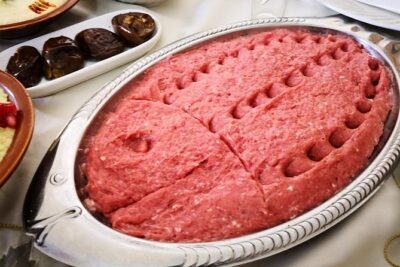
Authentic Lebanese Cooking Lesson and Meal with Tania’s Family in Beirut
Read our review →
Beirut: Jeita Grotto, Harissa, Byblos group tour & Guide
Read our review →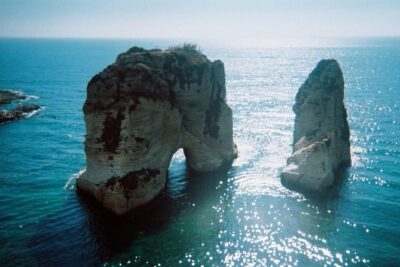
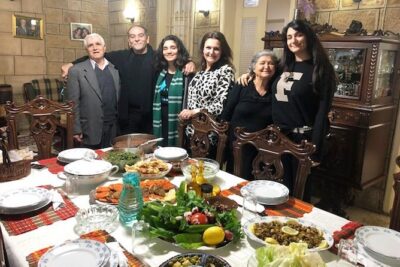
Private Lebanese Cooking Class in Beirut with Amal + Transfers
Read our review →
Lebanon: Beirut, Jeita Grotto, Byblos Private Tour and Lunch
Read our review →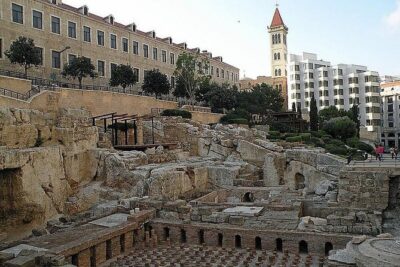
Historical Beirut Tour (AM) Half Day – (4G on Board)
Read our review →
Authentic Lebanese Meal in Beirut in Tania’s Family Home
Read our review →Browse the lists this tour appears in