
Reviewed · BAALBEK & ANJAR DAY TRIPS
Sightseeing all-inclusive Private Tour to Baalbek and Ksara
Baalbek is the star here: a vast Roman sanctuary where Jupiter, Venus, and Bacchus were worshipped beneath some of antiquity’s biggest stone blocks. This private outing also adds Lebanese wine at Chateau Ksara and a taste of the Bekaa Valley, giving you more than a single archaeological stop.
I like the private transport and personal guide attention, especially on a long day from Beirut. I also like that lunch, entry fees, the Baalbek guide, and wine tasting are bundled into the $75 price. The tradeoff is time: six hours is enough for highlights, but the schedule may feel brisk, particularly if you want to study every ruin in detail.
Key points at a glance
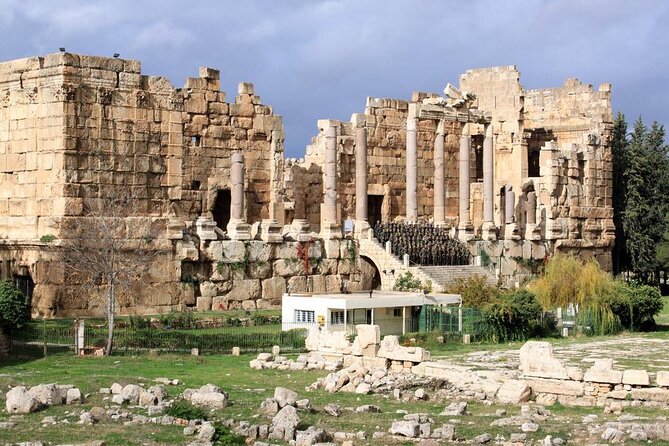
- Baalbek’s colossal Roman sanctuary includes the temples of Jupiter, Venus, and Bacchus, with 90 minutes set aside for a guided visit.
- A local Baalbek guide is included, along with admission to the archaeological site.
- The Stone of the Pregnant Woman gives you a close look at the enormous blocks intended for the Roman temple complex.
- Sayyida Khawla Shrine adds a living religious site to the ancient Roman setting.
- Chateau Ksara wine tasting and Lebanese lunch round out the day with local food and drink.
- Private round-trip transport from Beirut keeps the outing simple and gives your group its own vehicle and tour leader.
Why Baalbek makes this a special Beirut day trip
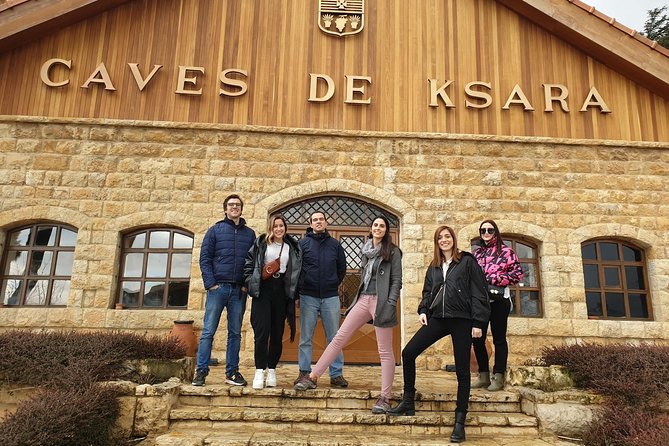
Lebanon offers ancient sites in many directions, but Baalbek has a scale that is hard to grasp from photographs. The complex sits near the foot of the Anti-Lebanon range, beside the fertile Bekaa plain, at about 1,150 meters above sea level. That setting matters. You are not looking at isolated columns in a city park. You are seeing a major sanctuary built where Roman power met an older Phoenician religious tradition.
The Romanized gods were Jupiter, Venus, and Bacchus, but the worship here drew on an essentially Phoenician cult. That blend gives the site more depth than a simple Roman architecture lesson. As your local guide leads you through the complex, you can connect the huge masonry to the people who came here to honor the Heliopolis Triad.
The construction took more than two centuries. That long building period helps explain the range of work you see, from monumental platforms and columns to carved details and temple remains. A guide is especially useful at Baalbek because the scale can overwhelm you. Without context, you may notice size first and meaning second.
The tour allows about one hour and 30 minutes at Baalbek, with admission included. That is a sensible amount of time for the main sanctuary and an explanation of its religious and architectural role. It is not a full-day archaeological study, so keep your expectations focused on the principal remains rather than every stone and excavation detail.
More Baalbek and Anjar circuits:
- Guided Small-Group Tour to Baalbek, Anjar and Ksara with Lunch
★ 5.0 · 511 reviews - Anjar, Baalbek & Ksara Day Trip – With Lunch (4G on Board)
★ 4.5 · 181 reviews - Baalbek – Anjar – Ksara Trip From Beirut
★ 4.5 · 80 reviews
Inside the Roman temples of Baalbek
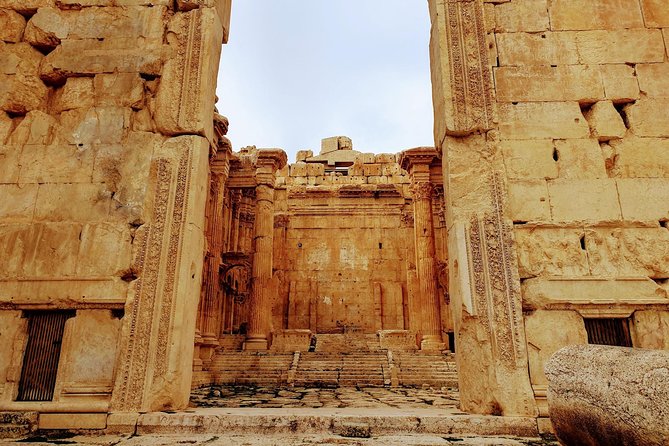
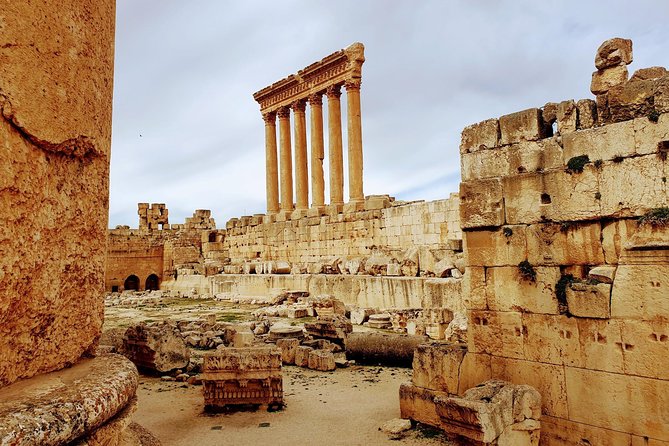
Baalbek reached its height during Roman rule, and its buildings were designed to make an impression. The site is known for well-preserved Roman temples and colossal construction, often described as a model of Imperial Roman architecture. The temples of Jupiter, Venus, and Bacchus give the visit a clear structure, even if the remains differ in size and condition.
The Temple of Jupiter is associated with the largest and most imposing construction at the sanctuary. The Temple of Bacchus is also a major part of the visit, with its connection to the Roman god of wine creating a neat link to the later tasting at Chateau Ksara. Venus completes the triad and reflects how Roman names were placed on a religious tradition with older local roots.
I would pay attention to the blocks as much as the columns. The stones show how ambitious the builders were, and the site makes you ask practical questions: how were these pieces quarried, moved, and fitted? Those questions lead naturally to the next stop, the Stone of the Pregnant Woman.
The included local guide is one of the strongest parts of the arrangement. One review specifically praised the guide and driver for making the trip pleasant and educational. No guide names are provided, but the format gives you a dedicated local explanation rather than leaving you to decode the ruins alone.
The Stone of the Pregnant Woman in 15 minutes
The Stone of the Pregnant Woman is a worked Roman monolith near Baalbek. It is one of the largest ancient quarried stones, along with another huge block nearby, and both were likely intended for the temple complex.
The stop lasts about 15 minutes and has no separate admission charge. That short visit suits the purpose. You are there to see the sheer mass of the stone and connect it to the construction at Baalbek, not to spend another hour at a second archaeological complex.
This is a good place to use your guide’s explanation. The stone can look like a simple quarry block until you understand its likely role in the sanctuary. I would treat it as a visual follow-up to the temples: first see the finished monument, then see the kind of raw material that made such monumental building possible.
Sayyida Khawla Shrine, a brief living religious stop
The Sayyida Khawla Shrine offers a different kind of history. The mosque is built where Sayyida Khawla, identified as the daughter of Imam al-Hussein and granddaughter of the Prophet Muhammad, is believed to have been buried.
The visit is planned for only five minutes, so do not expect an extended religious tour. Its value is in the contrast. Baalbek shows the remains of an ancient Roman sanctuary, while this stop connects the town to an active Islamic tradition and a story tied to the passage of captives from Karbala.
Because this is a religious site, follow your guide’s instructions about conduct and photography. The tour data does not specify a dress code or photography policy, so ask the tour leader before taking pictures. Even in a short stop, you can appreciate that Baalbek is not only an archaeological location. It is also a place with continuing religious meaning.
More Bekaa wine afternoons:
- Guided Private Full Day Tour to Baalbek, Anjar and Chateau Ksara
★ 5.0 · 60 reviews - Lebanon tour Baalbek ruins & Ksara w/pick-up, lunch,guide+entries
★ 5.0 · 35 reviews - Baalbek Temples & Ksara Caves w/pick-up,guide, entries+lunch
★ 4.9 · 34 reviews - Small Group Tours to Baalbek, Anjar & Chateau Ksara with lunch and Tickets
★ 5.0 · 29 reviews
Aanjar and the Umayyad chapter
The route continues to Aanjar to see the Umayyad ruins. This adds another period to the day’s story, moving beyond Roman Baalbek to the early Islamic era.
The supplied schedule gives no separate duration for Aanjar, so the exact amount of time there is not clear. That is worth noting when you book. The tour description names the Umayyad ruins as part of the route, but Baalbek and Chateau Ksara receive the clearest time allocations. If Aanjar is a priority, ask the provider how long the stop lasts and whether the site entrance is included.
Even with a brief visit, Aanjar helps prevent the day from becoming a single-civilization tour. You see Roman religious architecture, a Muslim shrine, and Umayyad remains before reaching a modern Lebanese winery with roots in the nineteenth century.
Chateau Ksara and Lebanese wine in the Bekaa Valley
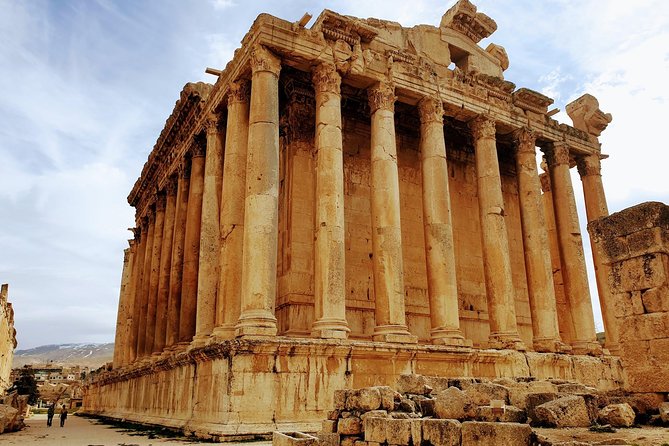
The final major stop is Chateau Ksara, a Lebanese wine company in the Bekaa Valley. Jesuit priests founded it in 1857, and the winery developed Lebanon’s first dry wine. Today, its wines are exported to more than 40 countries, with production of roughly three million bottles each year.
You receive about one hour here, with wine tasting fees included. This is enough time for an introduction to the winery and its wines, but it is not presented as a long technical wine course. The tour’s strength is the combination of tasting with the day’s cultural route. After ancient temples and Umayyad ruins, you get a direct taste of a continuing Lebanese tradition.
The Bacchus connection at Baalbek makes the wine stop particularly fitting. Bacchus was part of the Roman Triad worshipped at the sanctuary, and Chateau Ksara gives the day a modern link to wine production in the same broad region.
Lunch is also included, described as a Lebanese lunch. That inclusion matters at $75 because food and drinks can quickly add to the cost of a full-day outing. The available information does not specify the menu, so if you have dietary restrictions, ask in advance rather than assuming every dish will suit you.
What the $75 price really covers
At $75 per person, the tour includes private transportation, an air-conditioned vehicle, a tour leader, a local Baalbek guide, lunch, wine tasting fees, and entrance to Baalbek. Round-trip pickup from your Beirut hotel is offered, and the start time is 9:00 a.m.
That is a solid package if you want convenience. You are not separately arranging a car, negotiating transport, buying Baalbek admission, finding a local guide, and organizing lunch and wine tasting. The private format also means only your group participates, which can make questions and timing easier.
The value depends partly on your group size. A solo visitor pays the full per-person rate, while a larger private group may find the arrangement especially attractive because group discounts are available. Ask how the discount works before booking, since the exact terms are not provided.
There are limits. The tour lasts about six hours, and several major stops are packed into that window. You are paying for a well-organized overview, not a slow archaeological expedition. If you want long time at Baalbek, an extended wine visit, or an unhurried exploration of Aanjar, confirm the timing before you commit.
Transport, timing, and comfort from Beirut
The 9:00 a.m. start and private, air-conditioned vehicle make this a practical option from Beirut. Round-trip hotel transfers remove one of the day’s biggest chores: arranging the trip to and from the Bekaa Valley yourself.
A private vehicle also gives your group a quieter setting than a large coach. The tour leader can help keep the day moving, and you can ask for clarification as the route unfolds. A previous assessment praised both the driver and guide, which is important on a day where road time and site explanations shape the experience.
The six-hour estimate should be treated as approximate. The tour includes several stops, and traffic or site conditions can affect the schedule. Since the route includes Baalbek, Sayyida Khawla Shrine, the Stone of the Pregnant Woman, Aanjar, lunch, and Chateau Ksara, you should be ready for a compact day.
Comfortable shoes are sensible because the core experience involves walking around ancient ruins. The provided information does not state the walking surface, accessibility arrangements, or vehicle model, so ask the provider if you have mobility concerns. Most people can participate, according to the tour details, but that broad statement does not replace a personal accessibility check.
Who will get the most from this private tour
I would choose this experience if you want Lebanon’s major inland highlights without piecing together transport and admissions. It suits first-time visitors who want Roman ruins, early Islamic history, local religious culture, Lebanese food, and wine in one organized outing.
It is also a good match for couples, families, and small groups that value a private vehicle. The format lets your group share the day rather than joining strangers, and the included guide services help you get more from Baalbek than you might on your own.
Wine enthusiasts will appreciate Chateau Ksara, especially its long history and connection to Lebanese dry wine. The tasting is one hour, so it works best as part of a wider cultural day rather than as the sole reason for booking.
You may want a different plan if your main goal is extended time at one site. Baalbek deserves more than a quick glance, and Aanjar’s visit length is not specified. Ask for the exact schedule if archaeological detail matters more to you than variety.
Booking and cancellation details
Confirmation is provided at booking, and mobile tickets are available. Pickup is offered, but the supplied details do not list every hotel area or the exact pickup procedure, so provide your accommodation information clearly.
Free cancellation is available when you cancel at least 24 hours before the experience start time. Cancellations made less than 24 hours ahead are not refunded, and changes inside that window are not accepted. The cutoff follows local time.
Should you book the Baalbek and Ksara tour?
Book it if you want a private, efficient introduction to inland Lebanon with the main costs bundled together. Baalbek supplies the powerful ancient centerpiece, Aanjar broadens the historical frame, and Chateau Ksara adds food and wine rather than ending the day at ruins.
I would be comfortable recommending it to anyone who values a good driver, a local Baalbek guide, and straightforward planning. The strongest praise available focuses on the guide and driver making the day pleasant and educational, exactly the qualities that matter on a six-hour route.
Before paying, confirm the Aanjar timing, your pickup details, and any food or accessibility needs. If you are happy with a highlights tour rather than a slow, specialist archaeology visit, $75 is a reasonable price for the transport, guide, admissions, lunch, and tasting included.
FAQ
What is included in the $75 tour price?
The price includes private transportation, an air-conditioned vehicle, a tour leader, a local guide in Baalbek, Lebanese lunch, wine tasting fees, and entrance to the Baalbek archaeological site.
How long does the tour last?
The experience lasts approximately six hours.
What time does the tour start?
The stated start time is 9:00 a.m.
Is hotel pickup available in Beirut?
Yes. Round-trip transfers from your Beirut hotel are offered.
Is this a private tour?
Yes. Only your group participates in the private activity.
Is the Baalbek entrance fee included?
Yes. Admission to the Baalbek site is included.
How long is the Baalbek visit?
The guided visit to the Temples of Baalbek is scheduled for about one hour and 30 minutes.
Is wine tasting included?
Yes. Wine tasting fees are included, with about one hour allocated at Chateau Ksara.
Can I cancel for a full refund?
Yes, if you cancel at least 24 hours before the experience start time. Cancellations made less than 24 hours before the start are not refunded.
Just added around Beirut
- Beirut to Sidon, Tyre and Maghdouché: Daily Tours with Lunch★ 5.0 · 3 reviews
- Exploring Beirut’s Past: A Private Guided Historical Tour★ 5.0 · 3 reviews
- Chouf Charm: Private Journey Through Lebanon’s Historic Heartland★ 4.5 · 3 reviews
- Hike Chouwen★ 5.0 · 3 reviews
- Private Trip to Beiteddine, Deir el Qamar & Maaser el Chouf Cedars★ 4.5 · 3 reviews
- Small-Group Tour with Lunch to Baalbek, Anjar and Ksara★ 5.0 · 3 reviews
- Lebanese wineries guided tour with tastings & lunch★ 4.9 · 3 reviews
- Baalbek, Anjar & Wine: A Journey Through Lebanon’s Heritage★ 5.0 · 3 reviews
Baalbek & Anjar Day Trips, compared.
Guided Small-Group Tour to Baalbek, Anjar and Ksara with Lunch
Read our review →
Anjar, Baalbek & Ksara Day Trip – With Lunch (4G on Board)
Read our review →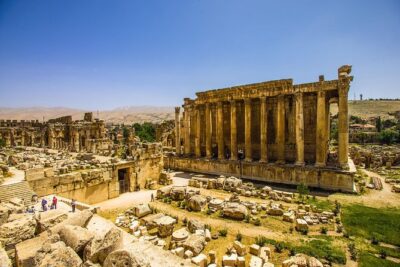
Private Anjar and Baalbek Tour from Beirut with Departure Ticket
Read our review →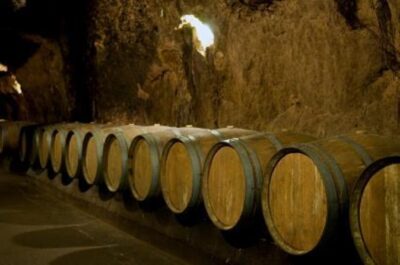
Guided Private Full Day Tour to Baalbek, Anjar and Chateau Ksara
Read our review →
Lebanon tour Baalbek ruins & Ksara w/pick-up, lunch,guide+entries
Read our review →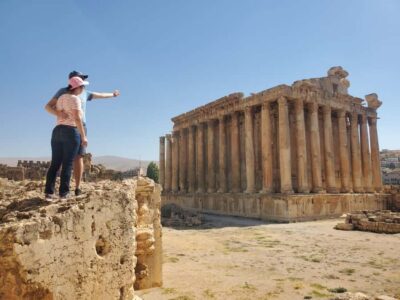
Baalbek Temples & Ksara Caves w/pick-up,guide, entries+lunch
Read our review →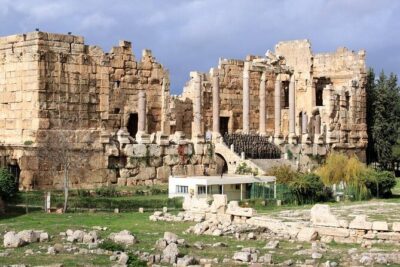
Small Group Tours to Baalbek, Anjar & Chateau Ksara with lunch and Tickets
Read our review →Browse the lists this tour appears in