
Reviewed · BAALBEK & ANJAR DAY TRIPS
Small-Group Tour with Lunch to Baalbek, Anjar and Ksara
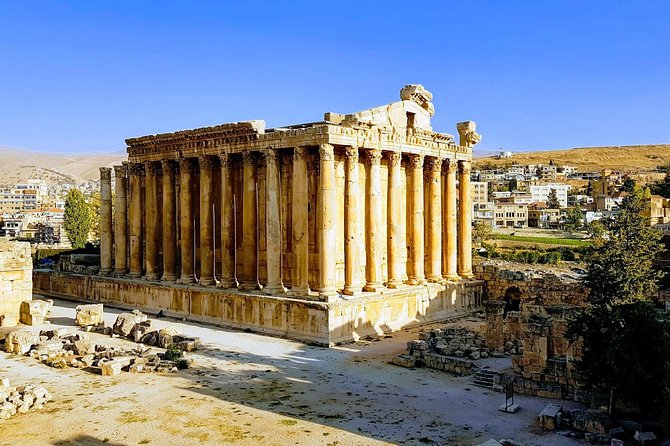
Baalbek is the star here: a huge Roman sanctuary in Lebanon’s Bekaa Valley, where the Temple of Jupiter and Temple of Bacchus still give you a clear sense of Rome’s power. I like that this tour adds Anjar’s Umayyad ruins and a stop at Château Ksara, so your day covers several very different chapters of Lebanese history and culture.
I also like the practical setup. Hotel pickup in central Beirut, air-conditioned transport, lunch, and a group capped at 15 make a long day much easier. Guides named Albert, Ghofran, and Ziad have led this trip, with especially strong praise for clear explanations and careful timing. The main drawback is pace: Baalbek, Anjar, and Ksara in one day means you get a useful introduction, not hours to explore each site at leisure.
Key points to know before booking
- Baalbek is the main event: You see the Temple of Jupiter, Temple of Bacchus, and the wider Roman sanctuary at one of the world’s great ancient sites.
- Anjar adds a different era: Its ninth-century-style Umayyad remains include palace walls, baths, a mosque, and long rows of columns.
- The Stone of the Pregnant Woman is a quick but memorable stop: This enormous Roman block shows the scale of the building project at Baalbek.
- Lunch is included: You get an authentic Lebanese meal, which adds real value to the $65 price.
- Château Ksara brings local wine into the day: The tasting connects the Bekaa Valley’s modern wine trade with its older agricultural traditions.
- Small means manageable: With no more than 15 people, you have a better chance to hear the guide and ask questions than on a large coach tour.
Why Baalbek deserves the long ride from Beirut
The trip leaves Beirut at 8:30 a.m. and heads inland toward the Bekaa Valley. The change is striking. You leave Lebanon’s capital and its Mediterranean setting behind, then reach a high plain bordered by the Anti-Lebanon range. Baalbek sits at about 1,150 meters above sea level, and its position helps explain why the site became an important religious center.
The ancient city was known as Heliopolis during the Hellenistic period. Under Rome, the sanctuary served a Phoenician-rooted religious tradition adapted into the Roman Heliopolitan Triad: Jupiter, Venus, and Bacchus. That mixture is one reason Baalbek feels different from a standard Roman ruin. You are not looking at a single Roman building in isolation. You are seeing a major shrine shaped by local beliefs, Greek influence, and Imperial Roman ambition.
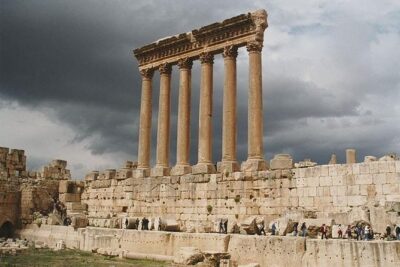
The scale is the first thing you notice. Baalbek was built over more than two centuries, and the surviving blocks and columns make the engineering feel almost absurd. The Temple of Jupiter once had enormous columns, while the Temple of Bacchus remains one of the best-preserved Roman temples anywhere. You can expect time to look closely at carved stone, massive platforms, stairways, and fragments of the sanctuary.
The schedule gives Baalbek about three hours across the general stop and the temple complex. That is enough for a meaningful visit, especially with a guide explaining what you are seeing. It is not enough for a slow archaeological study or an unhurried wander through every corner, so listen closely and save your questions for the guide.
One detail worth watching for is the contrast between the grand architecture and the small carved features. The large blocks grab your attention, but the decorative work on the temples shows the skill behind the scale. A good explanation turns Baalbek from a pile of ancient stones into a place where pilgrims, rulers, and builders all left their mark.
More Baalbek and Anjar circuits:
- Guided Small-Group Tour to Baalbek, Anjar and Ksara with Lunch
★ 5.0 · 511 reviews - Anjar, Baalbek & Ksara Day Trip – With Lunch (4G on Board)
★ 4.5 · 181 reviews - Baalbek – Anjar – Ksara Trip From Beirut
★ 4.5 · 80 reviews
The temples of Baalbek, from Jupiter to Bacchus
The temple complex is the heart of the day. The sanctuary reached its peak during the Roman period, when pilgrims came to honor the three local deities under their Roman names. The site’s importance also explains the lavish construction. This was not a minor provincial shrine. It was designed to impress people who had traveled long distances to worship.
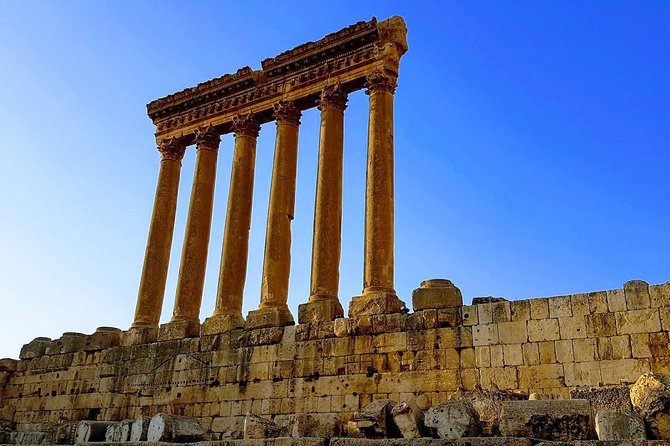
The Temple of Jupiter is the most dramatic reminder of that ambition. Even in ruin, its scale is difficult to grasp from photographs. You will want to stand back to understand the platform, then move closer to inspect the blocks and surviving architectural pieces. The Temple of Bacchus offers a different experience, with more of its structure still readable and a wealth of carved detail.
Admission to the temple complex is not included in the tour price, so allow for that separate cost. The general Baalbek stop is listed without an admission charge, but the main temple entry is the part you should expect to pay for. Since the exact fee is not provided here, check the current amount before departure.
Your guide matters at Baalbek. Albert has been praised for careful timing and detailed explanations across the day. Ghofran has also led the Baalbek portion with close attention to the individual locations. If Ziad is guiding your group, you can expect him to handle both driving and questions, based on the way this tour has been described.
The Stone of the Pregnant Woman and Roman building power
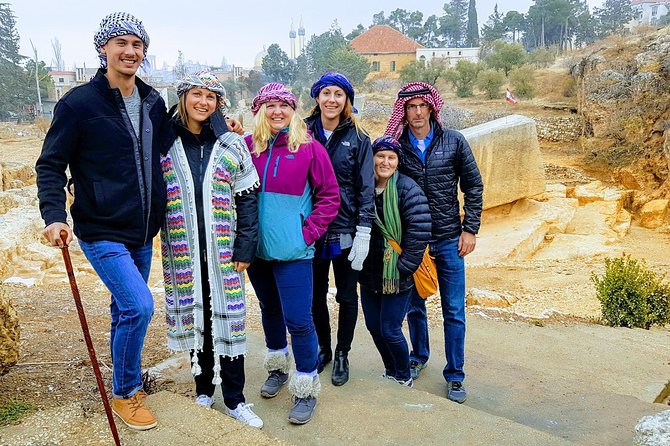
The Stone of the Pregnant Woman gets only about 15 minutes, but it earns its place on the route. This worked Roman monolith, along with another huge block nearby, ranks among the largest stones ever quarried. The blocks were likely intended for the temple complex.
The nickname is memorable, but the useful point is the construction problem behind it. These were not decorative stones carried into place by accident. They show how much effort the builders were willing to spend on Baalbek and give you a physical sense of the project before you return to the main temples.
This is a short photo and explanation stop, not a second archaeological visit. Keep your expectations in line with the timing. You will see the stone, hear why it matters, and move on.
Anjar’s Umayyad ruins offer a sharp change of mood
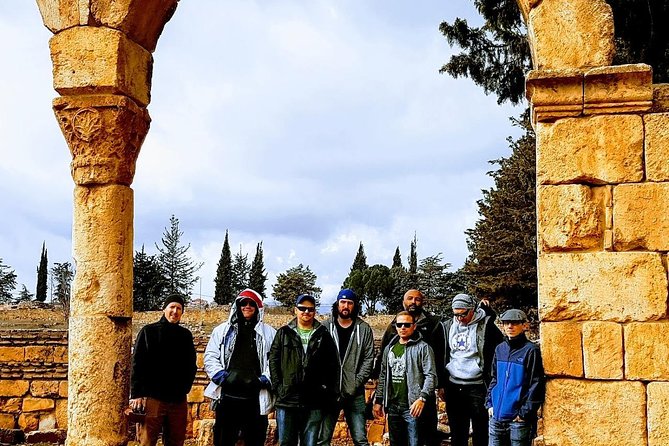
Anjar, also written as Aanjar, gives the day a welcome change of period and style. The city was an inland commercial center at the meeting point of routes from Beirut to Damascus and across the Bekaa toward Homs and Tiberias. Archaeologists only found the site in the late 1940s, so its exposure to modern visitors is relatively recent.
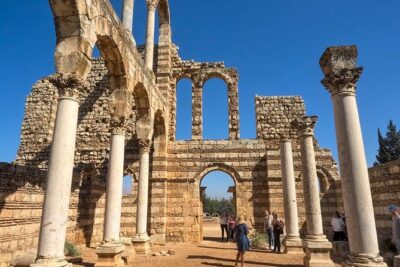
The remains include the walls of the Umayyad palace, the caliph’s great palace, harems, a mosque, thermal baths, and many columns. Some columns and architectural features show Roman influence, but the city belongs to the Umayyad era. That mixture makes Anjar useful for understanding how later rulers reused older design ideas while building their own centers of power.
You have about 45 minutes here. I would use that time to focus on the layout rather than trying to inspect every stone. Look for the planned quality of the city, the palace areas, the baths, and the repeated columns. The site is less monumental than Baalbek, but that is part of its appeal. Baalbek is a sacred complex built to overwhelm. Anjar helps you picture an organized inland town tied to trade and government.
Admission to Anjar is not included, so this is another separate site fee to plan for. The stop is shorter than Baalbek, and a guide’s explanation is especially useful because the ruins may not immediately tell their own story. A clear account of the city’s routes, rulers, destruction, and reconstruction gives the remains much more meaning.
More Bekaa wine afternoons:
- Guided Private Full Day Tour to Baalbek, Anjar and Chateau Ksara
★ 5.0 · 60 reviews - Lebanon tour Baalbek ruins & Ksara w/pick-up, lunch,guide+entries
★ 5.0 · 35 reviews - Baalbek Temples & Ksara Caves w/pick-up,guide, entries+lunch
★ 4.9 · 34 reviews - Small Group Tours to Baalbek, Anjar & Chateau Ksara with lunch and Tickets
★ 5.0 · 29 reviews
Château Ksara connects the valley to modern Lebanon
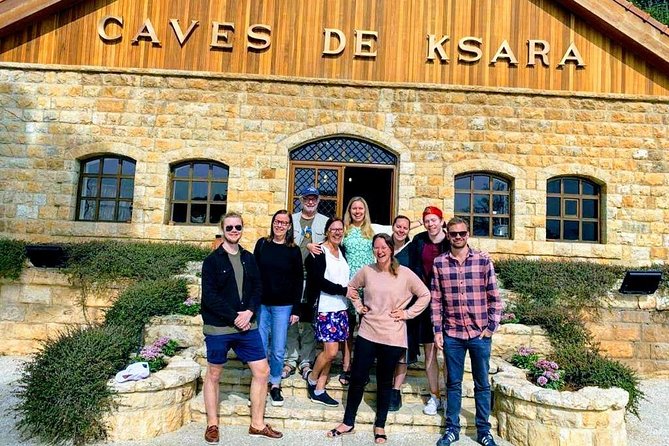
The final major stop is Château Ksara, a Lebanese wine company founded by Jesuit priests in 1857. The winery developed Lebanon’s first dry wine and now produces about three million bottles each year, with exports to more than 40 countries.
You get about an hour here, including a wine tasting. This is not just a decorative food stop added to fill time. It gives you a look at a working part of the Bekaa Valley economy and introduces a Lebanese product with a long local connection. The tasting is complimentary, although the stop itself is listed without an included admission ticket.
The winery also creates a pleasant change after several hours of stone ruins. You can sit, taste, and ask questions instead of climbing around temple platforms. If you do not drink wine, the stop may be less important to you, but it still adds a modern cultural angle to a day that otherwise leans heavily toward archaeology.
The tour description does not specify which wines are poured, how many samples you receive, or whether a cellar visit is included. I would treat the tasting as a pleasant introduction rather than a full wine course. Anyone hoping for an extended winery tour should confirm the exact format before booking.
What lunch and transport add to the $65 price
At $65 per person, this tour offers solid value if you want to see all three places in one day. The price includes air-conditioned transport, hotel pickup and drop-off within Beirut’s city center, a Lebanese lunch, a guide, and the small-group format. Baalbek and Anjar admission fees are not included, and you should also confirm any current cost connected with the winery visit.
The included lunch matters. A full day in the Bekaa Valley requires more than a snack, and the promise of an authentic Lebanese meal keeps you from having to arrange food between sites. The exact restaurant and menu are not specified, so do not book this expecting a particular dish. You can expect the meal to be part of the day rather than an extra purchase.
Pickup begins at 8:30 a.m., and door-to-door service within central Beirut removes one of the biggest hassles of an inland day trip. You do not need to find a distant bus terminal or organize a taxi to the departure point. Drop-off is also included.
The vehicle is air-conditioned, a practical feature for a long outing. The tour lasts about eight hours, though road conditions and the number of pickup points can affect the exact return time. The schedule is full, so wear sensible footwear and be ready for walking at ancient sites. The supplied details do not state the vehicle’s exact model or accessibility arrangements, so contact the operator if you need specific mobility assistance.
A maximum of 15 people is a useful middle ground. You get the cost benefits of a shared excursion without the scale of a large bus group. It also helps at Baalbek, where a guide’s voice and answers can be lost in a crowd. Small-group does not mean private, however. If you want to set your own pace or skip a stop, a private tour would give you more control.
How the guides shape the day
The strongest part of this experience is likely to be the guiding. The trip covers Phoenician religious roots, Hellenistic Heliopolis, Imperial Rome, the Umayyad period, Lebanese wine, and local food in one day. Without explanation, that can feel like a rapid series of disconnected sites.
Albert has been singled out for planning, time control, and detailed explanations from the start of the day. Ghofran has been praised for a full account of Baalbek’s locations, which is useful at a site where the main temple names can blur together. Ziad has been described as both driver and guide, with clear answers to questions.
The exact guide is not guaranteed, so I would not book solely for one named person. Still, the repeated emphasis on timing, explanations, and questions gives you a good idea of what to value. Pay attention during the vehicle rides. That is when the guide can connect the valley, the sites, and the different periods without using up your limited time at the ruins.
The pace, the limits, and who should book
This tour suits you if you are staying in Beirut and want a broad introduction to inland Lebanon without arranging a car, driver, lunch, and site tickets yourself. It is particularly useful for first-time visitors who want Baalbek as the main prize but also want to see Anjar and sample Lebanese wine.
It also works well for people who value structure. Pickup, transport, lunch, guiding, and return are arranged for you. The group limit of 15 keeps the outing more personal than a standard coach excursion.
The pace may not suit you if Baalbek is your central passion. You will have a good amount of time there, but the day also includes Anjar, the stone quarry stop, lunch, and Ksara. A private Baalbek visit would allow longer photography, more quiet time, and closer attention to architectural details.
The wine stop is another point to weigh. If you enjoy regional wine, it adds variety and gives you a look at a major Lebanese producer. If you prefer an archaeology-only day, that hour could feel like time taken from the ancient sites.
Free cancellation is available when you cancel at least 24 hours before the start time. Inside that window, the payment is not refunded, and changes are not accepted. The tour is listed as suitable for most people, but detailed accessibility information is not provided.
Should you book the Baalbek, Anjar, and Ksara tour?
I would book this tour if you have one open day in Beirut and want the easiest way to reach Baalbek and the Bekaa Valley. Baalbek alone justifies the trip, while Anjar, the huge Roman stone, lunch, and Château Ksara make the day feel fuller than a single-site excursion.
The $65 price is attractive because it includes the long-distance ride, central Beirut pickup, guide, lunch, and wine tasting. Add the separate entrance fees to Baalbek and Anjar when you set your budget.
Choose it with realistic expectations. This is a well-packed introduction, not a slow archaeological study. If you want strong site context, a small group, and several distinct experiences in one day, it is a sensible choice. If you want complete freedom at Baalbek or dislike scheduled tasting stops, look for a private or more narrowly focused alternative.
FAQ
Where does the tour start?
The tour starts in Beirut with pickup at 8:30 a.m. Hotel pickup and drop-off are offered from locations within the city center.
How long does the tour last?
The experience lasts approximately eight hours.
What sites are included in the route?
The route includes Baalbek, the Baalbek temple complex, the Stone of the Pregnant Woman, the Umayyad ruins of Anjar, and Château Ksara.
Is lunch included?
Yes. An authentic Lebanese lunch is included in the tour price.
Is wine tasting included?
A complimentary wine tasting is included at Château Ksara. The winery stop is listed without an included admission ticket.
Are entrance fees included?
The provided details state that admission to the Baalbek temple complex and Anjar is not included. The Stone of the Pregnant Woman stop is listed without an admission charge.
How many people can join the group?
The tour has a maximum of 15 participants.
Can I cancel for a full refund?
Yes, if you cancel at least 24 hours before the experience start time. Cancellations or changes made less than 24 hours before the start time are not refunded or accepted.
More Lunch Experiences in Beirut
- Guided Small-Group Tour to Jeita, Harissa, Byblos with Lunch
★ 5.0 · 361 reviews - Byblos, Jeita Grotto & Harissa Day Trip -With Lunch (4G on Board)
★ 4.5 · 145 reviews - Semi-Private Tour to Jeita Grotto, Harissa & Byblos with Lunch
★ 5.0 · 52 reviews - Sidon, Tyre & Maghdouche Day Trip – With Lunch (4G on Board)
★ 4.5 · 44 reviews
Just added around Beirut
- Beirut to Sidon, Tyre and Maghdouché: Daily Tours with Lunch★ 5.0 · 3 reviews
- Exploring Beirut’s Past: A Private Guided Historical Tour★ 5.0 · 3 reviews
- Chouf Charm: Private Journey Through Lebanon’s Historic Heartland★ 4.5 · 3 reviews
- Hike Chouwen★ 5.0 · 3 reviews
- Private Trip to Beiteddine, Deir el Qamar & Maaser el Chouf Cedars★ 4.5 · 3 reviews
- Lebanese wineries guided tour with tastings & lunch★ 4.9 · 3 reviews
- Baalbek, Anjar & Wine: A Journey Through Lebanon’s Heritage★ 5.0 · 3 reviews
- Wine Tasting and Culture★ 5.0 · 3 reviews
Baalbek & Anjar Day Trips, compared.
Anjar, Baalbek & Ksara Day Trip – With Lunch (4G on Board)
Read our review →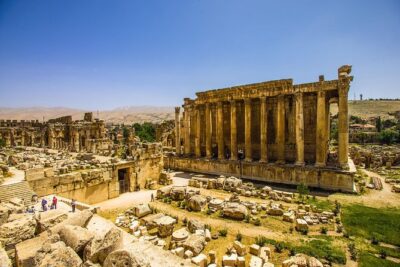
Private Anjar and Baalbek Tour from Beirut with Departure Ticket
Read our review →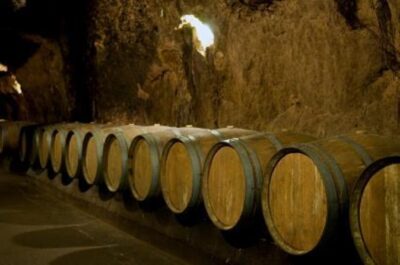
Guided Private Full Day Tour to Baalbek, Anjar and Chateau Ksara
Read our review →
Lebanon tour Baalbek ruins & Ksara w/pick-up, lunch,guide+entries
Read our review →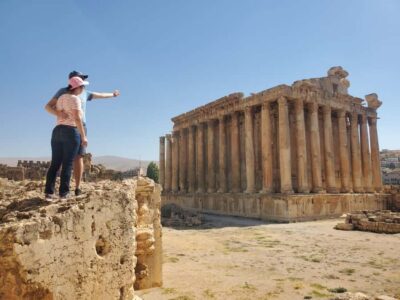
Baalbek Temples & Ksara Caves w/pick-up,guide, entries+lunch
Read our review →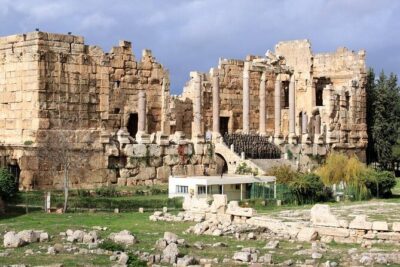
Small Group Tours to Baalbek, Anjar & Chateau Ksara with lunch and Tickets
Read our review →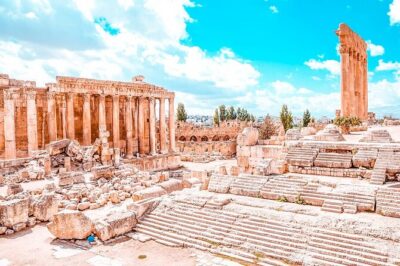
Private Tour: Anjar, Baalbek and Ksara Day Trip from Beirut
Read our review →Browse the lists this tour appears in