
Reviewed · BAALBEK & ANJAR DAY TRIPS
Small Group Tours to Baalbek, Anjar & Chateau Ksara with lunch and Tickets
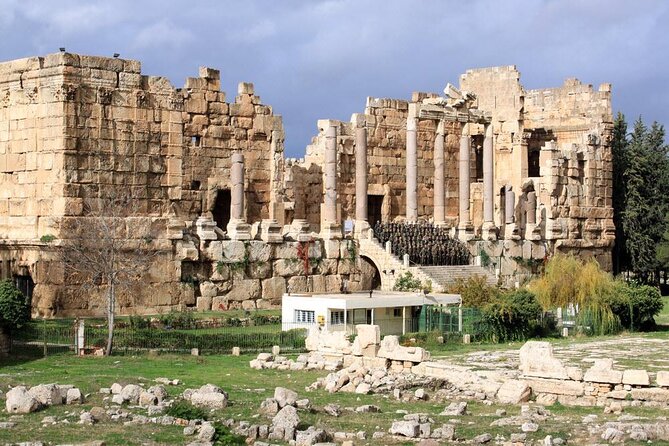
Baalbek is the star here: a vast Roman sanctuary with enormous columns, temples, and stones that make ordinary ancient ruins look modest. I like that this day adds Anjar’s Umayyad city and Château Ksara’s wine caves, so you get three very different sides of Lebanon in one outing.
I also like the small group and hotel pickup, especially if you have limited time in Beirut and do not want to arrange transport across the Bekaa Valley. The main consideration is the long day, about nine hours, with roughly 1 hour and 30 minutes at Baalbek and shorter visits at Anjar and the winery.
Key points to know before booking
- Baalbek delivers the biggest visual impact: Jupiter’s temple, the Temple of Bacchus, and the Stone of the Pregnant Woman show Roman building on an almost unbelievable scale.
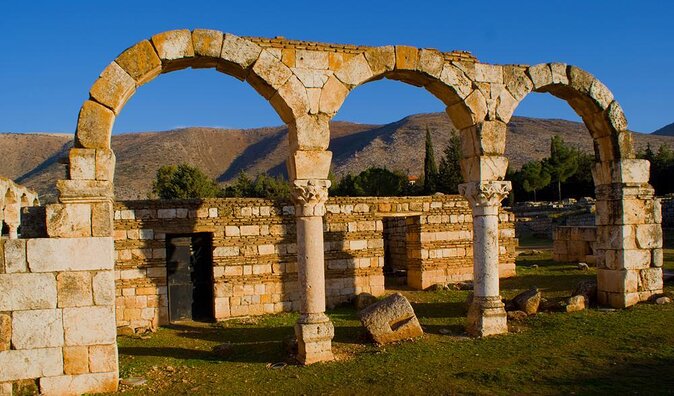
- Anjar changes the historical focus: Its palace, mosque, baths, arcades, and harems belong to the Umayyad period, not the Roman one.
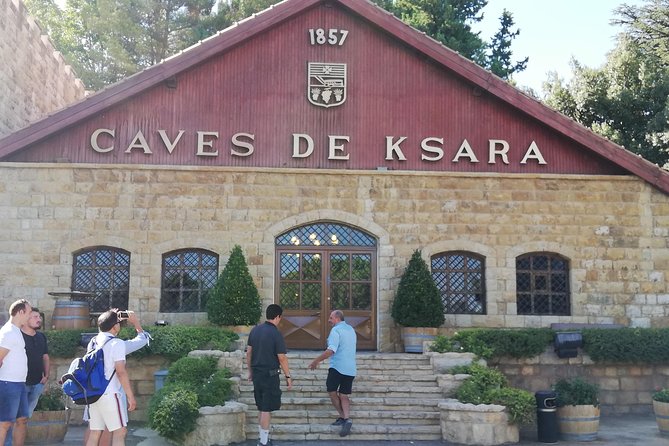
- Château Ksara adds a local flavor: Founded by Jesuit priests in 1857, it offers a look at Lebanese winemaking and its underground cave.
- Lunch is part of the deal: You eat at a local Lebanese restaurant, a useful break on a full sightseeing day.
- The group is capped at 15: That is small enough for questions without paying for a fully private tour.
- The $75 price covers the essentials: Hotel transfers, a guide, air-conditioned transport, lunch, and admission to Baalbek and Anjar are included. Château Ksara admission is not.
Why this three-stop day works from Beirut
This tour makes sense because the three sites complement one another. Baalbek gives you monumental Roman architecture, Anjar introduces the Umayyad world of the eighth century, and Ksara shifts the day toward food, wine, and modern Lebanese production.
You leave Beirut at 8:00 am and spend the day in a comfortable, climate-controlled private minivan. That matters here. The tour covers several sites away from the capital, and arranging separate taxis or public transport would take more effort and make the timing harder to manage.
The group maximum is 15 people. I would not call that an intimate private tour, but it is far more workable than a large coach. You should have a reasonable chance to hear the guide and ask questions, while still keeping the price at $75 per person.
The day is also a good fit if you have only a short stay in Beirut. Instead of giving a full day to a single archaeological site, you see major Roman and Umayyad remains, taste Lebanese wine, and sit down to a local meal.
The tradeoff is clear: this is a packed excursion. You will spend a good part of the day in the van, and each stop has a fixed time. If you prefer to study every column, inscription, and stone at your own pace, a private tour with a slower schedule would suit you better.
More Baalbek and Anjar circuits:
- Guided Small-Group Tour to Baalbek, Anjar and Ksara with Lunch
★ 5.0 · 511 reviews - Anjar, Baalbek & Ksara Day Trip – With Lunch (4G on Board)
★ 4.5 · 181 reviews - Baalbek – Anjar – Ksara Trip From Beirut
★ 4.5 · 80 reviews
Baalbek: Roman scale that is hard to grasp
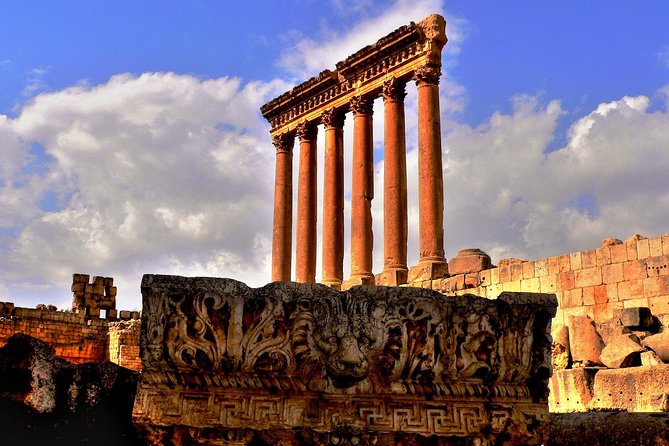
The Baalbek complex sits at about 1,150 meters at the foot of the Anti-Lebanon range, beside the fertile Bekaa Valley. In Roman times, the city reached its peak as the sanctuary of Heliopolis, where the Romanized versions of Jupiter, Venus, and Bacchus were honored.
Your main visit lasts about 1 hour and 30 minutes, with admission included. That is enough to see the major structures and hear the basic story, though it is not an unlimited amount of time for such a large site.
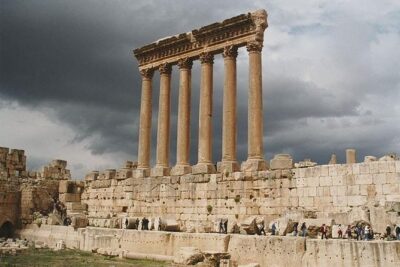
The first lesson is scale. The sanctuary was built over more than two centuries, and its surviving construction gives you a strong sense of Roman ambition. The Temple of Jupiter is known for its giant columns, while the Temple of Bacchus is among the best-preserved buildings in the complex. The Temple of Venus has a more unusual curved form and a different feel from the grand rectangular temples.
I like Baalbek because it rewards both casual sightseers and people who enjoy ancient architecture. You can simply look up at the columns and massive blocks, or listen closely as your guide explains how the site developed from a Phoenician religious center into a Roman imperial sanctuary.
A guide with archaeological training can make a real difference here. Natasha, identified as an archaeologist on one outing, is one guide who may be assigned to the tour. A guide able to explain construction, religious change, and Roman design can help you understand why Baalbek is more than a collection of impressive ruins.
The site also connects to a much older Phoenician tradition. The Roman names of Jupiter, Venus, and Bacchus do not tell the whole story, since the sanctuary reflects an essentially Phoenician cult adapted under Roman rule. That layered background is one reason I would not rush through the guide’s explanation.
Bring sensible footwear and be ready for open-air walking. The tour description does not promise a particular accessibility setup, though most people can participate. The altitude, uneven archaeological ground, and amount of walking are worth keeping in mind if you have mobility concerns.
Sayyida Khawla Mosque and Baalbek’s living religious identity
The visit also includes the Mosque of Sayyida Khawla in Baalbek. It is believed to mark the burial place of Sayyida Khawla, the daughter of Imam al-Hussein, the grandson of the Prophet Muhammad.
This stop gives the day a different tone. Baalbek is not only an ancient Roman site presented behind archaeological boundaries. It is also a living place with religious meaning for local people.
The supplied schedule does not give a separate duration for the mosque, so your exact time there may depend on the day’s pacing. Treat it as part of the Baalbek visit rather than a long standalone stop.
As with any religious site, follow the guide’s instructions on appropriate conduct and dress. The available information does not specify a dress code, so it is sensible to ask at booking if you have concerns.
The Stone of the Pregnant Woman and Roman engineering
A short stop of about 15 minutes takes you to the Stone of the Pregnant Woman, also known as a worked Roman monolith. Together with another nearby block, it ranks among the largest stones ever quarried.
The name is memorable, but the engineering is the real story. These enormous blocks were apparently intended for the nearby temple complex. Their size shows that Roman construction at Baalbek involved more than elegant columns and carved decoration. It also required moving and placing stones on a scale that remains difficult to explain.
Fifteen minutes is enough for photographs, a close look, and a clear explanation from the guide. It is not enough for an extended archaeological discussion, so think of this as a focused add-on to the main sanctuary visit.
I like the stop because it helps you understand the construction problem. After seeing the finished temples, you look at one of the raw building blocks and get a more practical sense of what the builders faced.
More Bekaa wine afternoons:
- Guided Private Full Day Tour to Baalbek, Anjar and Chateau Ksara
★ 5.0 · 60 reviews - Lebanon tour Baalbek ruins & Ksara w/pick-up, lunch,guide+entries
★ 5.0 · 35 reviews - Baalbek Temples & Ksara Caves w/pick-up,guide, entries+lunch
★ 4.9 · 34 reviews - Private Tour: Anjar, Baalbek and Ksara Day Trip from Beirut
★ 5.0 · 20 reviews
Anjar: a planned Umayyad city in the Bekaa Valley
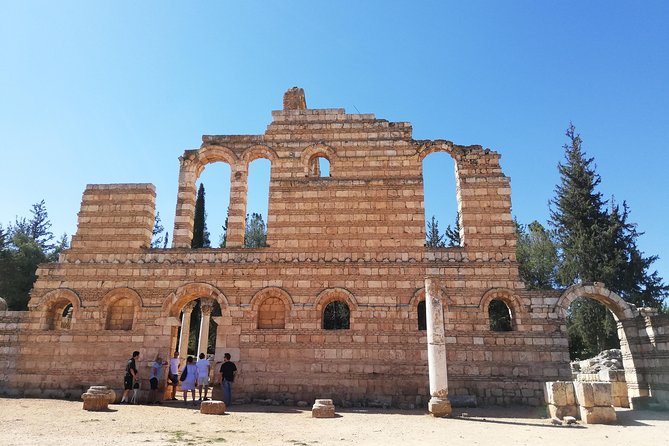
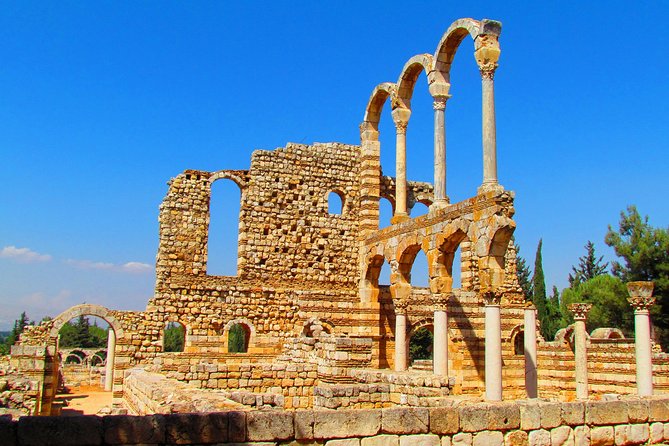
The next major archaeological stop is Anjar, with about 45 minutes on site and admission included. Its ruins belong to the Umayyad period and show how an inland commercial center was placed at the meeting point of important routes.
Anjar sat where roads connected Beirut with Damascus and crossed the Bekaa toward Homs and Tiberiade. The site was only identified by archaeologists in the late 1940s, which adds a modern chapter to its story.
The remains include the Umayyad palace, harems, a mosque, the great palace of the caliph, thermal baths, walls, and rows of pillars. Some columns and architectural details recall Roman design, but the city belongs to a later Islamic dynasty. That contrast makes Anjar an important counterpoint to Baalbek.
I find the visit especially useful for understanding how civilizations reused older building ideas. At Baalbek, the Roman sanctuary dominates. At Anjar, Roman-style elements appear within a planned Umayyad city built for trade and administration.
Forty-five minutes is brief but workable. You can walk through the main remains, take in the layout, and ask the guide how the palace, mosque, baths, and commercial routes fit together. If archaeology is your main interest, you may wish for more time, but the shorter stop is what allows the tour to include the winery and lunch.
Lebanese lunch gives the day a welcome pause
Lunch at a local Lebanese restaurant is included. The meal is not an afterthought, since a full day in the Bekaa Valley needs a proper break rather than a quick snack between ruins.
The available details do not name the restaurant or list the dishes, so I would not promise a specific menu. You can expect the meal to be presented as part of the local food experience, and one account describes it as generous and excellent.
Lunch also adds value to the $75 price. If you paid separately for transport, guiding, site admissions, and a substantial Lebanese meal, the day would quickly become more expensive and harder to coordinate.
The timing of lunch is not stated, so it may fall between the archaeological visits and Château Ksara according to the guide’s schedule. Keep some flexibility in mind rather than planning another fixed activity in Beirut immediately after the advertised nine-hour duration.
Château Ksara, Lebanese wine in a former Jesuit cellar
The final major stop is Château Ksara, founded by Jesuit priests in 1857. The winery developed Lebanon’s first dry wine and now produces about three million bottles a year for sale in Lebanon and other countries.
The visit lasts about one hour. You go behind the scenes to learn how Lebanese wine is made, see the on-site cave, and taste multiple wine samples.
That shift from ruins to working production is one of the tour’s best ideas. After a morning focused on ancient empires, you see a Lebanese business with a long local history and an international reach.
The cave is likely to be the most distinctive part of the visit. The information provided does not give its length, temperature, or exact route, so do not assume a lengthy cellar tour. Still, the chance to look inside the winery’s cave gives the tasting more context than simply sitting at a counter with a glass.
One important price detail: Château Ksara admission is not included, even though wine tasting is part of the advertised experience. The tour price covers hotel pickup and drop-off, the local guide, lunch, air-conditioned transport, tour leadership, and admission to Baalbek and Anjar. Ask the provider what winery admission or tasting charges apply before departure, since the information does not state the amount.
If you do not drink wine, you should also confirm how the stop is handled for non-drinkers. The supplied details describe wine tasting but do not specify an alternative activity.
Guides, transport, and the value of a small group
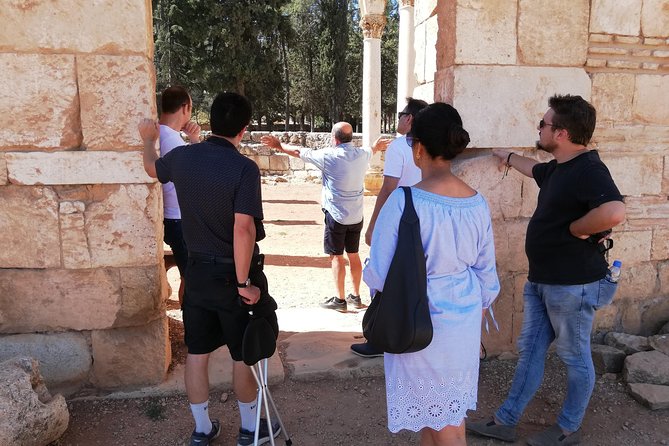
The guide is central to this experience. Baalbek and Anjar are much easier to appreciate when someone explains which period you are looking at and why the buildings matter.
The tour may involve several members of the team. Natasha is described as an archaeologist, Khalil is identified as an on-site guide at Baalbek, and Ziad is noted as a driver who looked after the group and helped ensure lunch was served well. Names and roles may vary by departure, so do not assume one person will handle every part of the day.
The air-conditioned minivan is another practical advantage. Lebanon can be hot, and a private vehicle with hotel transfers saves you from dealing with several separate journeys. The vehicle is described as comfortable and climate-controlled, but no specific model or seat arrangement is given.
With a maximum of 15 people, the guide can keep the day moving while still allowing questions. That is particularly useful at Baalbek, where a short explanation of the Romanized Phoenician cult or the Temple of Bacchus can change how you see the ruins.
The format is less suitable if you want complete control over meal timing, time at each monument, or the winery visit. Its value comes from combining several major stops without requiring you to organize the route yourself.
Is $75 a fair price?
At $75 per person, this is a strong value if you want all three stops. The package includes hotel pickup and drop-off, an air-conditioned vehicle, a local guide, a tour leader, lunch, and admission to Baalbek and Anjar.
The winery charge is the one item to check. Since Château Ksara admission is not included, the final cost may be higher than $75, depending on what you are charged there.
Even with that qualification, the price compares well with the amount of ground covered. You receive a full-day transfer from Beirut into the Bekaa Valley, several guided visits, a meal, and wine tasting without arranging separate transport.
The tour is also recommended by all listed ratings, with a five-star average from 29 reviews. More useful than the number itself is the pattern in the feedback: the archaeological explanations, Lebanese lunch, organization, comfortable van, and overall fit for a short Beirut stay receive the strongest praise.
Who should book this day?
I would choose this tour if you want a broad introduction to Lebanon beyond Beirut and have about nine hours available. It suits first-time visitors, history fans, wine enthusiasts, and anyone who prefers an organized route with hotel transfers.
It is especially helpful if you have limited time. Baalbek alone deserves longer than 90 minutes, but adding Anjar and Ksara gives you a much wider picture of the country in one day.
Families and mixed-interest groups may also appreciate the variety. One person can focus on Roman ruins, another on Umayyad architecture, and another on wine and food.
I would hesitate if you dislike long road days or want a slow archaeological study. The schedule is fixed, the Baalbek visit is not a full-day exploration, and the 15-person maximum still means you are sharing the experience with others.
Book at least a day ahead if your plans are firm. The experience is often reserved about 26 days in advance, which suggests that popular dates can fill well ahead of time. Free cancellation is available up to 24 hours before the start time. If bad weather cancels the tour, you can receive a different date or a full refund.
My verdict: a smart full-day introduction
You should book this tour if you want Baalbek but also want your day to include more than one famous ruin. The Roman temples are the main reason to go, yet Anjar, the local lunch, and Château Ksara keep the outing from feeling like a single-site history lesson.
The best reasons to choose it are the well-balanced route, hotel-to-hotel transport, and the combination of included lunch and major site tickets. The main cautions are the long day, limited time at each stop, and the separate Château Ksara admission.
For a first visit to Lebanon with a free day from Beirut, this is a practical and worthwhile choice. If your priority is absolute flexibility, book privately instead. If your priority is seeing Baalbek, Anjar, and Ksara without logistical headaches, the $75 format makes good sense.
FAQ
How long does the Baalbek, Anjar, and Ksara tour last?
The experience lasts approximately nine hours, beginning at 8:00 am.
Where does the tour start?
Hotel pickup and drop-off are included, with the tour starting in Beirut at 8:00 am.
What sites are visited?
The route includes the Temples of Baalbek, the Mosque of Sayyida Khawla, the Stone of the Pregnant Woman, the Umayyad Ruins of Anjar, and Château Ksara.
Is lunch included?
Yes. Lunch at a local Lebanese restaurant is included in the tour price.
Are entrance tickets included?
Admission to Baalbek and Anjar is included. Château Ksara admission is not included.
Is wine tasting included?
The experience includes multiple wine samples and a visit to Château Ksara, where you learn about Lebanese winemaking and see the on-site cave. The listed information does not specify the separate winery admission charge.
How large is the group?
The tour has a maximum of 15 travelers.
Is transportation provided?
Yes. The tour uses an air-conditioned vehicle and includes hotel pickup and drop-off.
Can I cancel for a full refund?
Yes, if you cancel at least 24 hours before the experience start time. Cancellations or changes made less than 24 hours before the start time are not refunded. If poor weather causes the provider to cancel, you will be offered another date or a full refund.
More Lunch Experiences in Beirut
- Guided Small-Group Tour to Jeita, Harissa, Byblos with Lunch
★ 5.0 · 361 reviews - Byblos, Jeita Grotto & Harissa Day Trip -With Lunch (4G on Board)
★ 4.5 · 145 reviews - Semi-Private Tour to Jeita Grotto, Harissa & Byblos with Lunch
★ 5.0 · 52 reviews - Sidon, Tyre & Maghdouche Day Trip – With Lunch (4G on Board)
★ 4.5 · 44 reviews
Just added around Beirut
- Beirut to Sidon, Tyre and Maghdouché: Daily Tours with Lunch★ 5.0 · 3 reviews
- Exploring Beirut’s Past: A Private Guided Historical Tour★ 5.0 · 3 reviews
- Chouf Charm: Private Journey Through Lebanon’s Historic Heartland★ 4.5 · 3 reviews
- Hike Chouwen★ 5.0 · 3 reviews
- Private Trip to Beiteddine, Deir el Qamar & Maaser el Chouf Cedars★ 4.5 · 3 reviews
- Small-Group Tour with Lunch to Baalbek, Anjar and Ksara★ 5.0 · 3 reviews
- Baalbek, Anjar & Wine: A Journey Through Lebanon’s Heritage★ 5.0 · 3 reviews
- Lebanese wineries guided tour with tastings & lunch★ 4.9 · 3 reviews
Baalbek & Anjar Day Trips, compared.
Guided Small-Group Tour to Baalbek, Anjar and Ksara with Lunch
Read our review →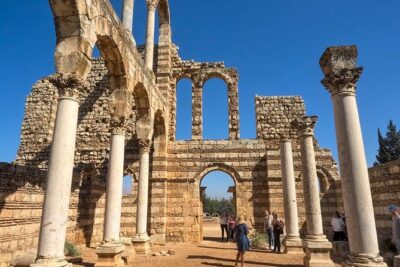
Anjar, Baalbek & Ksara Day Trip – With Lunch (4G on Board)
Read our review →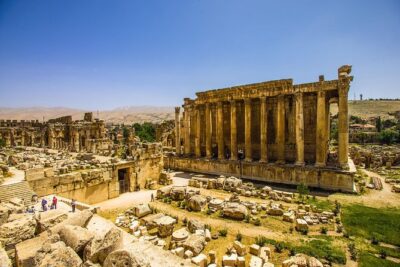
Private Anjar and Baalbek Tour from Beirut with Departure Ticket
Read our review →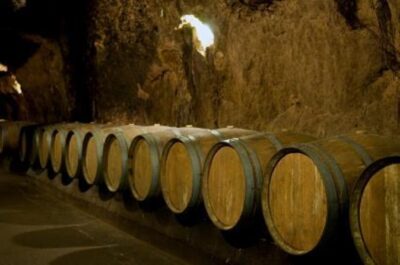
Guided Private Full Day Tour to Baalbek, Anjar and Chateau Ksara
Read our review →
Lebanon tour Baalbek ruins & Ksara w/pick-up, lunch,guide+entries
Read our review →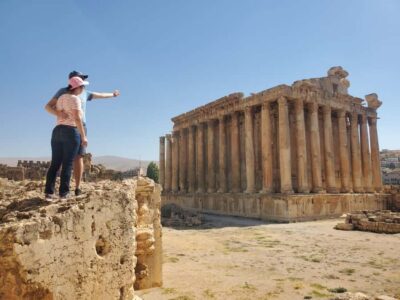
Baalbek Temples & Ksara Caves w/pick-up,guide, entries+lunch
Read our review →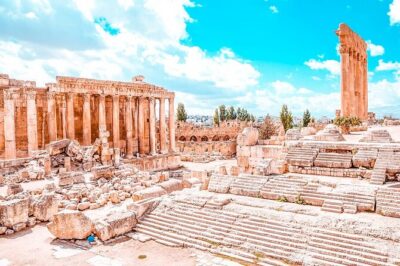
Private Tour: Anjar, Baalbek and Ksara Day Trip from Beirut
Read our review →Browse the lists this tour appears in