
Reviewed · BAALBEK & ANJAR DAY TRIPS
Guided Full-Day Private Tour to Jeita Grotto, Byblos and Baalbek
The remarkable thing here is the range. In about 10 hours, you move from a limestone cave filled with mineral shapes to a Phoenician port and then to some of the largest Roman ruins in the world. Jeita Grotto, Byblos, and Baalbek give you three very different ways to understand Lebanon.
I like the private door-to-door transport, which saves time and lets your group set the pace. I also like the chance to see Baalbek from Beirut without arranging a separate long-distance journey. The main drawback is the packed day: you will spend many hours on the road, and the short stops in Byblos leave little room for a slow lunch or extended wandering.
Key points
- Three major sights in one day: Visit Jeita Grotto, Byblos, and Baalbek from a Beirut hotel.
- A private experience: Only your group takes part, with a tour leader and air-conditioned vehicle.
- Jeita has two cave levels: The upper cave is filled with crystal formations, while the lower gallery follows an underground river and lake.
- Byblos combines archaeology and daily life: See the castle, ancient port, old souk, and Phoenician remains.
- Baalbek delivers the grand finale: The Temple of Jupiter, Temple of Bacchus, and Stone of the Pregnant Woman show Roman building on a huge scale.
One day, three very different sides of Lebanon
This tour is built for someone with limited time in Lebanon. You get an early start from Beirut, visit the coast and mountains, then travel inland to the Bekaa Valley. It is a lot, but the contrast is the point.
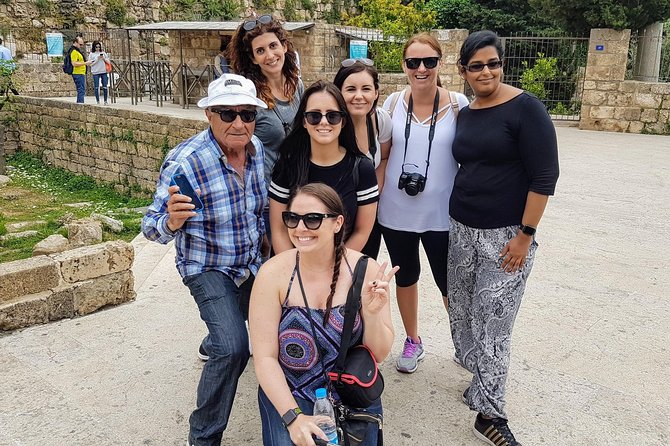
The day begins at about 7:30 am, with pickup from your Beirut hotel. A private air-conditioned vehicle and driver take you between sites, while a guide explains the history. Since only your own group participates, you can ask questions directly and avoid the stop-and-go feel of a large coach tour.
The price is listed at $100 per person. That is a fair value if you want private transport, hotel pickup and a guide for three major sights. You will still need to budget for lunch and several entrance tickets, so the final cost will be higher than the advertised rate. Group discounts may also be available, which can improve the value for families or friends traveling together.
The schedule is tight. Jeita gets about an hour, Byblos is split across several brief visits, and Baalbek receives the longest look. You should see the major highlights, but this is not the right choice if you want a slow archaeological study or a long meal beside the sea.
More Jeita Grotto and Harissa runs:
- Guided Small-Group Tour to Jeita, Harissa, Byblos with Lunch
★ 5.0 · 361 reviews - Jeita Grotto,Harissa&Byblos Full-Day PRIVATE-CAR Trip from Beirut
★ 5.0 · 222 reviews - Jeita Grotto – Harissa – Byblos Trip
★ 5.0 · 169 reviews
Jeita Grotto: a cool start beneath the limestone
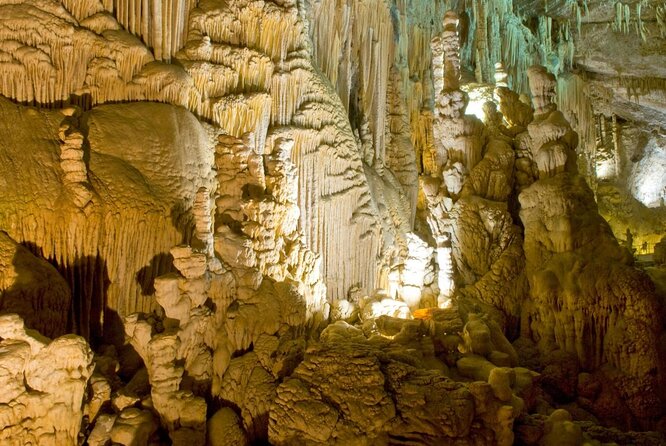
Jeita Grotto is a system of two connected limestone caves formed over millions of years. It sits about 300 meters above sea level, with a total height difference of 305 meters. The scale is easy to underestimate until you learn that the upper cave reaches about 2,130 meters and the lower gallery extends roughly 6,200 meters.
The upper cave is the visual showpiece. Stalactites hang from the ceiling, while stalagmites rise from the floor. You can also see columns, curtains, draperies, mushroom-shaped forms, and ponds. These are not ruins shaped by human hands. They are slow mineral works, formed drop by drop over an immense span of time.
The lower gallery lies about 60 meters below the upper cave. It is crossed by a smooth underground river and a lake. The tour schedule allows around one hour at Jeita, which gives you a useful introduction, though not a long period for lingering over every formation.
Admission is not included, so check the current ticket cost before you set out. You should also wear sensible shoes and bring a light layer if you feel chilled in caves. The contrast with the hot roads and open ruins later in the day makes Jeita a smart first stop.
Byblos: Phoenician history beside the sea
Byblos is one of the oldest Phoenician cities. People have lived here since Neolithic times, and the town is tied to the long story of Mediterranean trade, writing, and seafaring. It is also linked with the spread of the Phoenician alphabet, a detail that gives the ancient stones a wider importance.
The tour allows about an hour for Byblos itself, followed by shorter visits to the castle, souk, and port. That division helps you see several parts of town, but you will need to watch the clock. I would keep your first walk focused on the archaeological area rather than trying to inspect every corner.
Byblos works well because it is not only a ruin field. Ancient remains sit near a living town, old streets, shops, and the harbor. You can connect the city’s past with its present instead of viewing history behind a fence.
Byblos Castle and the archaeological site
Byblos Castle is a restored 12th-century Crusader fortress, surrounded by a dry moat about 10 meters wide. Its square keep gives you a strong view over the archaeological area and toward the sea.
From the castle, you can look down on Bronze Age dwellings and the remains of the Temple of Baalat Gebal and the Temple of the Obelisks. Inside, a small museum and information panels outline the city’s past. The panels are useful if you want dates and names to support the guide’s spoken explanation.
About 30 minutes is set aside for the castle. That is enough to climb, look around, and take in the view, but it is not enough for a slow museum visit. Admission is not included, so keep some money aside for the castle and archaeological site.
I like this stop because it gives Byblos height. On the ground, the ruins can seem like a jumble of foundations. From the keep, their relationship to the sea and the old settlement becomes clearer.
More days out in Byblos:
- Byblos, Jeita Grotto & Harissa Day Trip -With Lunch (4G on Board)
★ 4.5 · 145 reviews - Semi-Private Tour to Jeita Grotto, Harissa & Byblos with Lunch
★ 5.0 · 52 reviews - Small Group Tour to Jeita Grotto, Harisa & Byblos with Hotel pickup
★ 5.0 · 49 reviews - Private Guided Tour to Jeita Grotto through Harissa and Byblos
★ 5.0 · 48 reviews
The souk and port: a short taste of living Byblos
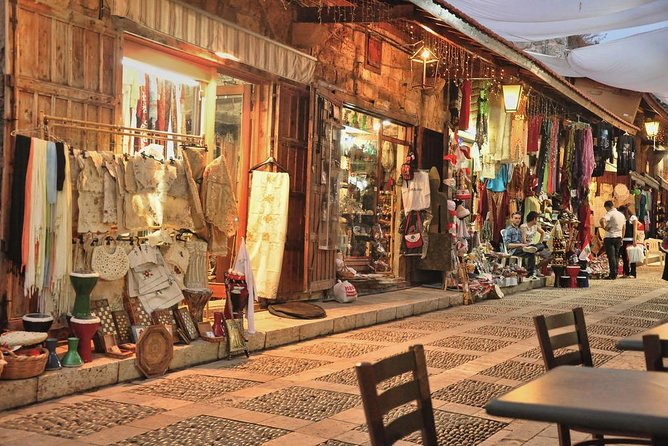
The old souk is a cobbled market area where you can browse souvenirs and antiques or simply enjoy the architecture. The scheduled visit is only about 10 minutes, so think of it as a quick walk, not a shopping session.
That short pause matters. After the formal archaeology, the souk brings you back to present-day Byblos. If you see something you want to buy, ask the guide how much time is available before stopping to browse.
The port also receives about 10 minutes. Lebanese tradition holds that Byblos Port is the oldest port in the world. Around 3000 BC, it was an important timber-shipping center for the eastern Mediterranean. You will not have time for a long waterfront meal here, but the harbor helps explain why Byblos became an important city in the first place.
The road to Baalbek and the Bekaa Valley
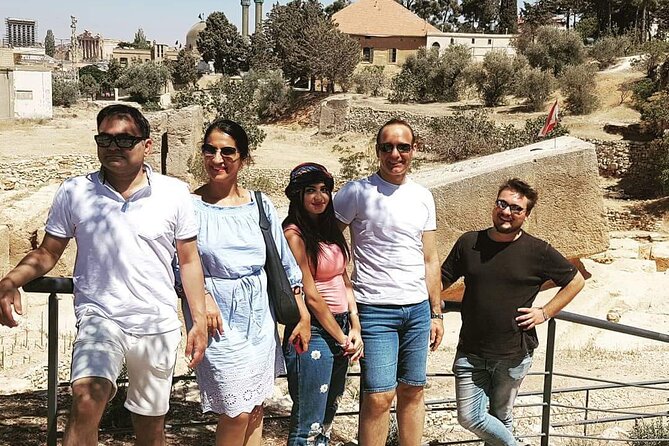
After Byblos, the tour heads inland toward Baalbek in the Bekaa Valley. This is the longest travel section of the day, and it is one reason the private vehicle matters. You can rest between stops instead of managing public transport connections or changing coaches.
Baalbek sits at the foot of the southwestern slope of the Anti-Lebanon range, near the fertile Bekaa plain, at an altitude of about 1,150 meters. The setting changes sharply from coastal Byblos. By the time you arrive, you are ready for a large, open archaeological site rather than another compact old town.
The day gives Baalbek roughly three hours when the main site and temple complex are counted together. That is still a brisk visit, but it gives you enough time to understand the layout and spend a moment with the biggest structures.
Baalbek: Roman power in stone
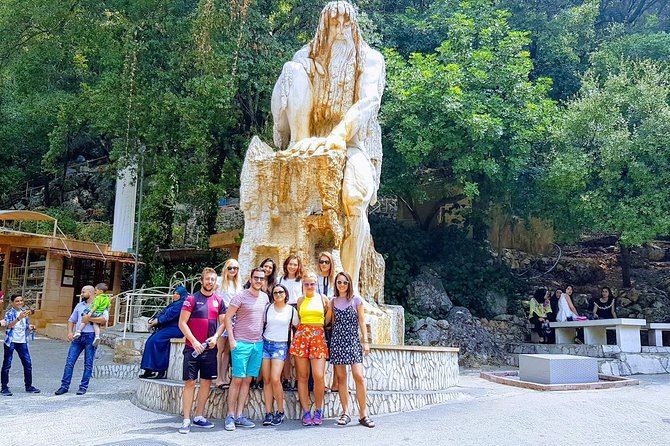
Baalbek was known as Heliopolis during the Hellenistic period. It had earlier Phoenician religious roots, and Roman worship centered on a triad associated with Jupiter, Venus, and Bacchus. Pilgrims came from across the Roman world to visit the sanctuary.
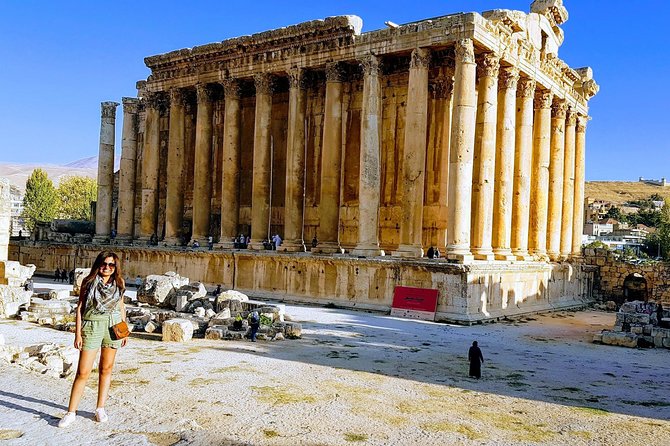
The site is famous for its enormous scale. The Temple of Jupiter and Temple of Bacchus are the key sights, and the surviving columns, platforms, and carved stone make clear how ambitious the complex was. This is not a place where you simply count columns. You need to look at the size of the blocks and imagine the labor required to quarry, move, and set them.
The Temple of Bacchus is especially memorable for its substantial walls and detailed stonework. The Temple of Jupiter is known for its monumental columns and elevated position within the complex. Your guide’s explanations are useful here because the ruins can otherwise feel too large to read at a glance.
Baalbek became a UNESCO World Heritage site in 1984. The designation reflects its importance as one of the finest examples of Imperial Roman architecture at its height, but you do not need an academic interest in Rome to enjoy it. The sheer mass of the ruins does much of the work.
Admission to the temple complex is not included. The tour information also lists the broader Baalbek visit as free, so confirm exactly which areas and tickets are covered on your travel date. This is one of the practical points to settle before leaving Beirut.
The Stone of the Pregnant Woman
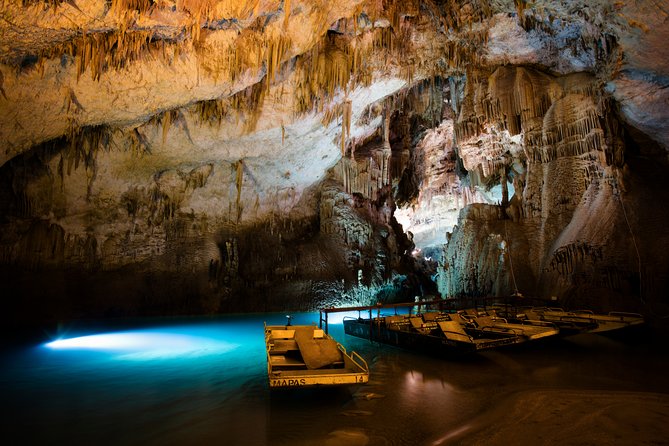
The Stone of the Pregnant Woman is a worked Roman monolith near the Baalbek temples. Together with another ancient block nearby, it is among the largest stones ever quarried. The blocks were likely intended for the Roman sanctuary.
You get about 30 minutes here. That may sound generous for one stone, but its size deserves a pause. The name is commonly linked with local tradition, while the engineering question is the real attraction: how did ancient builders plan to move and use a block of such weight?
This stop adds a useful detail to Baalbek. Inside the temple complex, you see the finished architecture. At the quarry, you see the raw material and the scale of the building project before it became a temple.
Why a private vehicle makes this long day workable
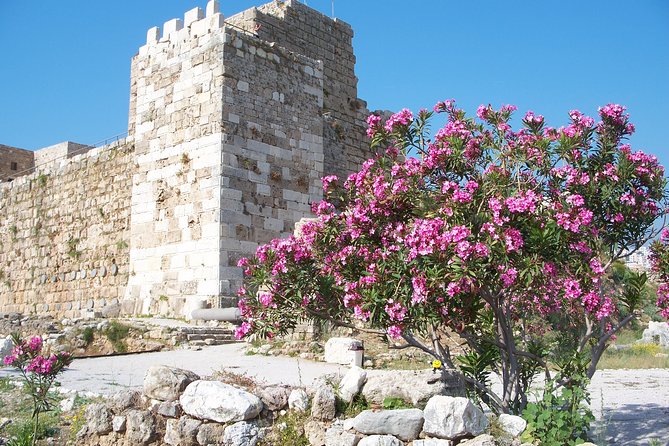
The private format is the tour’s most useful feature. Hotel pickup and drop-off mean you do not have to find a meeting point before sunrise or work out separate transport to Jeita, Byblos, and Baalbek.
An air-conditioned vehicle also gives you a place to recover between sites. The day includes several hours of driving, so comfort is not a small matter. You can use the road time to rest, ask the guide questions, or discuss which site deserves a return visit.
Private does not mean leisurely. The route still covers a large part of Lebanon, and the fixed stops create a full schedule. You should be ready to leave each place when the group timing requires it. The benefit is control over the company you keep and a more direct conversation with the guide, not unlimited time at every ruin.
One guide named in the tour feedback is Hassan. If he is assigned to your group, you can expect the personal feel that suits this format. The provider is Lebanon Tours & Travels, and the experience includes a tour leader plus professional guides.
Lunch, admission fees, and what to bring
Lunch is not included. You should plan for that expense and ask early how the day’s meal break will fit around the route. Because Byblos has only short scheduled stops, do not assume you will have a long seaside lunch there.
Entrance fees are also not fully included. Jeita Grotto, Byblos Castle, and the Baalbek temple complex are specifically listed with admission not included. Carry a payment method suitable for local ticket sales, and confirm current prices before departure.
Wear comfortable shoes. You will walk through cave areas, archaeological ground, old cobbled streets, and large temple precincts. Bring water, sun protection for the open ruins, and a light layer for Jeita’s cooler interior.
The booking includes mobile tickets and confirmation at booking. Free cancellation is available if you cancel at least 24 hours before the local start time. Changes or cancellations inside that 24-hour window are not refunded or accepted.
Who should book this Beirut day trip?
I would choose this tour if you have only one full day for major sights outside Beirut. It gives you a broad first look at Lebanon, with natural scenery, Phoenician culture, Crusader architecture, and Roman ruins all in one route.
It also suits you if you prefer a private setting, want hotel pickup, or do not want to arrange a complicated trip to Baalbek on your own. Families and small groups may find the group discount useful, though every person should be comfortable with the long day.
I would hesitate if your priority is slow travel. Byblos in particular deserves more than quick visits if you want to shop, sit by the port, or explore the archaeological site in detail. You may also prefer separate tours if you want to spend a full morning at Jeita or a full afternoon at Baalbek.
Should you book it?
Book this tour if your main goal is to cover Lebanon’s biggest highlights efficiently. The private transport, hotel pickup, guide, and three very different sites make the $100 starting price reasonable, especially when shared among a small group and supported by any available discount.
Skip it if you dislike early starts, long road sections, or extra ticket costs. For a first visit with limited time, though, the route is hard to beat: Jeita gives you natural wonder, Byblos supplies the coastal and Phoenician story, and Baalbek provides the day’s grandest finish.
FAQ
What time does the tour start?
The tour starts at 7:30 am.
How long does the experience last?
The full tour lasts approximately 10 hours.
Is hotel pickup and drop-off included?
Yes. Pickup and drop-off from your Beirut hotel are included.
Is this a private tour?
Yes. Only your group participates in the activity.
Are lunch and entrance tickets included?
Lunch is not included. Admission is also not included for Jeita Grotto, Byblos Castle, and the Baalbek temple complex.
Can I cancel for a full refund?
Yes, if you cancel at least 24 hours before the experience start time. Cancellations or changes made within 24 hours are not refunded or accepted.
More Full-Day in Beirut
- Guided Private Full Day Tour to Baalbek, Anjar and Chateau Ksara
★ 5.0 · 60 reviews - Jeita Grotto, Byblos and Harissa Full-Day Tour from Beirut
★ 5.0 · 23 reviews - Full-Day Private Tour to Jeita Grotto, Harissa and Byblos
★ 5.0 · 20 reviews - Beirut Full Day Walking Tour
★ 5.0 · 14 reviews
More Baalbek and Anjar Circuits
- Guided Small-Group Tour to Baalbek, Anjar and Ksara with Lunch
★ 5.0 · 511 reviews - Anjar, Baalbek & Ksara Day Trip – With Lunch (4G on Board)
★ 4.5 · 181 reviews - Baalbek – Anjar – Ksara Trip From Beirut
★ 4.5 · 80 reviews - Private Anjar and Baalbek Tour from Beirut with Departure Ticket
★ 5.0 · 79 reviews
Just added around Beirut
- Beirut to Sidon, Tyre and Maghdouché: Daily Tours with Lunch★ 5.0 · 3 reviews
- Exploring Beirut’s Past: A Private Guided Historical Tour★ 5.0 · 3 reviews
- Chouf Charm: Private Journey Through Lebanon’s Historic Heartland★ 4.5 · 3 reviews
- Private Trip to Beiteddine, Deir el Qamar & Maaser el Chouf Cedars★ 4.5 · 3 reviews
- Hike Chouwen★ 5.0 · 3 reviews
- Small-Group Tour with Lunch to Baalbek, Anjar and Ksara★ 5.0 · 3 reviews
- Baalbek, Anjar & Wine: A Journey Through Lebanon’s Heritage★ 5.0 · 3 reviews
- Lebanese wineries guided tour with tastings & lunch★ 4.9 · 3 reviews
Baalbek & Anjar Day Trips, compared.
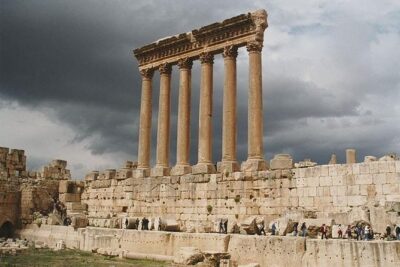
Guided Small-Group Tour to Baalbek, Anjar and Ksara with Lunch
Read our review →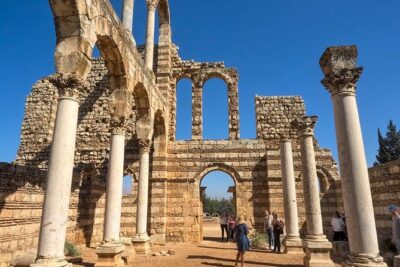
Anjar, Baalbek & Ksara Day Trip – With Lunch (4G on Board)
Read our review →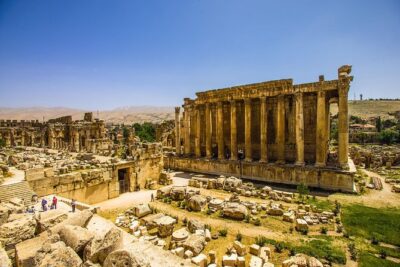
Private Anjar and Baalbek Tour from Beirut with Departure Ticket
Read our review →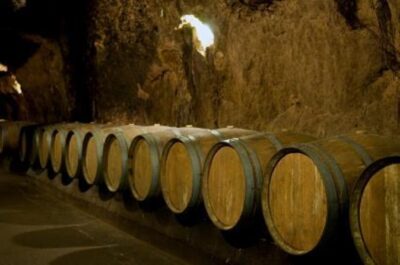
Guided Private Full Day Tour to Baalbek, Anjar and Chateau Ksara
Read our review →
Lebanon tour Baalbek ruins & Ksara w/pick-up, lunch,guide+entries
Read our review →
Baalbek Temples & Ksara Caves w/pick-up,guide, entries+lunch
Read our review →
Small Group Tours to Baalbek, Anjar & Chateau Ksara with lunch and Tickets
Read our review →Browse the lists this tour appears in