
Reviewed · SIDON & TYRE DAY TRIPS
Southern Lebanon Day Trip: Exploring Sidon, Maghdouche and Tyre
Southern Lebanon packs a remarkable amount of history into one day. From Sidon’s Crusader sea castle to Tyre’s Roman hippodrome, this trip takes you from medieval fortifications and old markets to one of Lebanon’s most important ancient sites, with Maghdouche’s hilltop shrine in between.
I like the practical hotel pickup and drop-off, and I like the small maximum group of 15. The $50 price also covers the vehicle, tour leader, and site explanations, which makes this a sensible choice if you want to see three southern destinations without renting a car. The main drawback is the pace: eight hours leaves limited time at each stop, and entrance fees and meals are extra.
Key points at a glance
- Sidon in four distinct stops: See the Crusader sea castle, Khan al-Franj, the Soap Museum, and the old souks.
- A short visit to Maghdouche: Visit Our Lady of Mantara, a shrine linked to a cave where Mary is believed to have rested.
- Tyre’s Roman centerpiece: Walk through Al-Bass, home to a major hippodrome, necropolis, aqueduct, road, and triumphal arch.
- Transport made simple: Hotel pickup and drop-off from Beirut are included in an air-conditioned vehicle.
- A compact group: The tour accepts no more than 15 people, with group discounts available.
- A useful guide-led overview: The tour leader gives brief explanations at each site, and guides such as Ahmed have also tailored walks around Sidon and Tyre for individual interests.
Why this southern Lebanon day trip works
If you are based in Beirut, southern Lebanon is easy to point to on a map and less easy to handle in practice. Renting a car adds planning, navigation, and parking concerns. This organized day trip removes that work and gives you a clear route through Sidon, Maghdouche, and Tyre.
The route also has a good historical arc. Sidon introduces you to a living old city, where the port, market lanes, workshops, and restored buildings still shape daily life. Maghdouche offers a quieter religious stop. Tyre then opens into a broad archaeological area where Roman remains give you a sense of the city’s former scale.
At about eight hours, the day is full but not absurdly long. You should still expect a road-based outing, not a slow local exploration. The scheduled stops are short in Sidon, and the time at each place depends on the group and traffic.
The tour begins at 8:00 a.m. Hotel pickup and drop-off are included, though the supplied details do not specify an exact pickup window for each Beirut hotel. Confirmation is sent at booking, and the group is capped at 15 people. That is small enough for a more personal guide experience than a large coach tour, while still keeping the price low.
More trips down to Sidon and Tyre:
- Small-Group Adventure Tour to Sidon Tyre & Maghdouche-Day Trip
★ 5.0 · 45 reviews - Sidon, Tyre & Maghdouche Day Trip – With Lunch (4G on Board)
★ 4.5 · 44 reviews - Guided Small-Group Tour to Sidon, Tyre & Maghdouche with Lunch
★ 5.0 · 41 reviews
Sidon Sea Castle: a fortress at the water’s edge
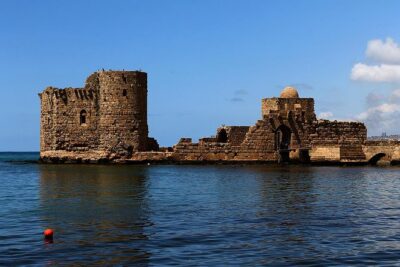
Your first major stop is the Sidon Sea Castle, built by Crusaders in the 13th century on a small island joined to the mainland by a causeway. It was constructed as a fortress of the Holy Land, and its position over the port gives the visit an immediate sense of place.
The castle was badly damaged by the Mamluks in 1291 and later restored by Emir Fakhr el-Dine Maan II in the early 17th century. Old prints show a much more decorated fortress than the one you see today, so it is best to approach the site as a surviving military structure rather than a perfectly preserved palace.
You have about 30 minutes here. That is enough for a look around and some photographs, but not enough for a long, detailed architectural study. Admission is not included, so carry some money for the entrance fee. The tour description does not give the current ticket price.
I like this first stop because it quickly establishes Sidon’s coastal character. You are not looking at an isolated ruin in an empty field. The castle is tied to the harbor, the causeway, and the working city beyond it.
Khan al-Franj and Sidon’s old commercial life
Khan al-Franj takes you from military history to trade. Emir Fakhreddine II built this 17th-century khan as a hotel for ambassadors and a center for business between Lebanon and France.
Its layout is easy to understand. A large rectangular courtyard with a central fountain is surrounded by covered galleries. In its earlier life, the building served far more than one purpose. It became a place linked with literature, religion, history, industry, and diplomacy.
The visit lasts about 15 minutes and admission is free. That short stop suits the building well. You can cross the courtyard, take in the galleries, and listen to the guide’s explanation without trying to turn it into a long museum visit.
This is also a useful reminder that Sidon was not simply a port for local trade. Its buildings reflect contact with foreign merchants, officials, and visitors. Look for the relationship between the courtyard and the covered walkways, since the design tells you how a traditional khan functioned.
The Soap Museum: craft, excavation, and olive oil
The Soap Museum occupies an old soap factory first built by the Hammoud family in the 17th century. Parts of the structure may date as far back as the 13th century, adding another layer to the building before you even reach the exhibits.
The museum explains Levantine soap production and the techniques used to make traditional olive oil soaps. You can also see a demonstration of the process. The displays cover hammam traditions, linking soap production to the region’s bathing culture rather than treating it as a simple household product.
There is an archaeological side, too. Excavations at the site uncovered clay pipe heads from the 17th to 19th centuries and pieces of pottery. These finds help show how the factory building changed and was used over time.
Plan for about 30 minutes. Admission is not included, so this is another place where you should expect a separate fee. The museum is a good fit if you enjoy practical history, old trades, and buildings that still show their original purpose. If you prefer large collections or lengthy exhibits, the visit may feel brief.
A few more Beirut days worth weighing up
- Anjar, Baalbek & Ksara Day Trip – With Lunch (4G on Board)
★ 4.5 · 181 reviews - Byblos, Jeita Grotto & Harissa Day Trip -With Lunch (4G on Board)
★ 4.5 · 145 reviews - Private Tour: Anjar, Baalbek and Ksara Day Trip from Beirut
★ 5.0 · 20 reviews - Beirut, Beiteddine & DeirElQamar Day Trip-With Lunch(4G on Board)
★ 4.5 · 12 reviews
Sidon’s souks: the most local part of the morning
The Sidon souks are a maze of narrow lanes lined with small kiosks, shops, cafés, and workshops. The commercial mix includes butchers, grocers, shoemakers, tailors, jewelers, and street merchants.
You have about 30 minutes here, which is enough to get your bearings and take a short walk through the market. It is not enough for a relaxed shopping session across every lane. If you see something you want, ask the guide how much time you have before stopping to browse.
For me, this is one of the most valuable parts of the day because it connects the historic sites with present-day Sidon. The sea castle and khan explain the city’s past, while the souk shows that trade and small craft still shape the old center.
The lanes may be tight and uneven, so wear comfortable shoes. The tour information says most people can take part, but it does not provide detailed accessibility information. If you have mobility concerns, ask the provider before booking.
Maghdouche and Our Lady of Mantara
The road then continues to Maghdouche for a short visit to the Basilica of Our Lady of Mantara, also called Our Lady of Awaiting. The shrine is a Melkite Greek Catholic site made up of a tower topped by a statue of the Virgin and Child, a cathedral, a cemetery, and a sacred cave.
The cave is believed to be the place where Mary rested while waiting for Jesus. According to the site’s story, a young shepherd discovered the shrine on September 8, 1721.
The stop lasts about 15 minutes and admission is free. That makes it more of a quiet pause than a full church visit. You can take in the setting, hear the story, and see the shrine complex before continuing toward Tyre.
This part of the route adds a religious and local dimension that would be missing from a trip focused only on ruins. Keep your visit respectful, particularly if worship is taking place. The supplied information does not promise a service, special access, or a long guided tour inside the church.
Tyre’s Al-Bass site and the Roman world
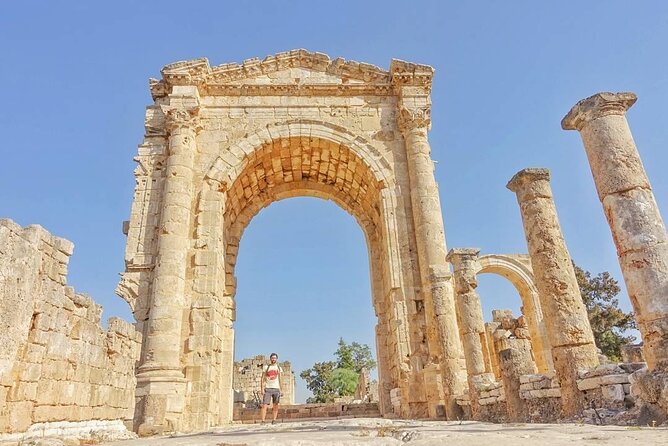
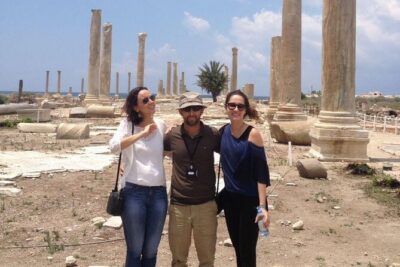
Tyre is the grand finale, and Al-Bass is the place where the ancient city’s scale becomes clear. The site includes a necropolis, a monumental causeway, a Roman triumphal arch, an aqueduct, a Roman road, and one of the best-preserved hippodromes from the Roman world.
The Roman hippodrome dates to the 2nd century and was one of the largest of its kind. Even with only about one hour here, you have time to understand how large public spectacles once shaped Tyre. The long racing ground is more than a single ruin. It shows the city’s investment in public life, movement, and ceremony.
The necropolis contains several hundred well-preserved sarcophagi. The monumental causeway leads through the ancient entrance area, while the triumphal arch dates from the 2nd century. An aqueduct adds another practical piece of the puzzle, showing how water was brought to the city.
Admission is not included. The site is large enough that good walking shoes matter, and the hour-long visit calls for sensible choices. Stay with the guide’s route and focus on the main remains rather than trying to see every corner.
Tyre is recognized as a UNESCO World Heritage site, and the Al-Bass area explains why. You are not seeing one isolated monument. You are walking through the remains of a city system, with roads, waterworks, burial grounds, ceremonial architecture, and public entertainment all close together.
What the guide and group size mean
The tour includes a leader and brief explanations at each site. That wording matters. This is designed as an overview, not a specialist archaeology course. You should expect useful context and orientation, then time to look around on your own.
One guide associated with this experience is Ahmed. If he leads your day, you may find the pace more flexible, particularly if the group is very small. A solo booking has previously allowed the guide to spend more time walking through Sidon and Tyre and to adjust the focus toward the individual’s interests.
That flexibility is not guaranteed for every departure, especially when the group reaches its maximum of 15. Still, a group of this size usually gives you a better chance to hear the guide and ask a question than a large bus group.
The air-conditioned vehicle is another practical advantage. Southern Lebanon can make for a long day on the road, and having transport arranged lets you focus on the stops instead of directions. Meals are not included, so plan to buy food during the day or ask the provider how meal timing is handled.
Is $50 good value?
At $50 per person, this is a strong value if you want transport from Beirut and a guided introduction to three destinations. The price includes hotel pickup and drop-off, the air-conditioned vehicle, the tour leader, and explanations at the sites.
You still need to budget for admission at the sea castle, Soap Museum, and Al-Bass Archaeological Site. Meals are also extra. Since the tour does not list those costs, check the current entrance fees before you go if you are keeping to a strict budget.
The value is highest for people who would otherwise rent a car or hire separate transport. It is less compelling if you already have a reliable car and prefer to spend half a day at one site. The schedule gives you range, not depth.
Group discounts are offered, which may lower the cost for people booking together. Free cancellation is available if you cancel at least 24 hours before the 8:00 a.m. start time. A cancellation inside that period is not refundable, and changes made within 24 hours are not accepted.
Who should book this day trip?
I would choose this tour if you are staying in Beirut and want a practical first look at southern Lebanon. It suits people who enjoy a mix of medieval buildings, old markets, religious sites, and Roman archaeology rather than one narrow theme.
It is also a good option if driving in an unfamiliar area is not appealing. The included vehicle and hotel service remove much of the day’s friction.
You may want a different plan if your main goal is extended time in Tyre, detailed museum study, or slow shopping in Sidon. The itinerary is tightly packed, and the site visits are short. The brief explanations are helpful, but anyone seeking specialist-level commentary should confirm what the guide can provide.
My booking verdict
Book this if you want three southern Lebanese destinations in one organized day and value simple transport more than a slow pace. Sidon gives you the strongest mix of city life and historic buildings, Maghdouche adds a meaningful religious stop, and Tyre supplies the largest ancient remains.
I would go in with realistic expectations: entrance fees and food are extra, the day moves quickly, and the tour is an overview. For $50, hotel pickup, a small group, and a route that reaches the Roman hippodrome at Tyre, it offers a lot of ground and a useful introduction to the south.
FAQ
Where does the tour begin?
The tour begins with pickup in Beirut at 8:00 a.m. Hotel pickup and drop-off are included.
How long does the tour last?
The day trip lasts approximately eight hours.
Which destinations are included?
The route visits Sidon, Maghdouche, and Tyre in southern Lebanon.
What can I see in Sidon?
The Sidon portion includes the Crusaders Sea Castle, Khan al-Franj, the Soap Museum, and the Sidon souks.
What is included in the price?
The price includes a tour leader, hotel pickup and drop-off, an air-conditioned vehicle, and brief explanations at each site.
Are meals included?
No. Meals are not included in the tour price.
Are entrance tickets included?
No. Admission is not included for the Crusaders Sea Castle, Soap Museum, or Al-Bass Archaeological Site. Khan al-Franj, the Sidon souks, and the Basilica of Our Lady of Mantara are listed as free.
How large is the group?
The tour has a maximum of 15 people. Group discounts are available.
Can I cancel for a full refund?
Yes. You can cancel up to 24 hours before the experience starts for a full refund. Cancellations within 24 hours are not refunded, and changes within that period are not accepted.
Just added around Beirut
- Beirut to Sidon, Tyre and Maghdouché: Daily Tours with Lunch★ 5.0 · 3 reviews
- Exploring Beirut’s Past: A Private Guided Historical Tour★ 5.0 · 3 reviews
- Chouf Charm: Private Journey Through Lebanon’s Historic Heartland★ 4.5 · 3 reviews
- Hike Chouwen★ 5.0 · 3 reviews
- Private Trip to Beiteddine, Deir el Qamar & Maaser el Chouf Cedars★ 4.5 · 3 reviews
- Small-Group Tour with Lunch to Baalbek, Anjar and Ksara★ 5.0 · 3 reviews
- Baalbek, Anjar & Wine: A Journey Through Lebanon’s Heritage★ 5.0 · 3 reviews
- Lebanese wineries guided tour with tastings & lunch★ 4.9 · 3 reviews
Sidon & Tyre Day Trips, compared.
Small-Group Adventure Tour to Sidon Tyre & Maghdouche-Day Trip
Read our review →Sidon, Tyre & Maghdouche Day Trip – With Lunch (4G on Board)
Read our review →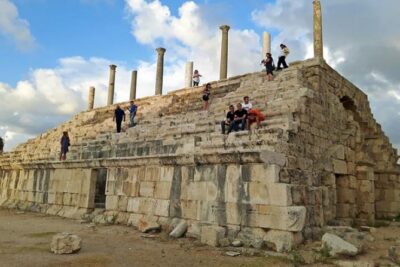
Guided Small-Group Tour to Sidon, Tyre & Maghdouche with Lunch
Read our review →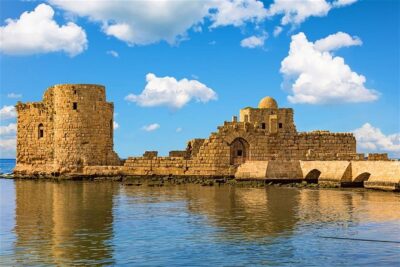
Private Guided Tour to Sidon, Tyre and Maghdouche from Beirut
Read our review →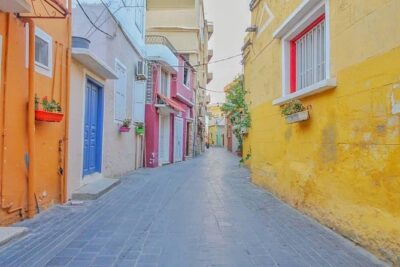
Lebanon tour Sidon & Tyre ruins with pick-up, guide,lunch+entries
Read our review →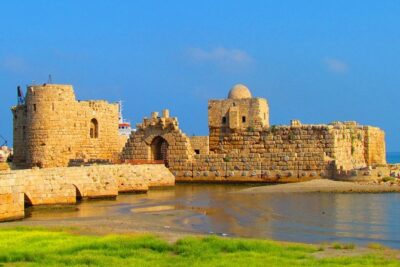
Lebanon Unveiled: Exclusive Private Tours to Sidon & Tyre
Read our review →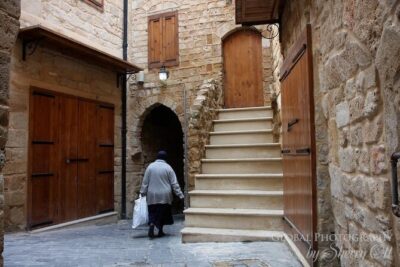
Browse the lists this tour appears in