
Reviewed · HISTORICAL TOURS
Temple of Eshmun – Mleeta Landmark – Beaufort Castle
Southern Lebanon gives you a striking mix of sacred ruins, modern conflict memory, and medieval stonework in one long day. This tour links the Temple of Eshmun, dedicated to the Phoenician god of healing, with Mleeta’s strongly presented account of the Israel-Lebanon conflict and the commanding ruins of Beaufort Castle. It is not a standard sightseeing circuit.
I like the efficient route, since you see three very different places without arranging several separate rides. I also like the small-group limit of 15, which should make questions and conversation easier. The main drawback is the pace: about 8 hours and 30 minutes on the road, with only 45 minutes at Eshmun and one hour at the castle.
Key points at a glance
- Three very different stops: Move from a Phoenician sanctuary to a modern conflict site, then to a Crusader fortress.
- Beaufort Castle is the visual highlight: Allow your attention to linger on the high stone ruins and wide views.
- Mleeta offers a clear political viewpoint: The site explains the conflict through the perspective of the Resistance and includes a shooting simulator.
- The Temple of Eshmun needs modest expectations: The ancient site is important, but the remains require care and imagination.
- Lunch costs extra: You stop at a local restaurant in Jarjouaa for about an hour.
- Transport is built in: Pickup is offered from a Beirut hotel or meeting point, and the activity ends back there.
Why this southern Lebanon route is unusual
Many day trips from Beirut focus on famous Roman ruins, coastal towns, or mountain scenery. This one takes a different path. It asks you to look at southern Lebanon through three separate periods: Phoenician religion, the Crusader era, and the modern Israel-Lebanon conflict.
That combination gives the day its real value. You are not simply ticking off similar ruins. At Eshmun, you encounter an ancient healing cult. At Mleeta, you see how a modern Lebanese organization presents military history and resistance. At Beaufort, you walk through a fortress tied to medieval power struggles.
I would choose this tour if you want context as much as photographs. The stops are not polished attractions designed to feel light and easy. They carry political, religious, and military weight. That makes the day more thought-provoking, but it also means you should arrive ready for a serious presentation at Mleeta rather than a neutral museum treatment.
The group size is capped at 15 people. That is a useful middle ground. You get the convenience of organized transport without the scale of a full coach tour. The guide leads the day, explains the sites, and keeps the route moving, though no guide name is provided in the tour details.
More ancient sites near Beirut:
- PRIVATE Beirut Historical Walking Half Day Tour
★ 5.0 · 27 reviews - Historical Beirut Tour (AM) Half Day – (4G on Board)
★ 4.0 · 16 reviews - Guided Half-Day Private Beirut Historical Tour
★ 5.0 · 6 reviews
The Temple of Eshmun near Sidon
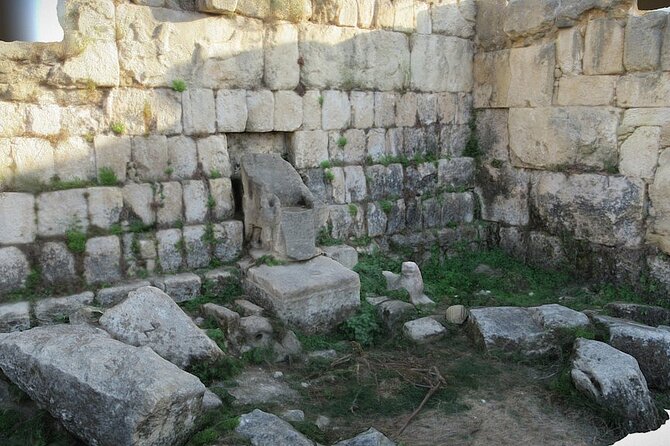
Your first major stop is the Temple of Eshmun, in the Bqosta area near the Awali River and roughly 2 kilometres northeast of Sidon. The sanctuary was dedicated to Eshmun, the Phoenician god of healing, so this is a place tied to ancient ideas about health, worship, and divine protection.
You have about 45 minutes here. That is enough to get an introduction, see the remains, and understand why the site matters. It is not enough for a slow archaeological study, so I would listen closely to the guide before wandering off to inspect individual stones.
The site’s setting near the river adds to its sense of purpose. Water and healing were closely linked in ancient worship, and the location helps you picture why a sanctuary connected with health might have been established here. The tour gives you an accessible entry point into Phoenician religion without asking you to spend an entire day at one archaeological site.
Keep your expectations realistic. The remains need work, and this is not the kind of restored monument where every column and wall is easy to read. You will get more from it if you bring curiosity and let the guide fill in the missing pieces.
I especially like the way this stop opens the day. It begins with a long view of Lebanon’s past, before the route turns toward modern conflict and medieval warfare. That contrast is one of the smartest features of the experience.
Admission is listed as free. The practical advantage is that you do not pay another entrance fee, but the short visit means the value here comes from the explanation and the historical setting, not from a large number of preserved structures.
Mleeta and the shooting simulator
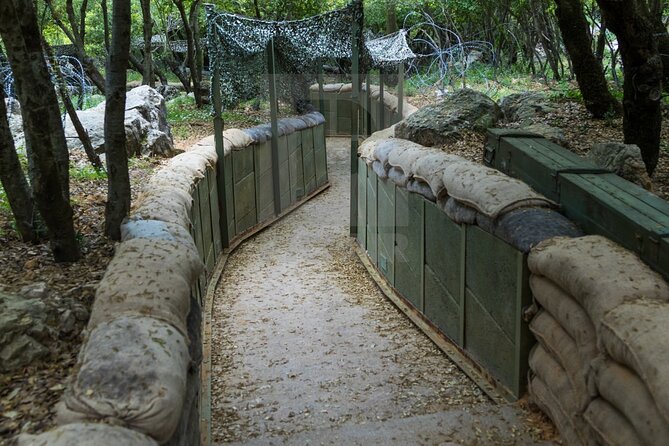
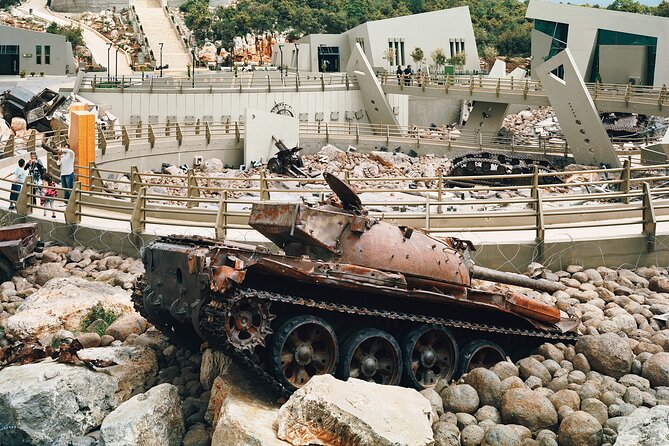
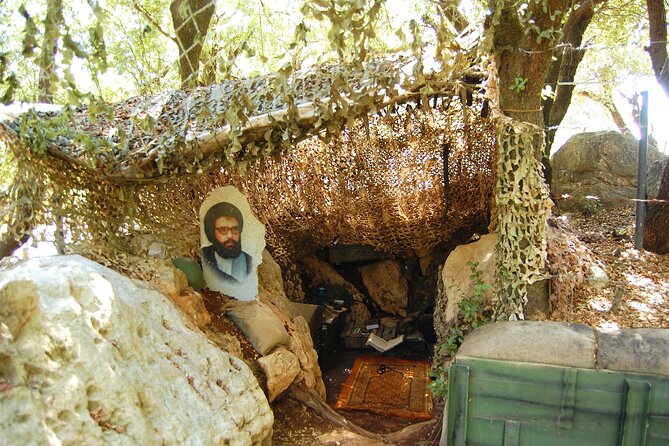
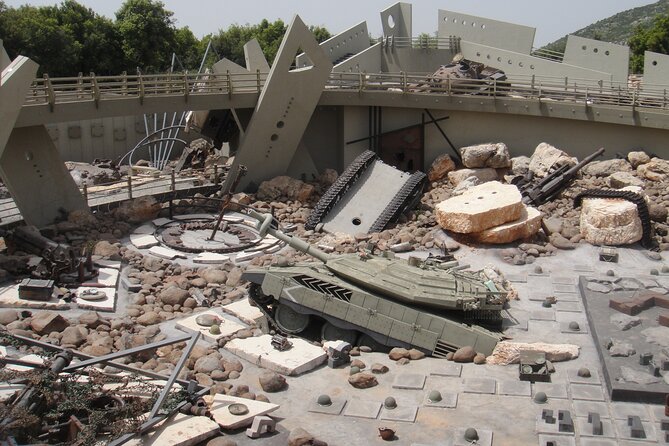
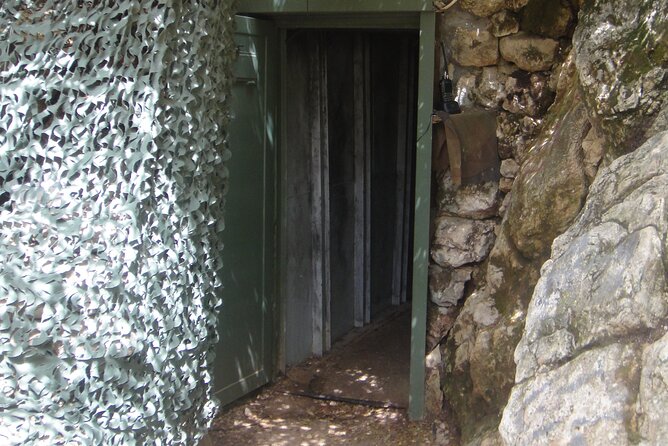
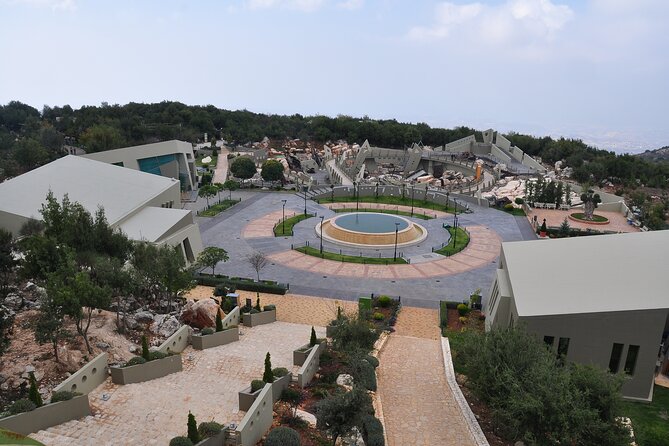
Mleeta is the most distinctive stop on the route. You spend about two hours at the Mleeta Landmark, where the guide explains the conflict between Israel and Lebanon through the viewpoint of the Resistance.
That point of view matters. Mleeta is not presented as a detached, academic survey of every side. It is a site built around a particular Lebanese political and military narrative. You should treat the visit as an opportunity to understand how that story is told locally, while remembering that any conflict site has its own selection of facts, images, and emphasis.
For many visitors, this will be the most memorable part of the day. The attraction is unusual, strongly themed, and tied directly to a painful period in the region’s recent past. It gives you a way to think about how military events become public memory.
The included shooting simulator adds an interactive element. You get the chance to try it as part of the visit, rather than only looking at displays or listening to a talk. That makes Mleeta different from a conventional museum, though it may not appeal to everyone. If you prefer quiet historical sites, this is the portion of the tour that may feel less comfortable.
I would set aside time for questions here. Two hours is the longest scheduled stop, and that gives you room to understand the site rather than rush through it. Ask the guide to clarify dates, locations, and the difference between the historical material and the site’s own interpretation.
The entrance is included in the tour price. That helps, since Mleeta is the core modern-history stop and not merely a quick roadside photo break.
Lunch in Jarjouaa
After the museum visit, the route includes a one-hour lunch stop at a local restaurant in Jarjouaa. Lunch is not included in the price, so budget separately for your meal.
This break is practical as much as cultural. The day begins in Beirut and covers several southern sites, so a proper pause matters. You can refuel, take a breath, and talk with people in the group before the final visit.
The details of the restaurant and menu are not specified, so do not book this expecting a particular dish or dining style. Think of it as a planned local meal stop rather than a formal food tour.
I like that lunch is built into the schedule instead of leaving you to search for food between sites. The tradeoff is that you have less control over where and when you eat. If you have dietary needs, it is sensible to ask about arrangements before departure, since the provided information does not describe menu choices.
Same country, a completely different kind of day:
- Guided Small-Group Tour to Baalbek, Anjar and Ksara with Lunch
★ 5.0 · 511 reviews - Guided Small-Group Tour to Jeita, Harissa, Byblos with Lunch
★ 5.0 · 361 reviews - Paragliding Trip Over Lebanon – Jounieh Bay
★ 5.0 · 257 reviews - Jeita Grotto,Harissa&Byblos Full-Day PRIVATE-CAR Trip from Beirut
★ 5.0 · 222 reviews
Beaufort Castle and the best views of the day
The final sightseeing stop is Beaufort Castle, also called Belfort Castle. Locally, it is known as Qal’at al-Shaqif or Shaqif Arnun. The Crusader fortress sits in the Nabatieh Governorate of southern Lebanon, about 1 kilometre south-southeast of Arnoun village.
You have one hour here. That is enough to walk around the principal remains and take in the setting, but you could easily want longer. The fortress is the stop where the scale of the site is likely to impress you most. Its position gives you broad views, and the combination of high walls, exposed stone, and open space makes it a rewarding place for photographs.
One especially useful tip is to protect your time here. The Temple of Eshmun is compact, and Mleeta has a structured presentation. Beaufort Castle benefits from lingering. Look beyond the masonry and notice how the fortress commands its surroundings. The views help explain why this location mattered for defense across different periods.
The castle is also a fitting end to the route. After the Phoenician sanctuary and the modern military museum, you arrive at a fortress shaped by medieval conflict. The three stops are separated by centuries, but each connects belief, power, and control of place.
Admission to Beaufort Castle is included. That improves the value of the tour, especially because the castle is one of the most visually rewarding parts of the day. The main limitation is the one-hour schedule. If you are passionate about medieval fortifications, you may leave wishing you had more time to explore.
The transport and timing from Beirut
The tour starts at 8:30 am in Beirut, with pickup offered from your hotel or a meeting point. Transport is included for the full outing, and the activity ends back at the Beirut meeting point.
This is a major advantage. Southern Lebanon is not a simple collection of sites to connect independently, especially when you want to combine Bqosta, Mleeta, Jarjouaa, and Beaufort Castle in one day. Having the driver and guide manage the route removes much of the planning burden.
The price is $74.99 per person. I see that as reasonable if you value convenience and want all three main visits in one organized day. The admission fee for Mleeta and Beaufort Castle is included, while the Temple of Eshmun has no admission charge. Lunch is extra, so the true day cost will be slightly higher.
The tour lasts roughly 8 hours and 30 minutes. That is a full day, not a quick half-day outing. The schedule includes about 45 minutes at Eshmun, two hours at Mleeta, one hour for lunch, and one hour at Beaufort Castle, with the remaining time used for driving and transitions.
You should be comfortable spending long stretches in transport. The reward is range: three very different places in one outing. The cost is less time at each individual site and less freedom to change the plan.
Who will get the most from this tour
I would recommend this day to you if you enjoy history that continues into the present. You get ancient religion, medieval military architecture, and a modern political narrative rather than a string of purely scenic stops.
It also suits first-time visitors to Lebanon who want a structured introduction to the southern part of the country. Pickup, transport, admissions at two stops, and a guide make the day easier to manage than planning the same route alone.
History fans should pay special attention to Mleeta and Beaufort Castle. The former offers a highly specific interpretation of recent conflict, while the latter gives you a physical sense of how fortified sites shaped the region.
You may want to choose another activity if your main goal is food, shopping, beaches, or relaxed sightseeing. This day has a serious tone, and Mleeta’s subject matter is central rather than incidental. The shooting simulator may also be a deciding factor. Some people will find it engaging, while others may prefer a less military-focused attraction.
The tour is listed as suitable for most people, but the schedule is still demanding. You will need to manage a full day, changing sites, and time on the road. Specific accessibility details are not provided, so ask the operator before booking if mobility support is important to you.
How the tour handles different versions of history
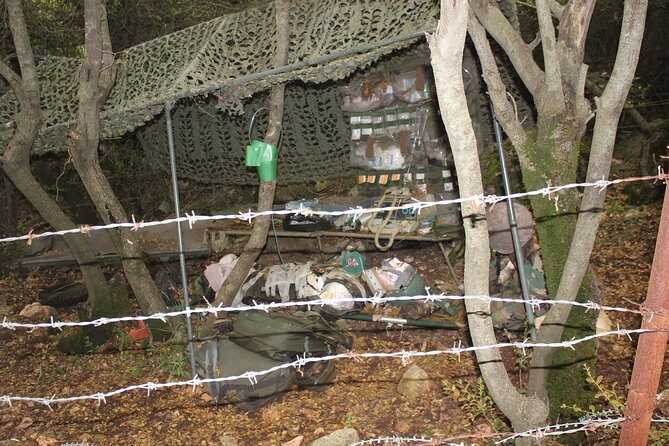
The strongest reason to take this tour is also the point that requires the most care. Mleeta presents a defined account of the Israel-Lebanon conflict and the Resistance. That is valuable because it shows how this history is understood and displayed in Lebanon, but it should not be mistaken for a complete account of every perspective.
You can make the visit more useful by listening for the site’s main message, then asking the guide for dates and broader context. A good question is not only what happened, but also why Mleeta presents it in this particular way.
This approach lets you respect the site without accepting every interpretation uncritically. It also makes the day more than a photo excursion. You come away with a clearer sense of how history, politics, and public memory overlap.
Small-group value and practical limits
A maximum of 15 people is one of the better details here. You are less likely to feel lost in a crowd, and the guide has a fair chance to answer questions. It also helps at sites where a personal explanation makes more difference than a printed sign.
Group discounts are available, though the amount is not specified. If you are booking for several people, check the final price before payment. Mobile tickets are offered, and confirmation is provided at booking.
The cancellation policy is strict. The experience is non-refundable and cannot be changed for any reason, so confirm your date, pickup details, and plans before paying. This matters more for a full-day tour than for a short local activity.
Because only nine ratings are provided, the 4.9 score suggests a very positive response but is not a large sample. The clearest praise centers on the guide’s friendly and polite manner, the unusual nature of the stops, Mleeta’s historical interest, and Beaufort Castle’s views. Those are the areas I would use to judge the experience, rather than expecting every part of the day to be equally polished.
Should you book the Temple of Eshmun, Mleeta, and Beaufort Castle tour?
Book it if you want a practical, history-heavy day from Beirut that reaches places you would not easily combine on your own. The best reasons are the unusual three-part route, included transport, small group, Mleeta’s distinctive presentation, and the memorable setting of Beaufort Castle.
Go in with realistic expectations. Eshmun is an important but somewhat worn archaeological site, lunch costs extra, and the day is long. Mleeta presents a clear political viewpoint, while the castle deserves more than the scheduled hour.
For a first visit to southern Lebanon, I think the $74.99 price offers solid value, especially with admissions at Mleeta and Beaufort Castle included. If you prefer a relaxed pace or neutral museum interpretation, choose a different outing. If you want to see how several layers of Lebanese history meet in one day, this is a strong choice.
FAQ
Where does the tour start?
The tour starts in Beirut, Lebanon, at 8:30 am. Pickup is offered from your hotel or from a meeting point in Beirut.
Where does the activity end?
The activity ends back at the Beirut meeting point.
How long does the tour last?
The tour lasts approximately 8 hours and 30 minutes.
How much does the tour cost?
The listed price is $74.99 per person.
Is lunch included?
No. Lunch takes place at a local restaurant in Jarjouaa, and the meal costs extra.
How many people can join the tour?
The tour has a maximum group size of 15 people. Group discounts are also available.
What attractions are included?
The tour visits the Temple of Eshmun near Sidon, the Mleeta Landmark, and Beaufort Castle.
Is admission included at the attractions?
Admission is included at Mleeta and Beaufort Castle. The Temple of Eshmun has free admission.
Just added around Beirut
- Beirut to Sidon, Tyre and Maghdouché: Daily Tours with Lunch★ 5.0 · 3 reviews
- Exploring Beirut’s Past: A Private Guided Historical Tour★ 5.0 · 3 reviews
- Chouf Charm: Private Journey Through Lebanon’s Historic Heartland★ 4.5 · 3 reviews
- Hike Chouwen★ 5.0 · 3 reviews
- Private Trip to Beiteddine, Deir el Qamar & Maaser el Chouf Cedars★ 4.5 · 3 reviews
- Small-Group Tour with Lunch to Baalbek, Anjar and Ksara★ 5.0 · 3 reviews
- Baalbek, Anjar & Wine: A Journey Through Lebanon’s Heritage★ 5.0 · 3 reviews
- Lebanese wineries guided tour with tastings & lunch★ 4.9 · 3 reviews
Historical Tours, compared.
Historical Beirut Tour (AM) Half Day – (4G on Board)
Read our review →
Sidon & Tyre Unesco Heritage w/pick-up, guide, entries+lunch
Read our review →
PRIVATE tour to Beirut history museum, Beiteddine & Deir elQamar
Read our review →
Baalbek, Anjar & Wine: A Journey Through Lebanon’s Heritage
Read our review →
Exploring Beirut’s Past: A Private Guided Historical Tour
Read our review →
Chouf Charm: Private Journey Through Lebanon’s Historic Heartland
Read our review →Browse the lists this tour appears in